ENEnglish
 LTLietuviškai
 DEDeutsch
 FRFrançais
 RUРусский
 ESEspañol
 PLPolski
 ITItaliano
 UKУкраїнська
 CSČeština
 PTPortuguês
 JA日本語
 LVLatviešu valoda
 ETEesti
 HUMagyar
 IDBahasa Indonesia
 TRTürkçe
 HIहिन्दी
 ELΕλληνικά
 ARالعربية
 THไทย
 VITiếng Việt
 RORomână
 MSBahasa Melayu
 BNবাংলা
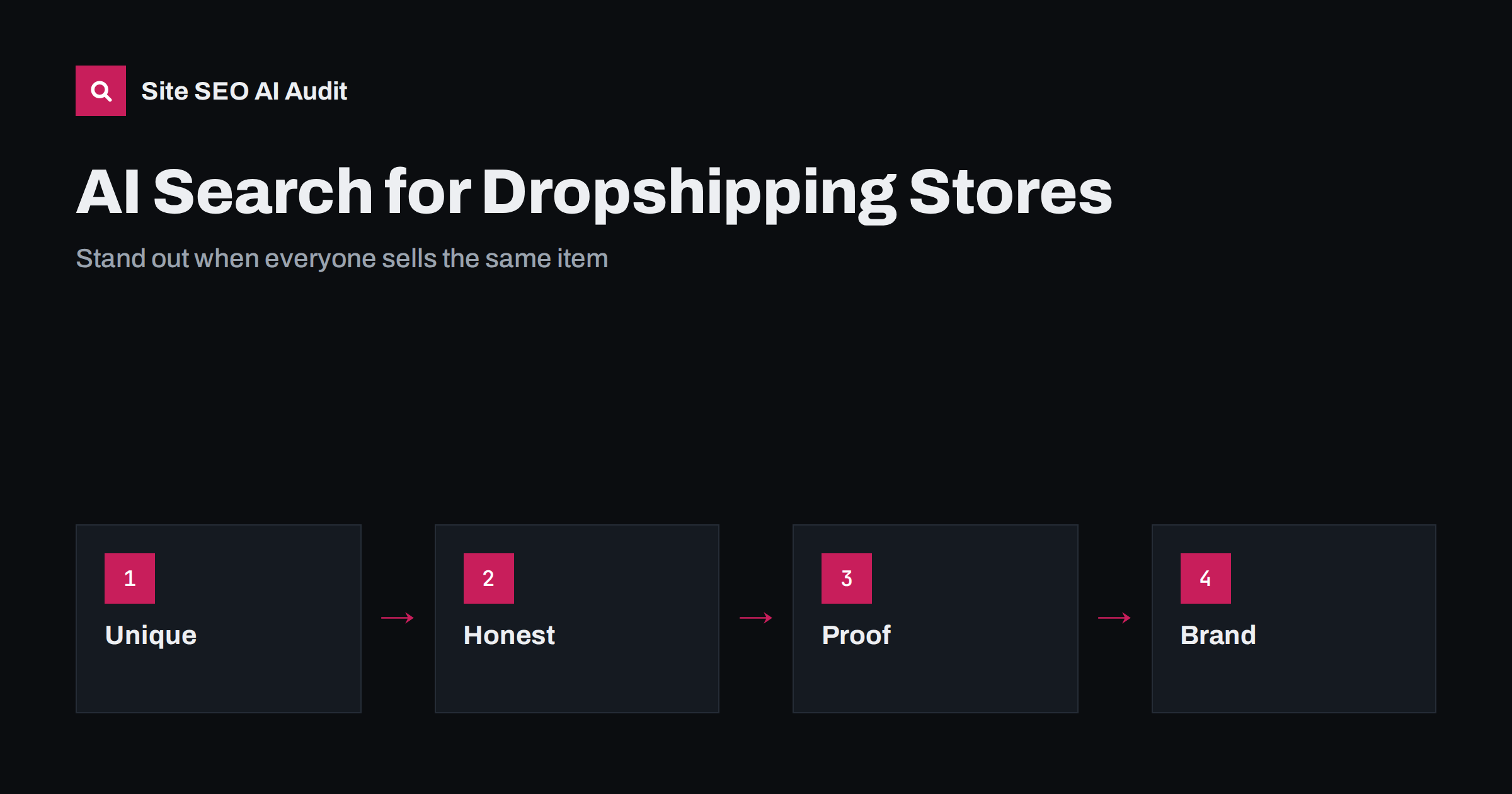
Short answer: Dropshipping and print-on-demand stores often sell products that many others also list, with supplier descriptions and stock photos. AI search tends to prefer sources that add something: original descriptions, real photos, clear shipping times and costs, honest return terms, genuine reviews and a visible business identity. To be recommended, make each product page specific and trustworthy, and build a brand that people and assistants can tell apart from copies.
Shopping questions are moving into AI assistants. People ask which gift to buy, which print on a mug or shirt suits a hobby, or whether a shop is reliable. For stores built on suppliers, the challenge is that the same product, with the same text and the same images, can appear on hundreds of sites. An assistant that wants to give a useful, safe answer will look for signals that separate a real business from a template. This guide covers practical ways to provide those signals. For general principles, see the guide to product pages for AI shopping.
Why these stores struggle
There are four typical problems. Product text is copied from a supplier, so it is duplicated across the web and offers no reason to choose one shop over another. Images are the same stock photos. Shipping times and costs are vague or hidden, which creates doubt, especially when items ship from abroad. And the shop has no visible company details, so it looks temporary. Each problem makes it harder to be trusted, and trust matters even more when assistants answer with a short list.
Print-on-demand shops have an extra advantage: the design is theirs. A unique design, a story and a clear niche are real assets that can be described in plain words, if the pages are built to show them.
Write original product content
Replace supplier text with your own. Describe what the product is, who it suits, the material, size, colour options, care and any limits. Mention what you have checked yourself, such as a sample you ordered, and say so. Answer the questions that customers ask: how it fits, how long a print lasts, how to wash it, what the colours look like on screen versus in real life. This is the kind of detail assistants can quote, and it is covered in the guide to manufacturer product descriptions.
For print-on-demand, add information about the design: the idea, the artist or the source of the artwork, the print method and the product base. Explain in plain words how items are made after an order, because this also explains delivery times. Use real photos where possible, including photos of samples in use, and write useful alt text, as discussed in the guide to image alt text.
Be clear about shipping and returns
Many people hesitate because they fear long delivery or difficult returns. Put the facts in plain text, on the product page and in a dedicated policy page: where items ship from, typical processing and delivery times by country, what shipping costs, who pays duties or taxes and how to track the order. State the return and refund rules clearly, including who pays the return shipping, the time limit and what condition is required. Only write terms that you actually follow, and keep them current.
Honest, specific information is more useful than optimistic promises. If a product takes two weeks to be made and shipped, say so. AI systems and customers alike prefer a shop that sets the right expectation. See the guide to shipping and returns pages.
Show who you are
A store that hides its identity looks risky. Publish an about page with the company name, the country, how to reach you and the story behind the brand. Add a contact page with a working address, e-mail or form, and make sure the legal and policy pages are easy to find. Use the same name and details across the website, social profiles, payment pages and marketplaces. Consistency is a strong signal, described in the guide to business profile and website alignment.
Explain your niche. A shop that clearly serves one audience, such as runners, cat owners or a specific hobby, with designs and information made for them, is easier to recommend than a general shop with thousands of random items. See the guide to about page SEO and the guide to E-E-A-T and AI search.
Collect real reviews and handle problems well
Reviews from real buyers are a major trust signal, both on your own pages and on independent platforms. Ask customers for a review after delivery, show the good and the critical ones and reply politely. Never fake reviews or copy them from a supplier or another site, because this is risky and easy to detect. Where product reviews are shown, mark them up correctly and only when they are real, as explained in the guide to review markup and the guide to reviews and reputation.
Problems will occur, especially with products made by third parties. How you handle them matters. Publish a clear way to report a problem, answer quickly and fix errors in public, so that the record shows a responsible seller.
Structured data and product details
Use product markup with the name, description, images, price, currency, availability and, where you have them, brand and identifiers. Keep it equal to the visible page. For variants such as sizes and colours, decide whether each has its own page or whether they share one, as explained in the guide to product variants. Keep stock and availability accurate: products that are no longer sold should be handled as described in the guide to out-of-stock product pages. Further technical points are in the guide to product markup.
Make sure the price and shipping information is in the HTML that crawlers receive, not only inserted by a script after the page loads. Many themes load key details late, and AI crawlers may not run scripts.
Marketplaces and your own site
Many sellers also list on marketplaces. These can bring sales, but assistants may name the marketplace instead of your brand. Keep your own site as the main source of detail: the full story, the best photos, the policies and the content that helps people choose. Link between your profile pages and your website, and use the same brand name everywhere. Learn how marketplaces appear in answers in the guide to AI search for marketplaces and directories.
Content around the products also helps: gift guides written from real experience, care instructions, size guides and comparisons that explain differences honestly. They show expertise and answer the questions that precede a purchase.
Test what assistants say about you
Once a month, ask several assistants the questions your customers ask: which shop sells a certain kind of design, whether your store is reliable, how long delivery takes from your shop to a given country and what your return rules are. Write down which sources are named and what is wrong or missing. Wrong delivery times, old prices or confusion with a similarly named shop usually point to a page that is unclear or outdated, or to a third-party listing that still shows old details. Fix the source, not only the symptom.
Keep a simple record of changes and results. Over a few months you will see which kinds of pages are quoted, such as a size guide or a delivery table, and you can produce more of what works. Do not copy competitors, because the aim is to be different and verifiable, not to look the same.
Seasonal peaks and gifts
Gift seasons bring a large share of orders for these shops, and people ask assistants for ideas in the weeks before. Prepare early: publish clear last-order dates for delivery before holidays, keep stock and availability current and write gift pages that explain who each product is for. Update dates every year and remove outdated seasonal offers, as described in the guide to peak season SEO.
Here is a short example. A print-on-demand shop sold shirts with designs for amateur astronomers. Its product pages used a generic supplier text and the same mockup images as many competitors. The owner rewrote the pages with the story of each design, size and material details, real photos of samples and a clear delivery table by country. Assistants began to mention the shop in answers about gifts for stargazers, which the generic pages never achieved.
A second example is a small dropshipping store that hid its shipping origin. After it started to state transparently where items ship from, how long delivery takes and how returns work, the number of questions to support fell and customer reviews became more positive.
Site SEO AI Audit crawls your store and checks titles, descriptions, duplicate and thin content, broken links, structured data, status codes, page speed and AI visibility settings, which helps you find weak or duplicated product pages. It does not source products or process orders. The first audit of up to 200 pages is free, and larger stores can see the pricing page.
Related reading
- AI Search for Craft and Handmade Sellers
- When AI Gets Facts About Your Business Wrong
- Product Page SEO Guide
The bottom line
Stand out with original product content, honest shipping and return terms, real reviews and a clear brand identity.
الأسئلة الشائعة
Can a dropshipping store appear in AI answers?
Yes, if it offers original content, accurate details and visible trust signals rather than copied supplier pages.
Should I rewrite supplier descriptions?
Yes. Write your own text based on real details and customer questions, so the page is not a copy of many others.
Do shipping times matter for AI search?
They matter for trust. State true processing and delivery times in plain text on the product and policy pages.
Are print-on-demand designs an advantage?
They can be, because the design is yours. Describe the idea, the artwork and the print method in words, and use real photos.
Do I need my own website if I sell on marketplaces?
It is strongly recommended. Your site is where you control the story, policies and the detail that helps assistants name your brand.