ENEnglish
 LTLietuviškai
 DEDeutsch
 FRFrançais
 RUРусский
 ESEspañol
 PLPolski
 ITItaliano
 UKУкраїнська
 CSČeština
 PTPortuguês
 JA日本語
JA日本語 LVLatviešu valoda
 ETEesti
 HUMagyar
 IDBahasa Indonesia
 TRTürkçe
 HIहिन्दी
 ELΕλληνικά
 ARالعربية
 THไทย
THไทย VITiếng Việt
 RORomână
 MSBahasa Melayu
 BNবাংলা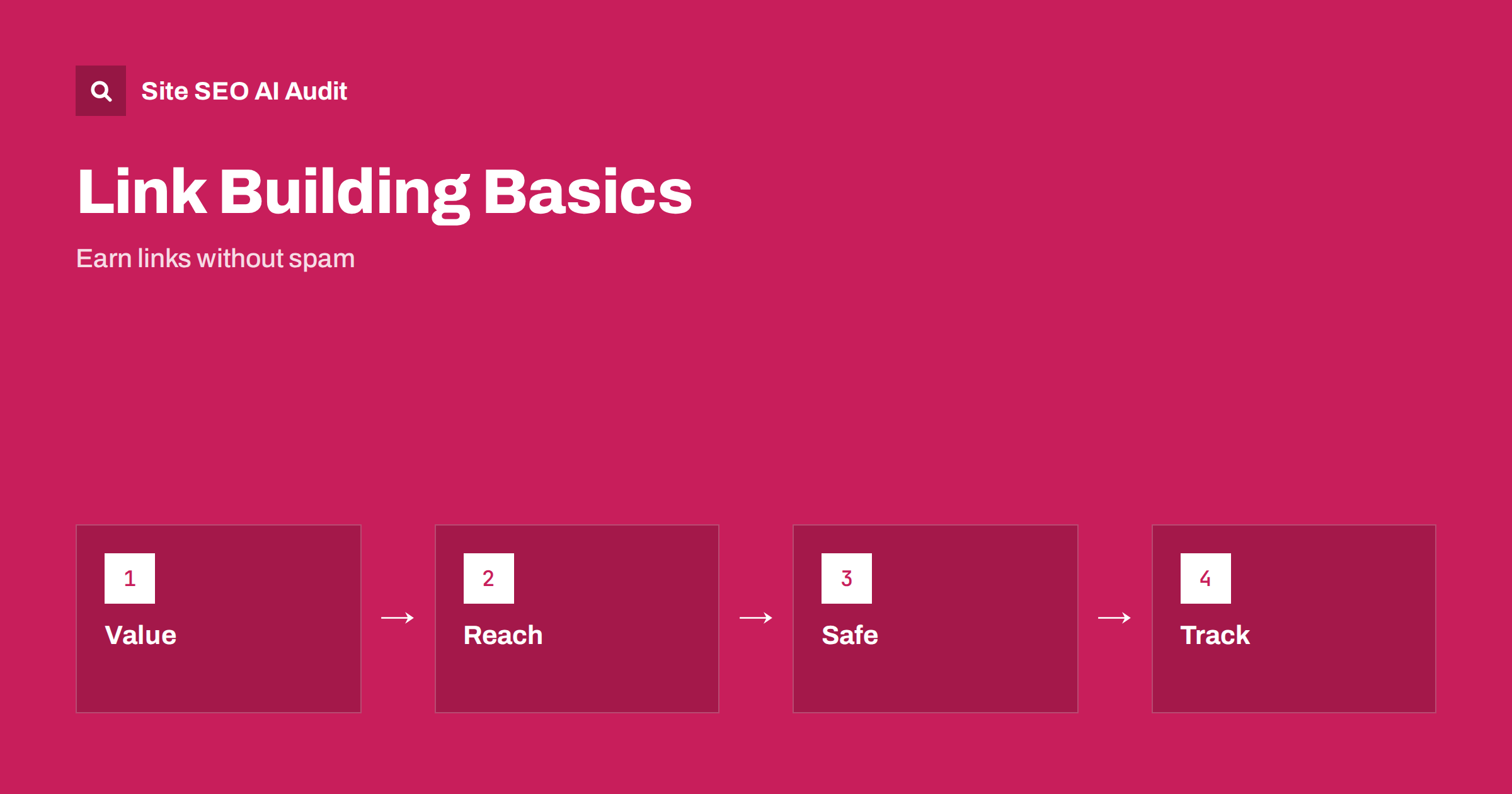
Short answer: Link building means earning links from other websites to yours. The safest way is to publish something that is genuinely useful, original or authoritative, make sure the right people know about it, and build real relationships with partners, customers, communities and publishers. Avoid buying links, link swaps at scale and automated spam. A few relevant links from respected sites are worth more than hundreds of random ones.
Links remain one of the signals that search engines use to find pages and to judge their reputation. When another site links to yours, it is a kind of recommendation. For a small business, a link from a local newspaper, an industry association, a supplier or a respected blog can matter more than a long list of directory entries. Yet link building has a bad reputation, because of years of spam, paid schemes and shortcuts that ended in penalties. This guide explains the basics in a calm, practical way: what a good link is, what to build first, which tactics are safe, what to avoid and how to measure progress.
What makes a link worth earning
Not all links are equal. A useful link tends to have most of these qualities:
- Relevant. The linking page is about a topic close to yours, and the link makes sense for its readers.
- Editorial. A real person chose to add it because it helps their audience, not because they were paid or forced.
- Visible and crawlable. It sits in the main content of an indexable page, as a normal link.
- From a trusted site. The site is real, maintained, and has an audience.
- Likely to send visitors. The best links bring people, not only signals.
Beware of scores. Third-party metrics such as authority ratings are estimates made by tools; they do not come from search engines, and they are easy to misread. See domain authority and rating scores before you set goals based on them.
Start with your own house
Before you ask anyone for a link, make sure your site gives them something worth linking to and a good place to land. Check that your key pages load quickly, work on phones, have clear titles and explain the topic well. Make it easy to find your contact details and your story, so that journalists or partners can verify who you are; see about page SEO. Fix broken links and redirect old pages so that existing links still work; the Links report in Search Console shows which pages already attract links, as explained in the Search Console Links report guide.
It also helps to be clear about your target. Decide which two or three pages should attract links first, such as a guide, a tool, a study or a service page, and prepare them well. Links to a thin page will not do much; links to a strong one will.
Create assets that earn links
People link to things that save them time or make their own content better. Examples that work for small sites include:
- Original data and research, such as a small survey, a price comparison or an analysis of your own numbers. See original data and first-hand experience.
- Complete guides that answer a question better than existing pages.
- Tools and templates, such as calculators, checklists and downloadable forms.
- Clear explanations of local facts, such as regulations, fees or events in your area.
- Glossaries and definitions that others can cite; see glossary pages for SEO.
- Case studies that show real results with permission; see case study pages.
Pick topics from real questions: customer emails, search data and gaps in the pages that already rank. The guide to content gap analysis shows how to find topics that others cover and you do not. Quality matters more than volume: one strong asset a quarter beats a dozen thin posts.
Tell the right people
A great page that nobody sees will not earn links. After publishing, tell the people who have a reason to care:
- Customers and partners. Many will link from their own site or newsletter if you give them a good reason, such as a joint project or a mention of their work.
- Suppliers and associations. Industry groups and suppliers often list members or customers, with links.
- Journalists and bloggers. Send a short, personal note with a clear angle and a reason why their readers will care. Do not send mass emails with the same text.
- Communities. Share your work where it is welcome and useful, following the rules of the community; see forums and communities in AI answers.
- Local organisations. Schools, charities, events and chambers of commerce often link to businesses that take part.
Prepare a press or resources page that makes it easy to find logos, facts and contact details; see press and newsroom pages.
Safe tactics that work for small sites
Several approaches are reliable and low risk:
- Sponsorships and events. Support a local team or event that publishes a sponsor page with a link, and where the sponsorship makes real sense for your business.
- Guest contributions. Write a genuinely useful article for a respected publication in your field, with a natural author link. Do it for the audience, not only for the link.
- Expert comments. Offer short, useful comments to journalists and bloggers who cover your topic.
- Reclaiming mentions. When someone mentions your brand without a link, politely ask whether they can add one; see unlinked brand mentions.
- Fixing broken links. If a site links to a page that no longer exists, redirect the old address so the link still helps you.
- Partner pages. Ask real partners and suppliers to list you on their site, and do the same for them where it is helpful to customers.
International businesses can adapt these methods to each market; see international link building.
Practices to avoid
Some shortcuts put your site at risk. Search engines have rules against links that exist mainly to manipulate rankings, and they have systems to detect them. Avoid:
- Buying links, or paying for posts whose main purpose is a link, unless the link is marked as sponsored.
- Large-scale link exchanges and private networks of sites built to pass links.
- Automated comments, forum spam and profile links created in bulk.
- Exact-match anchor text repeated everywhere, which looks unnatural; see anchor text best practices.
- Hidden links and manipulative widgets that insert links into other sites’ pages without clear consent.
Where money or free products are involved, mark links properly as sponsored or nofollow; the guide to nofollow, sponsored and ugc links explains how. If you inherit a poor link history, read the disavow tool guide and manual actions in Search Console before taking action.
Plan a simple monthly routine
Small teams do best with a routine that fits into a few hours a month. In the first week, pick one page to promote and write down who might care about it: three partners, three publishers or communities, and three local organisations. In the second week, send personal messages, each with a clear reason and a short summary of what the page offers. In the third week, follow up politely once, answer questions and add any useful details that people ask for, since these are often signs that the page is missing something. In the fourth week, record the results, thank the people who linked, and note what you learned.
Over a year, this routine produces a steady set of relevant links and, just as important, a network of people who know your business. Keep every message honest. If you offer something in return, such as a quote, a discount for readers or a link to their work, make sure that it is real and that you can deliver it.
Links, brand mentions and AI answers
AI assistants and AI search features draw on many sources, and mentions of your brand on trusted pages can matter even when they carry no link. Treat brand visibility and links as partners: a well-known, well-described business tends to attract both. Make sure each page you want mentioned is clear about who you are and what you do. The guide to entity SEO explains how clear naming helps systems connect these mentions to your business.
Track results and stay patient
Link building is slow. A single useful link may take weeks to appear and months to show an effect, and many efforts produce nothing. Keep a simple log: the asset, who you contacted, the response and any links earned. Review the links and referring sites in Search Console and in other tools each month, and watch the traffic and the rankings of the target pages. Do not chase raw counts; look for relevant, visible links that send visitors. If a tactic brings nothing after a fair try, stop and test another.
A technical review helps links work harder. Broken pages, redirect chains and slow templates waste the value of the links you earn. Site SEO AI Audit checks links, crawl setup and speed across seven areas, and the first audit of up to 200 pages is free. See the pricing page for re-checks.
Related reading
- Internal Linking Strategy: A Step-by-Step Guide for SEO
- Outbound Links and SEO: When Linking to Other Sites Helps
- New Website, No Authority: Getting Into AI Answers
- Social Media and SEO: What Helps and What Is a Myth
The bottom line
Good link building is mostly good marketing: make something worth citing, put it in front of people who care, build real relationships and be patient. Choose relevance over numbers, avoid paid schemes and spam, and keep your own site healthy so that every link you earn works for you.
FAQ
Do I need links to rank?
For competitive topics, links usually help. For low-competition or very local searches, strong content and a clean site can rank without many links.
Is buying links ever safe?
Paid links meant to influence rankings go against search engine rules. If you pay for placement, make sure the link is marked as sponsored.
How many links do I need?
There is no fixed number. Compare your pages with those that rank for your topic, and focus on relevant, trusted links instead of totals.
Are directory links useful?
A few relevant, well-run directories can help, especially local ones. Large lists of low-quality directories add little and can look spammy.
How long does link building take to work?
Often months. Earned links appear slowly, and the effect on rankings depends on competition, so track progress monthly and stay patient.