ENEnglish
 LTLietuviškai
 DEDeutsch
 FRFrançais
 RUРусский
 ESEspañol
 PLPolski
 ITItaliano
 UKУкраїнська
 CSČeština
 PTPortuguês
 JA日本語
 LVLatviešu valoda
 ETEesti
 HUMagyar
 IDBahasa Indonesia
 TRTürkçe
 HIहिन्दी
 ELΕλληνικά
 ARالعربية
 THไทย
 VITiếng Việt
 RORomână
 MSBahasa Melayu
 BNবাংলা
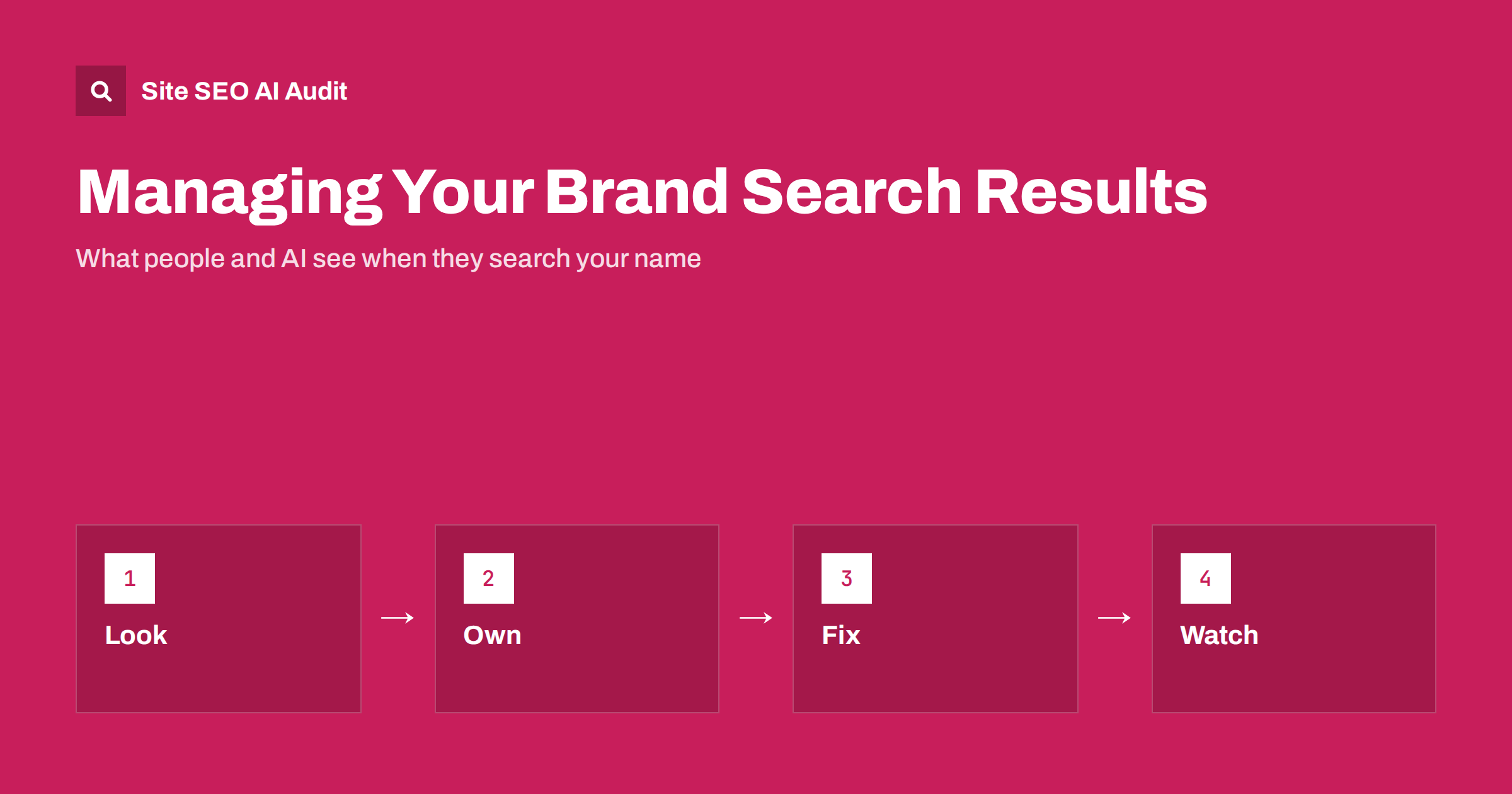
Short answer: The brand SERP is the set of results shown when someone searches for your company or product name. It is often the first impression a customer, journalist or AI assistant gets. Manage it by searching your own name regularly, making your official site and profiles clear, keeping facts consistent across the web, earning accurate third-party coverage, responding to reviews and fixing wrong or outdated information at its source. You cannot control every result, but you can shape most of what appears.
Before buying, applying or partnering, many people type a name into a search box. They look at the results for a few seconds and decide whether the business seems real, trustworthy and current. AI assistants do something similar when they are asked about a company: they gather what the web says and summarise it. If that picture is wrong, thin or dominated by someone else’s content, you lose customers you never knew you had. This guide explains how to review your brand results, what influences them and what you can do about problems. For the AI side of the question, see how to measure brand visibility in AI answers.
What a brand SERP contains
A results page for a brand name can show many elements. Typically there is the official website, sometimes with sitelinks that list its main sections. There may be a knowledge panel with facts, a map and reviews for local businesses, social profiles, news stories, videos, images, “people also ask” questions, review sites, directory entries, forum threads and competitors who bid on the name.
Each element tells a story. Together they answer questions such as what the company does, whether people like it, where it is and who is writing about it. Because the page is a mixture of owned and third-party results, you control some of it directly, influence some and can only monitor the rest.
Start by looking at your own results
Search your brand name, your product names and your own name if you are the face of the business. Do it in a private window, on a phone and on a desktop, and in the country and language of your customers. Add words people often append, such as “reviews”, “login”, “pricing”, “contact”, “complaints” and “alternatives”. These variations reveal what people worry about.
Write down what you see for the first two pages: which results are yours, which are neutral, which are negative and which are wrong. Include screenshots and the date. This record is your baseline, and it makes later changes easy to judge. Repeat the exercise with a couple of AI assistants, asking questions such as “what is this company” and “is it trustworthy”, and note any errors.
Make your official site the clear first result
Your own website should rank first for your exact name. If it does not, look for technical causes: pages blocked from crawling, a stray noindex tag, a home page that redirects oddly or a different name used in titles. Use the brand name consistently in the title of the home page, in the organisation structured data and in the site name settings that search engines read.
Give the main sections of the site clear names and strong pages: about, products or services, pricing, contact, support and blog. Search engines build sitelinks from sites with clear structure, and a tidy menu helps. A page that states who you are in plain text, with address, legal name and contact details, supports both the human reader and the machines, as explained in the guide to about pages.
Keep facts consistent everywhere
A single outdated detail copied across ten directories can undo careful work on your own site, so audit the places where your facts appear.
Search engines and AI systems compare sources. If your website says one address, a directory another, and a social profile a third, they may show the wrong one or hesitate to show any. Decide on the official name, description, address, phone number, opening hours, logo and founding year, and use them consistently on your site, your business profiles, social accounts, app stores and major directories.
Use structured data to state the facts clearly, with the organisation or local business type, the logo, the official URL and links to your official profiles. The details are covered in the guide to organisation schema. Remember that markup supports the visible page and does not replace it.
Claim and complete your profiles
Profiles on social networks, business listings, app stores, review platforms and professional directories often fill the brand SERP. Claim the ones relevant to your business, complete them with the same description and links, upload the same logo and keep them active. An abandoned profile with old information can do more harm than none.
For local businesses, the map listing is especially visible. Check the category, hours, photos and the website link, and answer questions that users post. For companies with a knowledge panel, follow the official process to claim it and to suggest corrections; the guide to claiming and fixing a knowledge panel explains the steps.
Handle reviews and negative results
Few things shape first impressions as quickly as stars and comments, so treat this part of the brand SERP as customer service rather than as public relations.
Reviews are often among the most noticeable results. Ask satisfied customers to leave honest feedback, respond politely and specifically to criticism, and fix the underlying problems. Never write or buy fake reviews; platforms detect them and the damage to trust is serious.
For negative articles or forum posts, first decide whether the content is accurate. If it is, the best remedy is to improve what it complains about and publish clear, factual answers on your own site. If it contains false statements, contact the publisher with evidence and ask for a correction. Use legal removal routes only for content that clearly breaks the law or the platform’s rules. Attempts to bury criticism with mass-produced pages usually fail and can look manipulative.
Earn good third-party coverage
Your own pages say what you claim; other people’s pages show what is true, and searchers know the difference.
Independent mentions carry weight. Pursue them honestly: share useful data, speak at events, contribute expert comments to journalists, support industry associations and publish original research. Make it easy for writers to describe you correctly with a short press page that lists facts, logos and contact details. Over time, accurate coverage on respected sites pushes weaker results down and gives AI systems reliable sources to quote.
Wikipedia and similar knowledge bases can be influential, but they have strict rules about notability and neutrality. Do not write about yourself or pay for an entry. If your company meets the criteria, independent editors will write about it based on reliable sources.
Special cases: shared names, new brands and rebrands
Some names are hard. If your brand shares its name with a common word, a celebrity or a larger company, the results will be crowded. Help searchers and search engines by adding a clarifying descriptor in titles and profiles, such as the product category or city, and by using the full legal name consistently. Create content that answers “what is” questions about your specific business. Do not imitate the other brand or try to confuse people; the aim is clarity, not competition for the same identity.
A brand-new name has the opposite problem: there are almost no results. Build the basics quickly. Publish the site, claim the profiles, submit a sitemap, earn a few genuine mentions and link between your official pages. Expect the picture to take weeks or months to form, and avoid launching with a name that other businesses already use heavily.
After a rebrand, old names linger in results, directories and AI answers. Redirect old addresses to the new ones, update every profile, announce the change on your site with both names and ask important partners to update their links. Keep the old name visible in text for a while, for example “formerly known as”, so searchers can connect the two. The checklist in the guide to rebrand and name change SEO covers the steps in order.
Monitor and respond
Review your brand SERP monthly and after big events such as a launch, rebrand or news story. Set alerts for your name and the common misspellings, check mentions in AI answers and keep the baseline log updated. When you find a mistake, trace it to its source, because fixing the original page usually corrects every copy.
Technical health matters too. If your pages stop being crawled or your sitemap fails, your own results can slip. A regular crawl with Site SEO AI Audit checks status codes, titles, structured data and AI visibility settings across the site, and the first audit of up to 200 pages is free.
Related reading
The bottom line
Search your own name, make your site the clear first result, keep facts consistent across profiles and fix errors at their source.
FAQ
What is a brand SERP?
It is the search results page for your brand name, including your site, profiles, reviews, news, images and other results.
Why does my site not rank first for my name?
Check for blocked crawling, noindex tags, redirects, inconsistent naming or a name shared with another business. Fix the technical causes first.
Can I remove a negative result?
Only through the publisher or, for clear legal violations, official removal channels. Otherwise respond and improve your own pages.
Do AI assistants use the same sources?
They draw on web pages and other sources, so consistent facts and reliable coverage help both search results and AI answers.
How often should I check?
Monthly, and after launches, rebrands or news. Keep dated screenshots to see what changed.