ENEnglish
 LTLietuviškai
 DEDeutsch
 FRFrançais
 RUРусский
 ESEspañol
 PLPolski
 ITItaliano
 UKУкраїнська
 CSČeština
 PTPortuguês
 JA日本語
 LVLatviešu valoda
 ETEesti
 HUMagyar
 IDBahasa Indonesia
 TRTürkçe
 HIहिन्दी
 ELΕλληνικά
 ARالعربية
 THไทย
 VITiếng Việt
 RORomână
 MSBahasa Melayu
 BNবাংলা
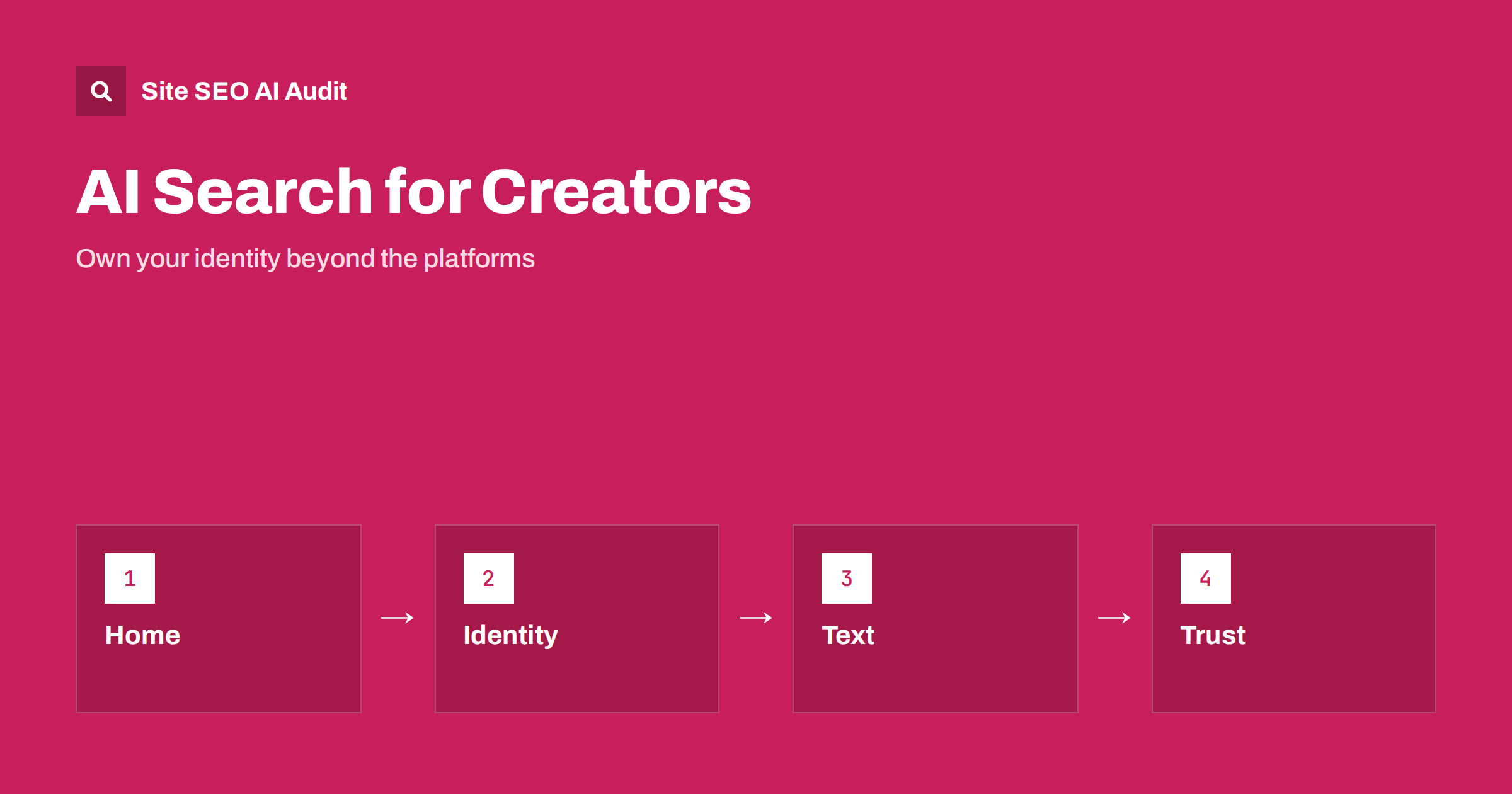
Short answer: Creators live on platforms that AI assistants cannot always read, so a personal website is the place where identity, expertise and work can be stated in text. To be recognised, a creator needs a clear name and description, an about page with real facts, written versions of key videos and posts, a press and partnership page, honest disclosure of sponsorships, consistent profiles across platforms and links from sites that mention the creator. The goal is that assistants can say who you are and what you are known for, correctly.
For creators, discovery has moved from a single feed to many places: video platforms, social networks, newsletters, podcasts and now AI answers. People ask assistants who to follow for a topic, which creator explains something well, how to contact a creator for a collaboration, or what a particular person is known for. If an assistant has nothing but fragments to go on, it may skip you, confuse you with someone of a similar name or repeat an old claim. Platforms are rented space: you do not control how they present you or what machines can read. A well-built website lets you state the facts yourself. This guide explains what to build and how to keep it accurate. For the general principles, see the guide to AI search for publishers and bloggers.
Build a home base that you own
A simple website with a clear structure is enough: a home page that says who you are and what you create, an about page, a page for each main topic or series, a contact page, a press and partnership page, and a place for written content. Use your name or brand consistently in titles, headings and the footer. Keep the site fast and readable on a phone, since most visitors arrive from social apps. Make the key pages plain HTML so that crawlers can read them without special tools, a point explained in the guide to JavaScript content and AI crawlers.
Link your platforms from the site and link back from each platform profile to the same address. These two-way links help systems connect the profiles to one person or brand. Use the same profile name, the same short description and the same photo style where you can.
State your identity and expertise clearly
Many creators have names that are shared with others or handles that differ between platforms. On your about page, write who you are in plain sentences: your full name or brand, what you make, for whom, since when, where you are based if you wish to share it, and what experience supports your work. Add facts that can be checked, such as publications, events, awards, education or professional background. Avoid vague claims like top creator or trusted expert unless you can back them up.
The approach follows the logic of entity recognition, which is covered in the guide to entity SEO and the guide to E-E-A-T and AI search. If you are a person rather than a company, the same ideas apply: a stable name, a consistent description and trustworthy sources that confirm them.
Turn videos, posts and episodes into readable pages
Machines read text far more easily than video or audio. For each important video, podcast episode or long post, publish a page with a short summary, the main points, key timestamps, a transcript or a cleaned version of it and links to related content. Do not paste raw auto-generated text full of errors; correct names and terms. Add the video embed or the audio player on the same page, with a clear title and description. The details are described in the guide to YouTube videos in AI search and the guide to podcast transcripts.
Write standalone guides too. If you often answer the same questions in comments or messages, collect the best answers on a page. A well-written guide on your own site can be cited, while a comment on a social post usually cannot.
Create a useful press and partnership page
Brands, journalists and event organisers look for a short, reliable source about you. A press page can include a short biography in two lengths, approved photos, the topics you cover, audience facts that you are willing to share and the date they were measured, past collaborations that you can name, and a clear way to make contact. Keep numbers honest and dated. Do not inflate follower counts or claim reach that you cannot document, since inaccurate claims can damage your reputation when checked.
The page also helps assistants answer questions such as how to contact a creator or what topics they cover. Keep it current, and link to your best work with stable addresses rather than temporary links.
Disclose sponsorships and affiliate links
Trust is the main asset of a creator. State clearly when content is paid, gifted or contains affiliate links, in line with the rules of your country and platform. On the website, explain your policy in a short page: how you choose partners, how you label sponsored content and how you keep editorial independence. Label each sponsored post at the top, not only in a footer. Mark paid links with the right attributes, as explained in the guide to nofollow, sponsored and UGC links.
If you publish reviews or comparisons with affiliate links, make the criteria visible and show real use. Thin pages that list products to earn commissions harm quality, which is discussed in the guide to affiliate content.
Keep your profiles consistent and watch for confusion
Check how your name appears across platforms, directories, interviews and event pages. Variations in spelling, an old handle that still appears or a profile that claims a different location can confuse systems. Ask the owners of sites that mention you to correct errors, and keep a short fact sheet that you can send. Search for your name in a few assistants from time to time and note what they say. If an answer is wrong, fix the source: the place where the wrong information came from is usually a page that can be corrected. The approach is similar to the guide to wrong information from AI about a business.
If your name is shared with a more famous person, add context in your description, such as your field and location, and use consistent wording everywhere, as described in the guide to brand name confusion in AI search.
Earn mentions and links from relevant places
Assistants draw on what others say about you. Interviews, guest appearances, joint projects, event pages, articles that cite your work and community discussions all help. Quality counts more than quantity: a mention from a respected outlet in your field is worth more than dozens from unrelated pages. When you are mentioned without a link, a polite request can help, and the topic is covered in the guide to unlinked brand mentions. Original work, such as a survey of your audience or a clear case study, tends to be cited, as in the guide to original research and AI citations.
Show your work with context
A gallery of posts tells visitors little without context. For each major project, campaign or series, write a short page that explains the goal, what you made, what you learned and what happened, with honest numbers if you wish to share them. If you worked with a brand and have permission, name it and describe your role. If you cannot name the partner, describe the type of project. A portfolio built this way helps a company decide whether to work with you, and gives an assistant concrete facts to use when asked what you are known for. The structure follows the guide to portfolio and gallery pages.
Keep the best examples near the top and retire pages that no longer represent you. Creators change direction, and a site that still describes an old niche will mislead people. Review the main pages twice a year, update the biography and remove claims that are no longer true. This small habit keeps the identity that machines read in line with the one that your audience knows.
Finally, consider accessibility. Add captions to videos, alt text to images and clear headings to pages. These help people with different needs, and they also give machines more text to understand.
Plan for newsletters and archives
If you send a newsletter, consider publishing a public archive with the best issues on your website. Make the pages indexable, give each a clear title and summary and link them to topic pages. Keep the signup form simple and visible, so that people who find an article can follow you. Details are in the guide to newsletter archives. A site that pulls together videos, articles and newsletters under clear topics lets visitors and assistants see the whole of your work.
Site SEO AI Audit crawls your website and checks status codes, titles, descriptions, headings, broken links, structured data, page speed and AI visibility settings such as AI crawlers in robots.txt, which helps you keep a creator website healthy and readable. It does not manage your social profiles or measure your audience. The first audit of up to 200 pages is free, and larger sites can see the pricing page.
Related reading
The bottom line
Own a clear, honest and readable home base, and let platforms point to it.
KKK
Do creators need a website if they have a large following?
Yes. A website gives you a stable, readable identity that assistants can cite and that does not depend on a platform.
Should I publish transcripts of my videos?
Yes, for key videos. Clean, readable text helps both people and machines to understand and cite the content.
How should I label sponsored content?
Clearly and near the top, following local rules, and use the proper link attributes for paid and affiliate links.
What if an assistant describes me incorrectly?
Find the source of the error and correct it where possible, and make your own pages clear and consistent.
Is a press page necessary?
It is very useful. It gives journalists, brands and assistants a reliable summary of who you are and how to reach you.