ENEnglish
 LTLietuviškai
 DEDeutsch
 FRFrançais
 RUРусский
 ESEspañol
 PLPolski
 ITItaliano
 UKУкраїнська
 CSČeština
 PTPortuguês
 JA日本語
 LVLatviešu valoda
 ETEesti
 HUMagyar
 IDBahasa Indonesia
 TRTürkçe
 HIहिन्दी
 ELΕλληνικά
 ARالعربية
 THไทย
 VITiếng Việt
 RORomână
 MSBahasa Melayu
 BNবাংলা
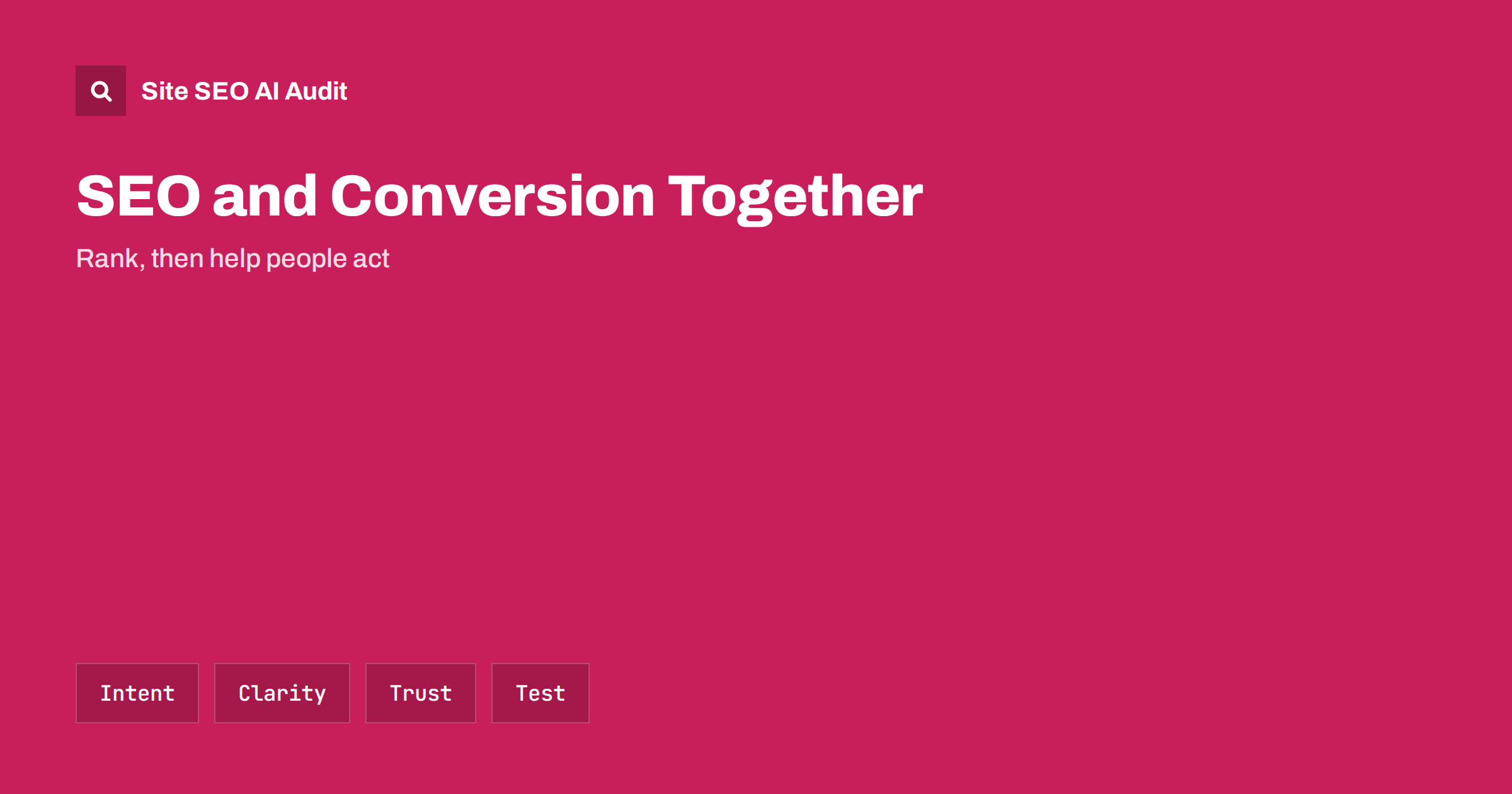
Short answer: SEO brings the right people to a page, and conversion work helps them act once they arrive, so the two goals usually support each other. Conflicts appear when text is written only for keywords, when design hides content, when tests change many things at once or when speed is sacrificed for effects. Start from search intent, make the offer and the next step clear, show proof, keep the page fast and test changes carefully.
Teams often treat search optimisation and conversion optimisation as separate projects, with separate owners and separate reports. One group wants more content, the other wants fewer distractions. One adds keywords, the other removes text. The conflict is mostly false. A page that matches what the searcher wants, explains the offer plainly and removes friction will usually do better on both measures. This guide shows where the two aims meet, where they truly conflict and how to resolve those cases. It builds on the guide to search intent.
Start with intent
People searching for a comparison want to compare, people searching for a price want a price, and people searching for a how-to want steps. A page that answers a different need will lose both ranking and sales, because search engines learn from behaviour and visitors leave. Before you change anything, write down what the searcher wants and what you want them to do, and check that the page serves the first before it asks for the second. A guide that is interrupted by an aggressive sales form will convert worse than a guide with a calm, relevant offer after the useful part.
Make the offer clear in the first screen
Visitors decide quickly whether a page is for them. The first screen should state what the page is about, who it is for and what the main action is. Use a heading that matches the search, a short supporting sentence and a visible button or link. This is good for conversion, and it is also what search engines and AI answers look for, as explained in the guide to above-the-fold content. Do not fill the top with large decorative images that push all text below the fold, and do not hide the offer in a slider.
Write for people, structure for machines
Text that is stuffed with keywords reads badly and converts badly. Text that answers real questions, uses clear words and explains the benefits and limits of the offer works better for readers and for search. Use headings, lists and short paragraphs so that people can scan, and let the same structure help machines understand the page. If the page needs a lot of information to rank, such as a comparison table or a detailed explanation, put the key points first and the details lower, so that quick visitors act and careful visitors read on. The guide to fixing keyword stuffing shows how to edit.
Show proof near the decision
Trust signals support conversion and also match what search engines look for in quality pages: real reviews, named experts, clear contact details, guarantees that you actually offer, case descriptions and honest limits. Place them near the action, not in a distant corner. Do not invent testimonials or ratings, and do not exaggerate, since false claims create legal and reputation risk and can lead to loss of trust. The article on E-E-A-T and AI search explains how experience and reliability are judged.
Keep the page fast and stable
Slow pages lose visitors before they see the offer, and unstable layouts cause mis-taps. Speed is therefore a point where SEO and conversion agree completely. Compress images, limit scripts, load third-party tags late and test on a mid-range phone. Be careful with conversion tools that add heavy scripts, such as testing platforms, chat widgets and heat maps. Check their effect on loading and on interaction speed before you add them, as the guide to third-party scripts and speed explains.
Where the two goals really conflict
Some conflicts are real. A designer may want to remove text to simplify the page, while the SEO owner needs text to match the topic. A sales team may want to gate information behind a form, while the search team wants it public. A marketer may want pop-ups to capture emails, while search guidelines discourage intrusive overlays on mobile. Resolve these cases with data and compromise: keep the text that answers questions and move the rest lower; show a summary publicly and gate the extra material; use a small banner or a delayed prompt instead of a full-screen block, as the guide to pop-ups and interstitials describes.
Test changes without breaking SEO
Run tests so that search engines see the same content as visitors. Do not hide the original from crawlers, do not redirect crawlers to a variant and do not leave tests running for months. Where a test splits traffic between addresses, use temporary redirects and a canonical tag that points to the original, and remove them after the test. Change one important element at a time, such as a heading or a button, so that you can tell what caused a difference. Record the date and the metrics before and after, because rankings can also move for reasons unrelated to your test.
Measure both sides together
Put search and conversion data in one report: impressions, clicks and position from Search Console, and sessions, engagement and conversions from analytics, per page. Pages with many impressions and few clicks need better titles and descriptions; pages with many clicks and few conversions need a better match between the promise and the content or a clearer action. Pages with few of either may need a different role. Looking at the whole path from search to sale shows where effort will pay off, and it prevents arguments based on one metric.
Be careful with small samples. A page with a few dozen conversions a month cannot support quick conclusions about a change, and seasonal patterns can mislead. Compare periods of the same length, include the same days of the week and note any promotions or outages. When the data is thin, rely on qualitative checks such as watching recorded sessions, reading customer questions and asking the sales team which objections they hear most.
Agree on shared goals. When the search team is measured on traffic and the conversion team on sales, each may optimise against the other. A shared target, such as qualified leads or revenue from organic search, aligns the work. Hold a short review each month where both teams look at the same pages and decide changes together. Many fixes, such as clearer headings and faster pages, need no negotiation at all.
Here is an example of the two goals working together. A company sells training courses and has a page titled with the course name. It ranks on page two. The page opens with a long company history, then the course outline, then a price at the bottom. Visitors who arrive leave without scrolling. The team rewrites the opening to say who the course is for, how long it lasts, what the price is and when the next date is, with a booking button. The history moves to the about page. The title now includes the course level and format. Over the next weeks, the page earns better clicks from search, because the title is clearer, and a larger share of visitors book, because the answer is at the top. Neither change needed trickery.
Another example concerns category pages in shops. SEO advice often asks for a block of descriptive text on a category page, while conversion advice asks for products at the top. The two aims can be combined: place the products first, with a short introduction above them, and put the longer helpful text, such as a buying guide and answers to common questions, below the products. Visitors who want to buy see products at once, and those who want help scroll to the guide. Search engines see both. The compromise respects the needs of both groups instead of choosing one.
When you plan work, list ideas from both teams on one sheet and rate each by the effort needed and the likely effect on visits, on actions and on risk. Do the ideas that help both first, such as faster pages, clearer headings, better images and honest descriptions. Discuss the ones that conflict, and choose a test that can show which way is better for your audience. Revisit decisions after the results arrive, and write down what you learned so that the next project starts from evidence.
Site SEO AI Audit crawls your site and checks titles, descriptions, headings, page speed indicators, broken links, structured data and thin pages, so you can find the technical and on-page issues that hold back both rankings and sales. It does not run tests or measure conversion. The first audit of up to 200 pages is free; larger sites can see the pricing page.
Related reading
The bottom line
Match the page to search intent, state the offer and next step clearly, show real proof, keep it fast, and test one change at a time while reading search and sales data together.
FAQ
Does improving conversion help rankings?
Not directly, but clearer, faster pages that satisfy visitors tend to perform better in search too.
Should I remove text to increase conversions?
Not automatically. Remove filler, but keep text that answers questions and matches the search intent.
Can A/B tests hurt SEO?
Only if they cloak content or run for too long. Show crawlers the same content and end tests promptly.
Which page should I start with?
Start with pages that have many impressions or visits and weak clicks or conversions.
How long should I wait before judging a change?
Wait for enough data, often several weeks, and compare equal periods.