ENEnglish
 LTLietuviškai
 DEDeutsch
 FRFrançais
 RUРусский
 ESEspañol
 PLPolski
 ITItaliano
 UKУкраїнська
 CSČeština
 PTPortuguês
 JA日本語
 LVLatviešu valoda
 ETEesti
 HUMagyar
 IDBahasa Indonesia
 TRTürkçe
 HIहिन्दी
 ELΕλληνικά
 ARالعربية
 THไทย
 VITiếng Việt
 RORomână
 MSBahasa Melayu
 BNবাংলা
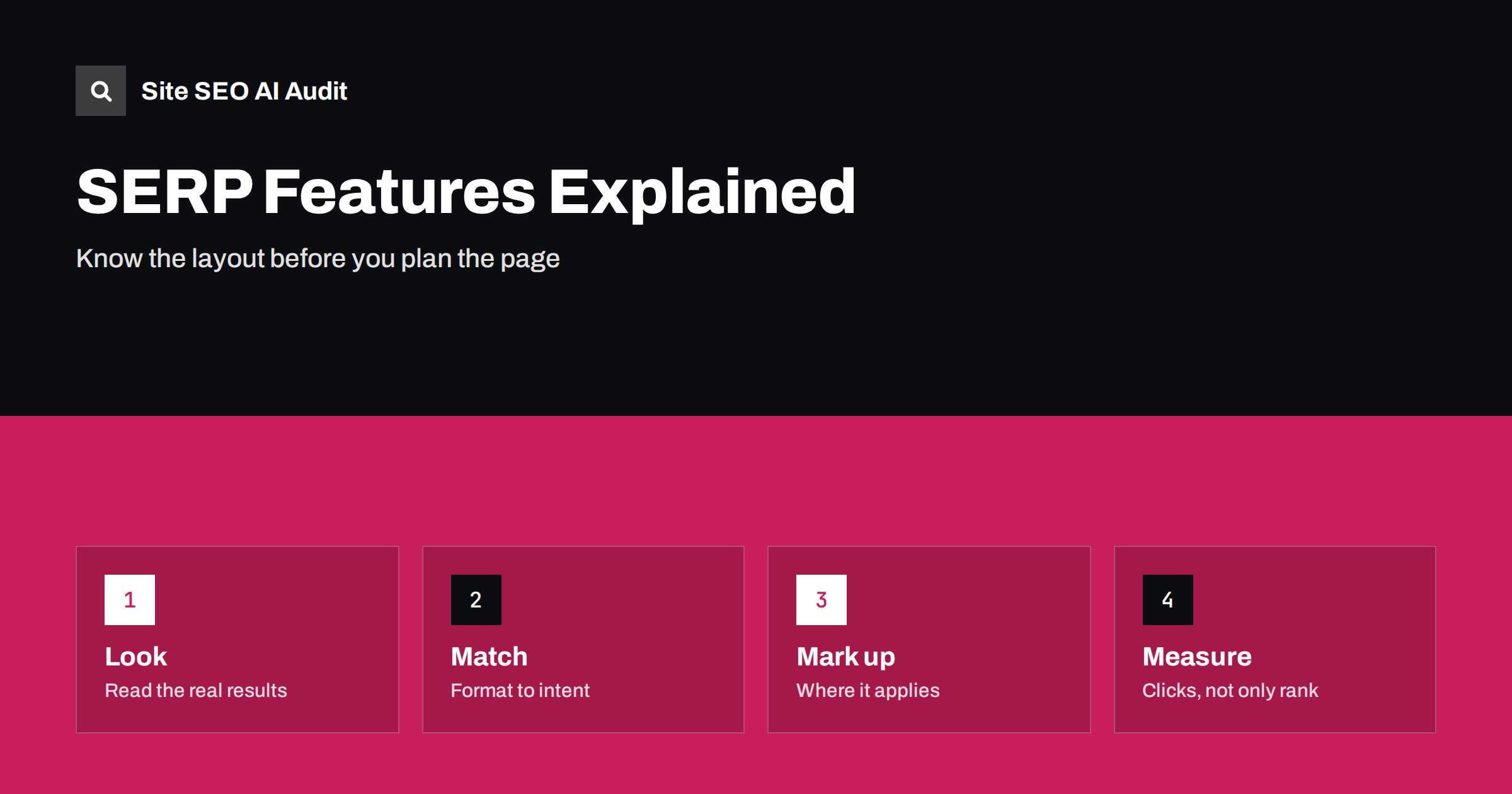
Short answer: A search results page is no longer a plain list of ten links. It can include featured snippets, people-also-ask boxes, image and video results, local packs, shopping results, news, sitelinks and AI-generated answers. Which features appear depends on the query. Before you plan a page, search for its main query, note the features shown and choose the format that fits: a short answer, a video, a product page or a local listing. Then measure clicks, not just position.
Two pages can both rank first and receive very different traffic, because one sits under a large answer box and a map while the other is the first thing people see. Understanding the layout of results for your key queries helps you set realistic goals, pick the right content format and avoid spending effort on features that do not exist for your topic. This guide describes the common features, what they mean for a site owner and how to use them in planning. For a related look at answers that need no click, see the guide to zero-click search.
Why the layout matters
Search engines try to match the format of the result to the intent of the query. A question may get a short answer. A search for a place may get a map. A search for a product may get shopping results. A search for a how-to may get videos. If you write a long article for a query whose results are dominated by a map and local listings, you will compete on the wrong ground. If you publish a short definition for a query that shows long guides, you may be too thin. Looking at the real results is the cheapest research you can do, and it complements the ideas in the guide to search intent.
Features also change over time and differ by country, language and device. Check the results in the market and language you serve, using a clean browser without personalised settings, and repeat the check every few months.
Answer features
Featured snippets show a short extract from a page at the top, often as a paragraph, list or table. People-also-ask boxes show related questions that expand into short answers. Both reward pages that state a clear answer near the top and organise related questions under headings. You cannot force them, and the page chosen may change, but a direct answer followed by detail gives you a fair chance. See the guide to featured snippets and the guide to people-also-ask.
AI-generated overviews and assistant answers sit in the same area and can reduce clicks for simple questions. They quote and link sources. Pages with clear structure, specific facts and visible dates are easier to use, as described in the guide to AI Overviews sources.
Media features
Image results and image packs appear for visual queries such as products, places and designs. Video results and carousels appear for how-to, review and entertainment queries. For these, the format of your asset matters as much as the text. Provide original images with descriptive file names, alt text and captions, as explained in the guide to image SEO, and publish videos on pages that explain them, as covered in the guide to video SEO. Visual search tools add another route, described in the guide to visual search.
Do not add media only to chase a feature. A video that repeats the text may add nothing, while a short demonstration of a hard step may be exactly what people want.
Local and shopping features
For queries with local intent, a map and a list of businesses often appear above ordinary results. These listings depend heavily on business profiles, reviews, distance and relevance, and your website supports them with accurate, consistent details. See the guide to local business and AI search. For product queries, shopping results show images, prices and ratings from merchant data and structured markup. They need accurate product data, as described in the guide to product markup.
If your query is dominated by these features, a normal blog article is unlikely to take much traffic. Consider whether a product page, a location page or a business profile is the right asset.
Rich results and snippets from your own markup
Some features come from structured data on your pages: review stars, recipe details, event dates, product price and availability or breadcrumbs. They make your listing larger or more informative and can improve the click rate. Search engines apply their own rules and may remove or limit some of them, so use the markup that matches your content and your eligibility, and keep it identical to the visible page. For ratings, see the guide to review markup, and for the wider picture the guide to structured data.
Your title and description also shape the snippet. Search engines often rewrite them, as covered in the guide to how Google picks snippet text, but a clear and specific title still helps.
Sitelinks, news and other extras
Sitelinks list extra links under the main result for brand searches. They are generated automatically from your structure and navigation, as explained in the guide to sitelinks. News and top stories appear for current events and need an active news-style publication, as described in the guide to top stories. Other features include knowledge panels, discussion and forum results, tweets and short videos. You do not need to optimise for all of them. Pick those that fit your topic.
How to use this in practice
Build a small table for your most important queries. For each one, note the features that appear, the formats of the pages that rank and the kind of intent they suggest. Then decide: write a page that fits, improve an existing page or skip the query. This approach also helps you decide what to measure. For a query with a large answer box, impressions may be high and clicks low, as discussed in the guide to low click rates, and that may be normal.
In Search Console, filter the performance report by search appearance where available, and compare clicks and click rate for pages with and without a feature. Track changes over time and avoid reading too much into a single week. Remember that the goal is useful visits and results for your business, not a particular box.
Common mistakes
The first mistake is chasing a feature that does not suit the page. Adding review markup to a page with no genuine reviews, or forcing a question and answer format onto a page that is really a product page, can lead to markup being ignored or even to manual action. The second mistake is copying what a competitor seems to do without checking the intent. A feature that appears for a rival page may be there because of its brand, its reviews or its authority, not because of a trick in the code. The third mistake is ignoring the mobile layout, where features take much more space and organic results may start far below the first screen. Always look at both phone and desktop results.
Another mistake is to measure only average position. A position that looks excellent can hide a poor click rate when several features sit above it. Look at clicks, click rate and conversions for the pages that matter, and compare them with pages that rank for queries with fewer features.
A simple review routine
Once a quarter, pick your ten most important queries and search for each in the right country and language. Record the features, the types of page that rank and the angle each page takes. Compare this with your own page and write one action per query: add a direct answer, add a comparison, add a video, fix the markup, improve the listing in a business profile or leave it as it is. Keep the notes, because over time they show how the results pages for your market are changing, and they make planning conversations easier for editors and developers who do not follow search closely.
Here is a short example. A hotel wrote a long article for the query of its town plus the word hotels. The results were dominated by a map, a travel booking module and large aggregators, so the article received almost no clicks despite a decent rank. The owner changed the plan: improved the business profile, added clear room and location pages, collected genuine reviews and wrote a guide to the area for a different, informational query where the results showed articles. Traffic and enquiries improved.
A second example is a recipe site that discovered that its top queries showed image and video features. It added step photos with proper alt text and a short video for the hardest recipes, and its listings gained more visibility.
Site SEO AI Audit crawls your pages and checks titles, descriptions, headings, image alt text, structured data, broken links and page speed, which supports the basics that SERP features depend on. It does not show live search results or track positions. The first audit of up to 200 pages is free, and larger sites can see the pricing page.
Related reading
- FAQ Sections That AI Answers Can Quote
- Recipe Markup: A Practical Guide
- Content Gap Analysis for SEO
The bottom line
Look at the real results for each key query, match your format to the features shown and judge success by useful visits rather than rank alone.
GYIK
What are SERP features?
They are elements on the results page other than plain links, such as answer boxes, images, videos, maps, shopping results and AI answers.
Can I choose which features my page gets?
Not directly. You can match the format and structure the search engine tends to show and use accurate markup where it applies.
Do features reduce clicks?
Sometimes. Answer boxes and AI answers can satisfy simple queries, so impressions may rise while clicks fall.
Which features matter for a small local business?
Usually the local pack and map listings, reviews, sitelinks for brand searches and sometimes image results.
How often should I check the layout of results?
Every few months for key queries, and after major changes in the search engine or in your market.