ENEnglish
 LTLietuviškai
 DEDeutsch
 FRFrançais
 RUРусский
 ESEspañol
 PLPolski
 ITItaliano
 UKУкраїнська
 CSČeština
 PTPortuguês
 JA日本語
 LVLatviešu valoda
 ETEesti
 HUMagyar
 IDBahasa Indonesia
 TRTürkçe
 HIहिन्दी
 ELΕλληνικά
 ARالعربية
 THไทย
 VITiếng Việt
 RORomână
 MSBahasa Melayu
 BNবাংলা
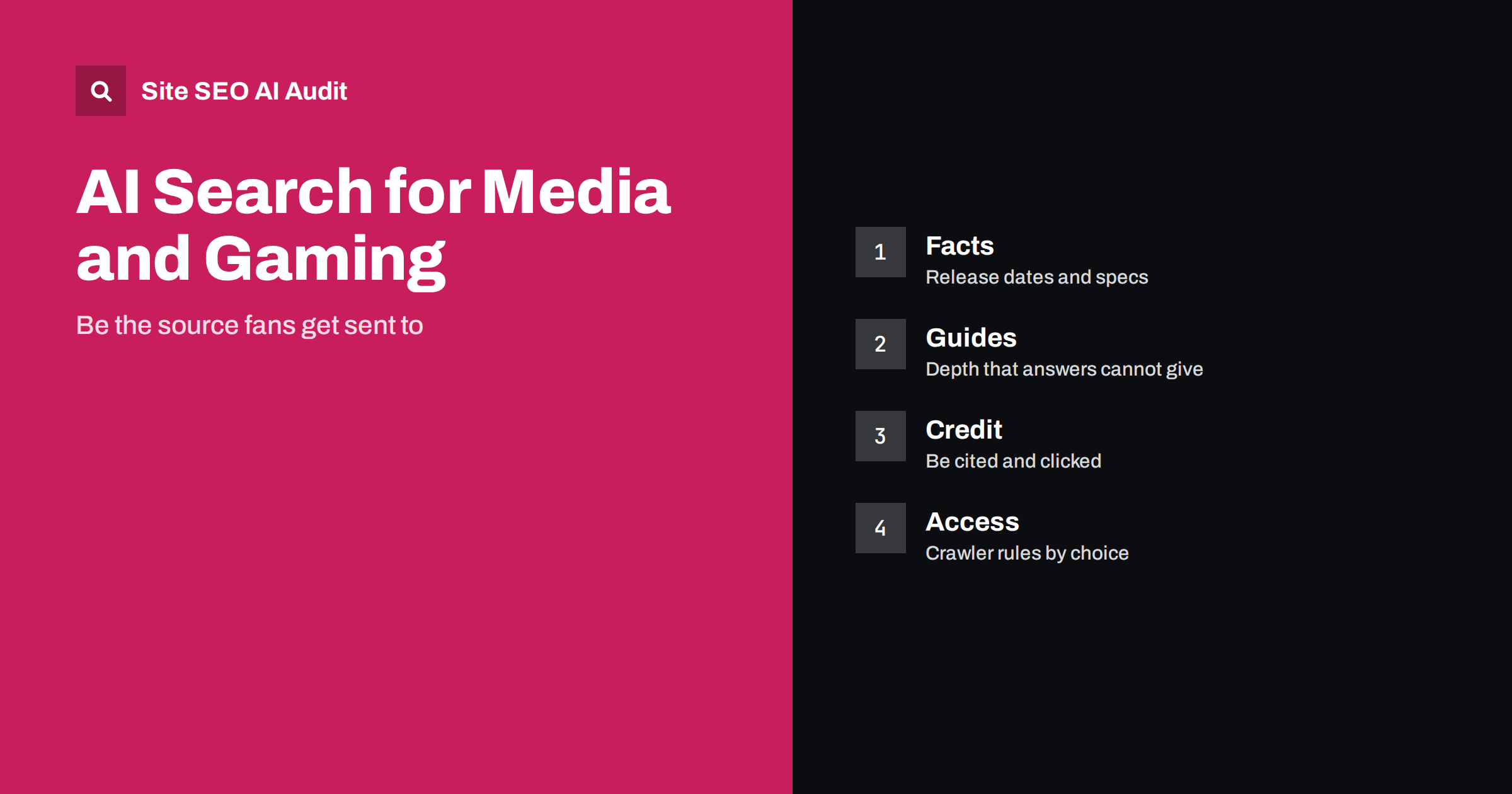
Short answer: Media, entertainment and gaming sites win citations in AI answers by being the accurate, up-to-date source for facts people ask about, such as release dates, cast, schedules, patch notes and platform support, and by offering depth that a short summary cannot replace: original reviews, tested guides, interviews and community knowledge. Mark up dates and entities, keep pages fresh and well structured, decide deliberately which crawlers to allow and give readers a reason to click through.
Entertainment is one of the most searched areas on the web, and a large share of questions are simple: when does the season start, which platforms support this game, who plays this character, what changed in the latest update. Assistants answer these directly, which can reduce clicks to publishers. At the same time, fans still want opinions, guides, communities and fresh news, which a summary cannot provide. The task for a media or gaming site is to be the trusted source behind the answer and the destination for what comes next. This guide covers both. For the background, read how AI search engines work.
Know which questions get answered without a click
Sort your content into three groups. The first group is quick facts: dates, times, lists, scores, specifications and requirements. Answer engines handle these well, so your aim is to be the cited source and to add context that makes a click worthwhile. The second is evaluation: reviews, comparisons, recommendations and rankings. Here your original testing and judgement matter and an assistant can only summarise them. The third is experience: long guides, walkthroughs, analysis, interviews, community discussion and live coverage. These keep people on your site. Plan your editorial calendar so that each fact page links to deeper pieces, and each deeper piece is easy to find from the facts. The trend toward answers without clicks is described in zero-click search.
A simple audit helps. List your fifty most visited pages and mark each as fact, evaluation or experience. Then ask the matching questions in several answer engines and see which pages are cited, which are summarised without credit and which are ignored. Pages in the first group may need clearer facts and stronger structure. Pages in the second may need a visible method, a named author and original evidence. Pages in the third may need better internal links and stronger entry points from the fact pages. This short exercise turns a vague worry about lost clicks into a concrete editorial plan with an owner for each page type.
Be the reliable source for facts
Accuracy and freshness decide who is cited for factual questions. Give each title, show, game, event or team a clear page with the essential facts at the top in plain text: release or air date, platforms, developer or studio, cast and credits, genre, age rating where it applies and the official source for each fact. Show the date of the last update and revise the page when the facts change, as discussed in content dates and freshness. When information is rumoured, label it clearly and separate it from confirmed information. Wrong dates and outdated requirements are quickly repeated by assistants, and they damage your credibility with readers. Use tables for specifications and schedules where a table is natural, and keep them in HTML rather than images.
Use structured data and clear entities
Structured data helps systems identify what a page is about. Mark up articles with author, dates and image, videos where you publish them, events with dates and places, reviews with the item reviewed and the rating you give and, where appropriate, the relevant entity types for movies, series, music, games or software. The markup must match visible content, and ratings must be your own, not copied from elsewhere. Build entity consistency: use the same official names, spellings and identifiers across pages, link related pages together such as a game, its updates, its guides and its reviews and link to authoritative profiles for the entities where this helps. See structured data and AI search and entity SEO for AI search.
Publish what a summary cannot replace
An assistant can condense a review into a sentence, but not the hours of play that went into it. Invest in original material: first-hand reviews with clear criteria, benchmark results, tested builds, route maps, tier lists with explained reasoning, interviews, behind-the-scenes reports and data you collected yourself. State the method, show evidence such as screenshots, footage or measurements and publish the author’s name and experience. Original research and tested results are more likely to be cited, as discussed in original research and AI citations. Update evergreen guides after each patch or season, and keep the old version accessible if it matters for readers who still play an earlier version.
Write answer-first, then go deeper
Open pages with a direct answer in the first sentences, and then give readers a reason to continue: more detail, steps, analysis and links. A game guide might begin with the quick solution and then explain the reasoning, alternatives and common mistakes. A news story should state the main fact first, then context and sources. This structure serves both people who want a quick answer and answer engines that extract a passage. Use clear question-style subheadings where people search that way, and add an FAQ block for repeated questions. See answer-first introductions and FAQ sections for AI answers. Avoid clickbait that withholds the answer, since both readers and quality systems tend to penalise it.
Community, video and social content
Entertainment audiences gather in communities, on video platforms and in forums, and assistants frequently draw on these sources. If your brand runs a forum, wiki or comment section, make sure that it is moderated, that useful threads are crawlable and that thin or spammy pages are kept out of the index. Publish video with transcripts and descriptive titles, and embed it on pages that explain the topic in text, as covered in YouTube videos and AI search and forums and communities in AI answers. Encourage contributions that add real information, such as verified tips and corrections, and credit contributors. A healthy community is a signal that people trust your site.
Decide your crawler policy
Media companies often have commercial reasons to control how content is used, so make crawler decisions on purpose. List the crawlers that fetch pages for search, those that fetch pages when a user asks a question and those that collect material for training. Allow what brings visibility, restrict what conflicts with your licensing and write clear rules in robots.txt, which you test regularly. Remember that blocking a crawler also means not being cited by the system that uses it. Check content delivery and firewall settings, since bot protection can block crawlers without your knowledge. Paywalls need care too, because crawlers can see only what you serve them. See AI crawlers and robots.txt, the training opt-out decision and paywalled content and AI search.
Turn citations into visits and loyalty
When an answer cites you, the visitor who clicks has a specific need. Make sure the landing page delivers it quickly, then offer a next step: a related guide, a newsletter signup, a community, a tool or a live page. Measure the referrals from answer engines in your analytics and compare their engagement with other sources, using tracking AI referral traffic in GA4. Build direct relationships through newsletters, apps and accounts so that your audience does not depend on one discovery channel. Keep ads and pop-ups restrained on landing pages, because intrusive layouts increase bounce and reduce trust, as discussed in popups and interstitials.
Monitor and correct
Each month, ask a set of fan questions about your titles and topics: release dates, specifications, best guides, review summaries and comparisons. Record whether you are cited, whether the facts are correct and which competitors appear. Fix errors at the source by updating your pages, and report wrong third-party information where a channel exists. Keep a log, review the pages that lose citations and refresh them. Use the AI search visibility checklist as a monthly routine.
Site SEO AI Audit crawls your site, checks status codes, titles, structured data, images, orphan pages and AI crawler rules, and lists the fixes ranked by the points they add. The first audit of up to 200 pages is free; larger sites can see the pricing page.
Related reading
- AI Search for Publishers and Bloggers
- Google News and Top Stories SEO
- Podcast SEO and Transcripts
- Video SEO for Embedded Videos
The bottom line
Entertainment sites should be the accurate source for facts and the best place for depth. Keep fact pages current and marked up, publish original reviews and guides, structure pages answer-first, decide the crawler policy deliberately and give visitors from answers a reason to stay.
FAQ
Will AI answers take all traffic from entertainment sites?
They reduce clicks for simple facts, but fans still look for opinions, guides and community. Focus on original content and make fact pages worth clicking through.
How do I keep game and release information fresh?
Assign an owner to each major title, show the last updated date and revise pages after patches, announcements and schedule changes. Label rumours clearly.
Should I block AI crawlers to protect content?
That depends on your licensing and business model. Blocking also removes you from the answers that rely on those crawlers, so decide per crawler and test the rules.
Does structured data help entertainment pages?
It helps systems understand the entity, dates, authors and ratings, provided that the markup matches visible content and is valid.
How can I measure visits from answer engines?
Check referral sources in your analytics, tag known referrers and compare engagement and conversions with search and social visits.