ENEnglish
 LTLietuviškai
 DEDeutsch
 FRFrançais
 RUРусский
 ESEspañol
 PLPolski
 ITItaliano
 UKУкраїнська
 CSČeština
 PTPortuguês
 JA日本語
 LVLatviešu valoda
 ETEesti
 HUMagyar
 IDBahasa Indonesia
 TRTürkçe
 HIहिन्दी
 ELΕλληνικά
 ARالعربية
 THไทย
 VITiếng Việt
 RORomână
 MSBahasa Melayu
 BNবাংলা
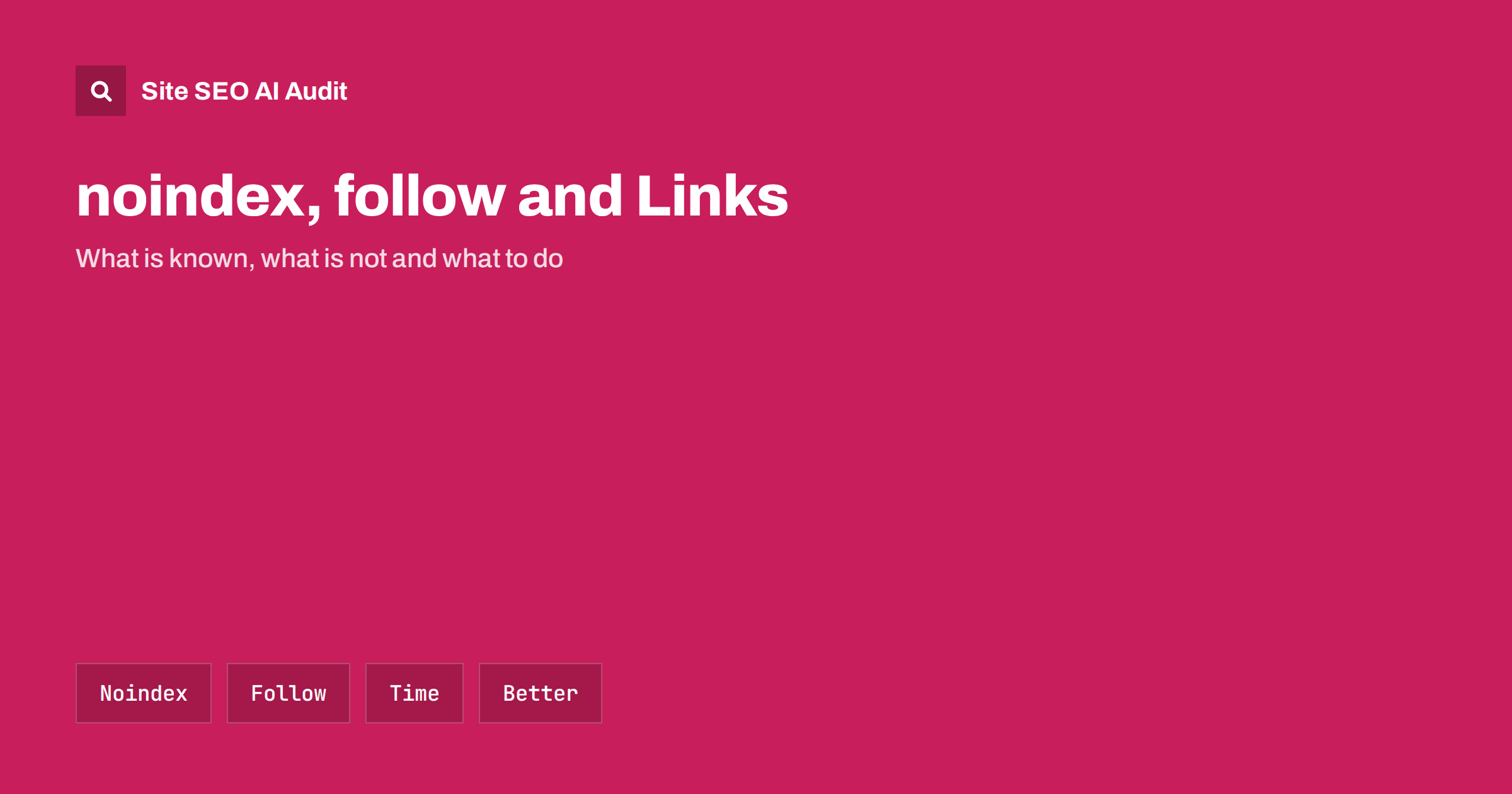
Short answer: A page with noindex, follow asks search engines not to show it in results while still following its links. For a while this works as intended. But search engines have said that a page left on noindex for a long time may eventually be treated as if its links are not followed, so you should not rely on it to pass link value for years. If a page must keep supporting other pages, it is safer to index it, merge it or link to the targets from other pages.
The combination of noindex and follow is one of the oldest tricks in technical SEO. It sounds ideal: keep thin pages such as filtered lists, tag pages or internal search results out of the index, but let crawlers pass through them to reach the products or articles they list. In practice, the situation is more nuanced. This guide explains what each directive does, what search engines have said and how to design a site that does not depend on the combination. For the basic difference between noindex and blocking, see the guide to noindex and disallow.
What the directives mean
Noindex tells a search engine not to keep the page in its index, so it does not appear in results. Follow tells it that the links on the page may be followed and may pass signals to the pages they point to. Follow is the default, so writing it is optional: a page with only noindex is also followed unless nofollow is added. The directives can be placed in a robots meta tag in the page head, or sent in an HTTP header, as explained in the guide to the X-Robots-Tag header.
It is important to separate three ideas that are often mixed up: being crawled, being indexed and passing signals. A page can be crawled but not indexed. A page can be indexed but have all its links nofollowed. And a page that is neither indexed nor trusted for a long time may stop being visited so often.
What search engines have said
Representatives of Google have explained that when a page stays on noindex for a long time, it is crawled less and less often, and over time it may be handled like a page whose links are not followed. In other words, the follow part of the combination is not a permanent promise. The wording has varied, and details of the systems are not public, so treat the exact timing as unknown.
The practical lesson is simple. Short-term use is fine, for example while a section is being cleaned up. Long-term dependence on links from noindexed pages is risky. If those links are the only route to important pages, the pages may become hard to reach and may even drop out of the index, which is a typical cause of orphan pages, covered in the guide to orphan pages.
Where the combination is used
Common cases include tag and category archives with little unique content, internal search result pages, filtered product lists, paginated archives some owners prefer not to index, thank-you pages and member areas. The reasons are mostly sound: these pages are not useful in search results, and they could cause duplicates. The question is whether they must also serve as crawl paths.
For archives, see the guide to tag and category pages. For result pages that people create by searching, see the guide to internal search pages. For pages that exist only after a form is sent, see the guide to thank-you pages, where no links need to be passed at all.
Give important pages other routes
The safest design makes sure that every page you want to rank is linked from at least one indexed page that is crawled often: the home page, a category page, a hub article or a sitemap page. If a noindexed list is the only way to reach a product, add a link from an indexed page, or make the list worth indexing. Good internal linking is the better foundation, as described in the guide to internal linking strategy and the guide on how link equity flows.
Also include the important pages in an XML sitemap. A sitemap does not replace links, but it gives crawlers a second route and helps you see which pages are found, as discussed in the guide to XML sitemap best practices.
Alternatives to consider
Depending on the situation, one of these options is often better than a long-term noindex, follow.
Index the page and improve it. If a category or tag page can be made useful, with a short introduction, a clear selection and unique value, it may deserve to rank. Merge or remove the page. If it has no purpose, redirect it to the best alternative or delete it, using the right status code. Use a canonical tag to point near-duplicates to the main version, as explained in the guide to canonical tags, remembering that it is a hint. Block crawling with robots.txt for areas such as internal search or endless filter combinations, when the pages need no link signals at all and should not use crawling capacity, as described in the guide to robots.txt.
Each option has a trade-off. A robots.txt block stops crawlers from seeing a noindex tag and from following any links. A canonical tag may be ignored. A redirect removes the page for visitors too. Choose according to what the page does for people.
Mistakes to avoid
Do not combine noindex with a robots.txt disallow for the same page, because the crawler cannot see the noindex tag if it cannot fetch the page. Do not add noindex to pages that are in your sitemap, since it sends mixed signals. Do not apply noindex to every paginated page and expect the products on them to remain well linked. On multilingual sites, do not noindex a language version that other versions point to with hreflang, as described in the guide to hreflang, noindex and robots conflicts.
When you want a page removed quickly, noindex is not the only tool. The options are compared in the guide to removing a page from Google.
How to check your site
List all pages with noindex using a crawl. For each group, ask what the page is for, whether other indexed pages link to the targets it lists and whether the noindex has been in place for months. Look at pages that are found only through noindexed pages, since they are the ones at risk. Check the index status in Search Console for those targets and see whether they are visited regularly.
Then decide for each group: keep, improve, merge or block. Write down the decision, because the reason is easily forgotten, and revisit it when you redesign the site.
Working with editors and developers
Noindex rules are often set by plugins, templates or release scripts, so the people who edit content may not know that a section is excluded. Document which page types carry the directive and why, and add a check to your release routine that confirms the tag is present where intended and absent everywhere else. A noindex that slips onto a live product page after a staging release can remove it from results within days, while a missing noindex on thin pages is a slow problem. Treat the first as an emergency and the second as routine clean-up.
When you review a new feature, ask three questions: should this page appear in search, how will visitors and crawlers reach the pages it links to and what will happen to those links if the page stays out of the index for a year. If the answer to the third question is uncomfortable, change the design before launch.
Here is a short example. A magazine marked its tag pages noindex, follow and used them as the only list of articles for many topics. After a year, several older articles were rarely crawled and dropped out of the index. The editors added topic hub pages that were indexed and linked from the menu, kept the tag pages out of the index and added related links inside articles. The older articles were crawled again within weeks.
A second example is a shop that noindexed all filtered lists but linked its products only from those lists and from the sitemap. After adding links from the main category pages to the best sellers and new products, the product pages were found more reliably.
Site SEO AI Audit crawls your website and reports noindex pages, canonical tags, orphan pages, click depth, internal links, redirect chains and status codes, so you can see which pages depend on noindexed routes. It does not decide your indexing strategy for you. The first audit of up to 200 pages is free, and larger sites can see the pricing page.
Related reading
The bottom line
Use noindex, follow only as a short-term tool, and make sure every important page is linked from indexed pages.
BUJ
Does noindex, follow pass link value?
It can at first, but search engines have said that long-term noindex pages may be treated as if their links are not followed.
Is follow needed in the tag?
No. Follow is the default, so a page with only noindex is also followed unless nofollow is added.
Should I use noindex or robots.txt for filter pages?
Use robots.txt for pages that should not be crawled at all, and noindex where the page must be fetched to see the instruction. Do not use both on the same page.
How long is too long for noindex?
There is no official number. Treat any noindex that lasts months as long-term and give linked pages other routes.
Can noindexed pages hurt my site?
Not by themselves. The risk is that important pages depend on them for links and become harder to find.