 ENEnglish
 LTLietuviškai
 DEDeutsch
 FRFrançais
 RUРусский
 ESEspañol
 PLPolski
 ITItaliano
 UKУкраїнська
 CSČeština
 PTPortuguês
 JA日本語
JA日本語 LVLatviešu valoda
 ETEesti
 HUMagyar
 IDBahasa Indonesia
 TRTürkçe
 HIहिन्दी
 ELΕλληνικά
 ARالعربية
 THไทย
THไทย VITiếng Việt
 RORomână
 MSBahasa Melayu
 BNবাংলা
#International SEO
International SEO is the work of making a website findable by searchers in more than one country or language. It covers how the site is structured, how language and country versions are signalled to search engines, and how content is adapted for each market. Typical tasks include choosing between country domains, subdomains and subfolders, adding hreflang annotations and keeping translations consistent. It also includes local keyword research, because people in different markets search with different words. Articles under this tag explain the concepts in plain language and show how to check and fix the most common problems.
 2026. gada 18. sept. · Lasīšanas laiks: 8 min
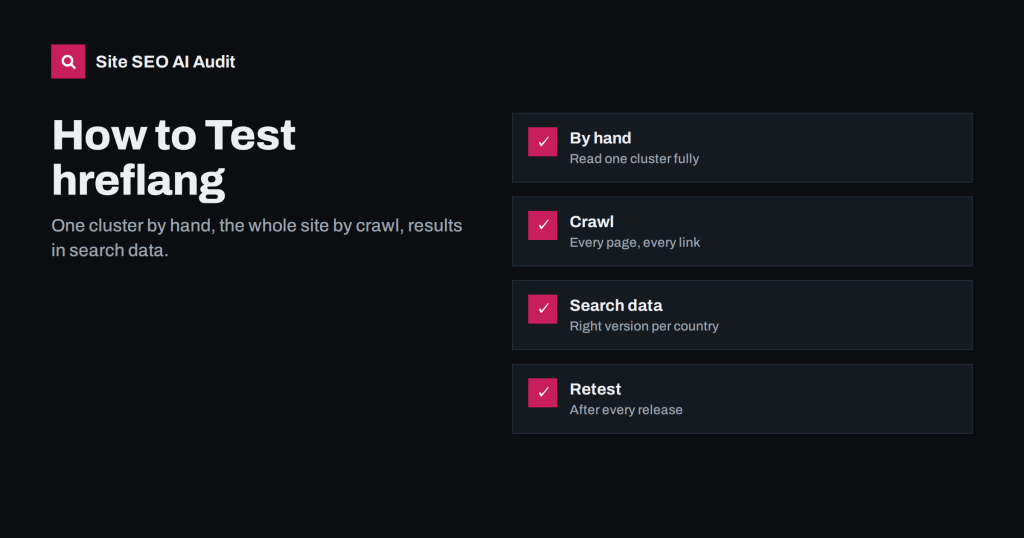
How to Test hreflang: Manual Checks, Crawls and Search Data
A practical way to test hreflang: check one cluster by hand, validate the site with a crawl, confirm the effect in Search Console and…
 2026. gada 17. sept. · Lasīšanas laiks: 7 min
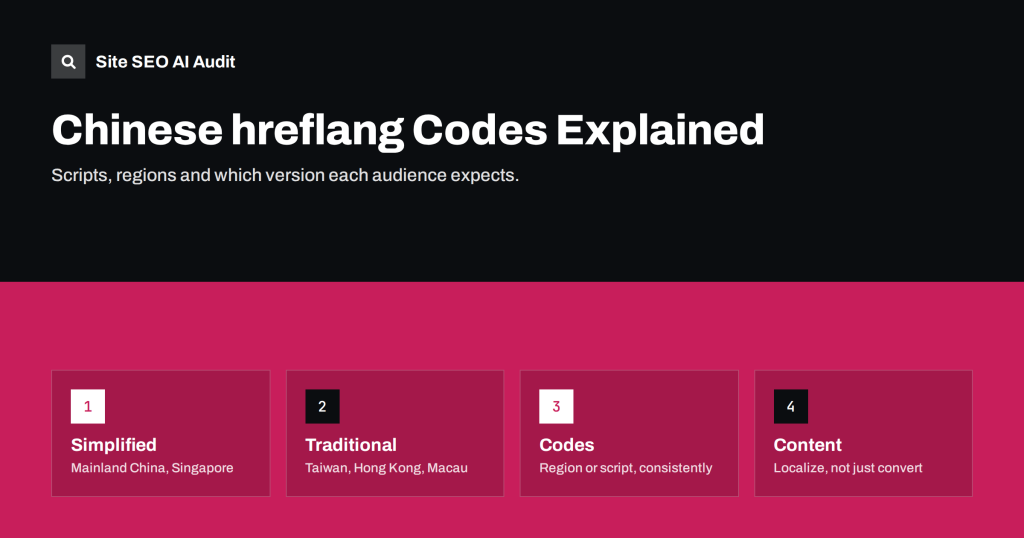
Chinese hreflang Codes: Simplified, Traditional and Regions
How to target Chinese speakers with hreflang: zh-CN, zh-TW and zh-HK versus zh-Hans and zh-Hant, when to split versions, and what to know about…
 2026. gada 16. sept. · Lasīšanas laiks: 7 min
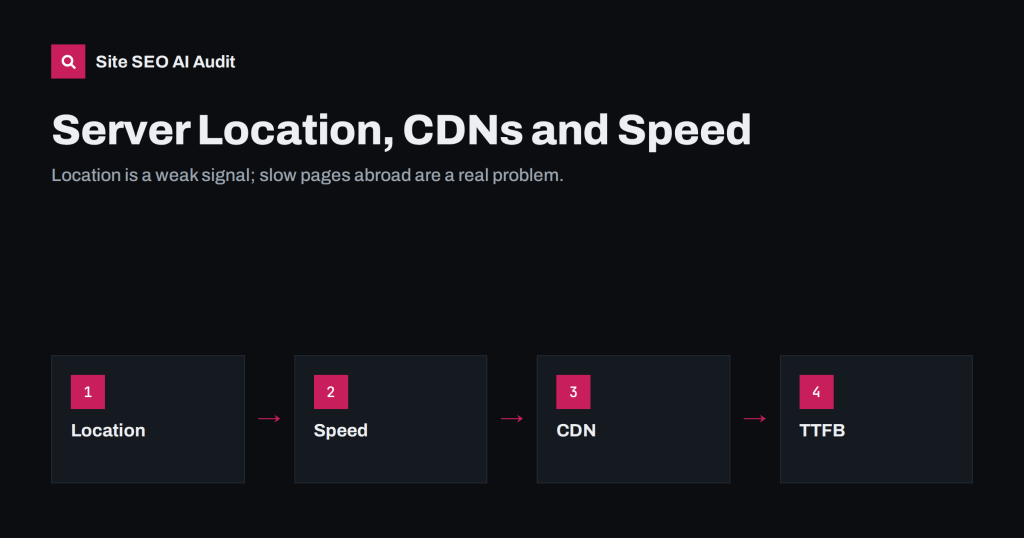
Server Location, CDNs and Speed for International SEO
Does server location matter for international SEO? Why speed for distant visitors matters more, how CDNs help, and what to check for each market…
 2026. gada 15. sept. · Lasīšanas laiks: 7 min
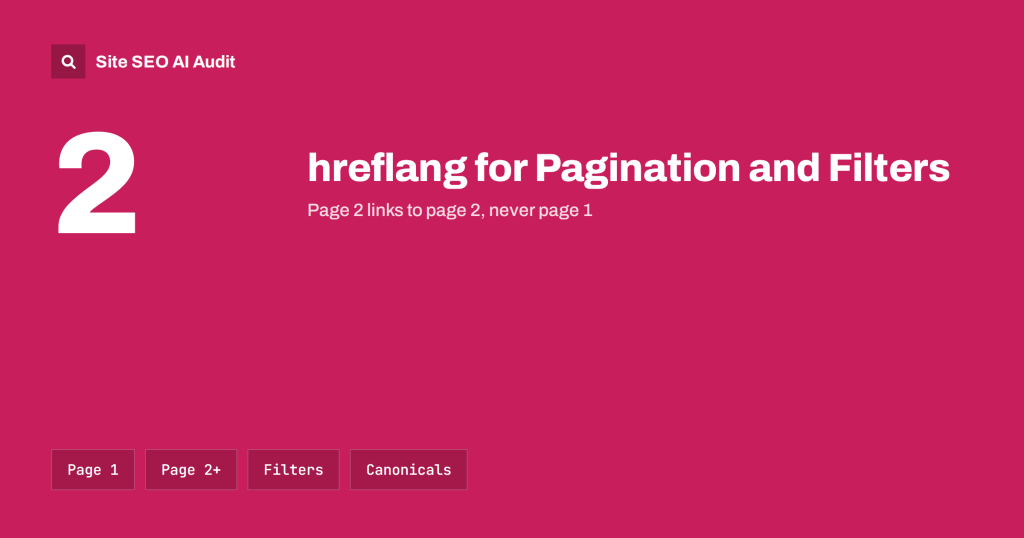
hreflang for Paginated, Filtered and Faceted Pages
How to handle hreflang on category pages with pagination, filters and sorting: when to annotate, how to match page 2 to page 2, and…
 2026. gada 14. sept. · Lasīšanas laiks: 8 min
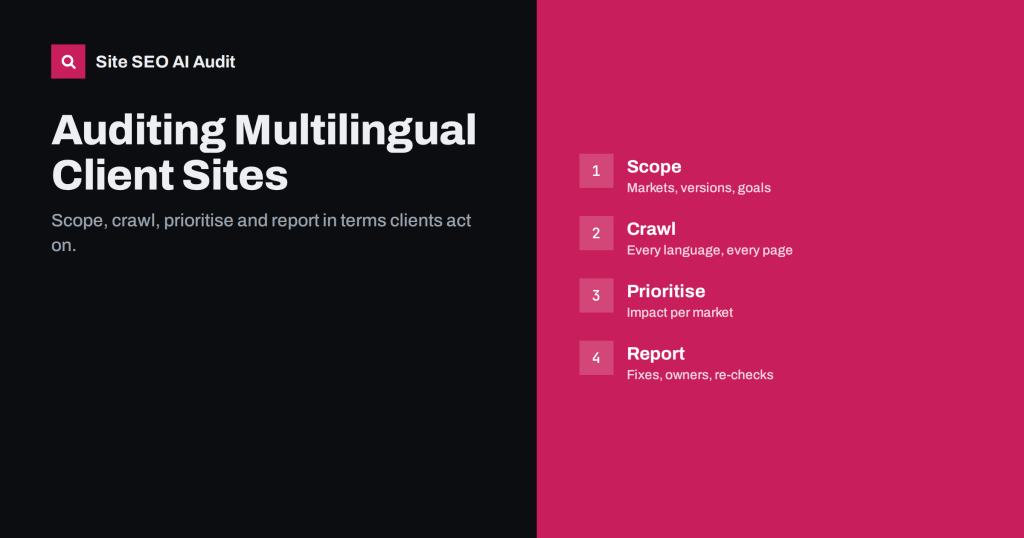
How Agencies Audit Multilingual Client Sites Step by Step
A practical process for agencies auditing a client's multilingual or multi-country site: scoping, crawling, prioritising fixes and reporting clearly.
 2026. gada 13. sept. · Lasīšanas laiks: 8 min
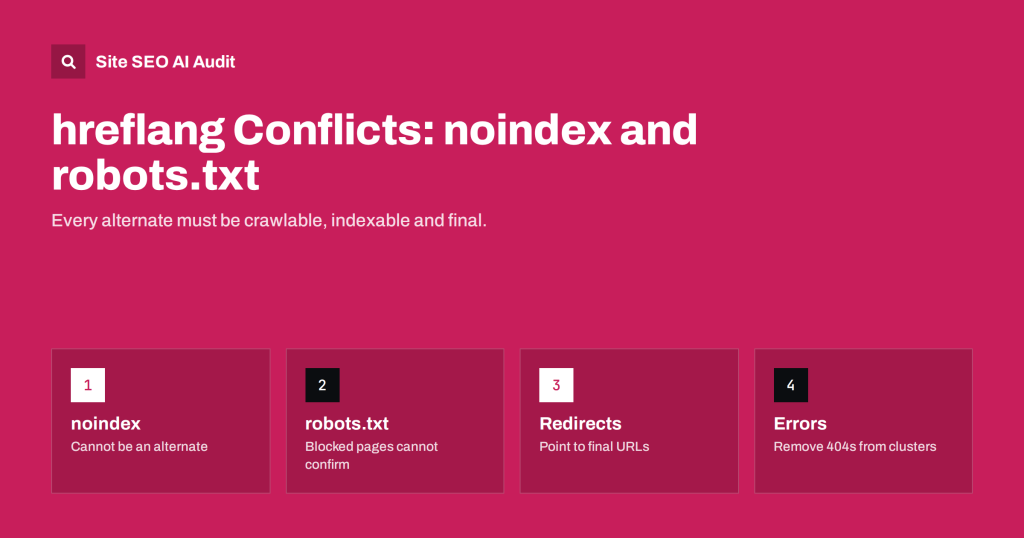
hreflang Conflicts with noindex, robots.txt and Redirects
hreflang only works between pages that can be crawled and indexed. How noindex, robots.txt, redirects and errors break clusters, and how to resolve each.
 2026. gada 12. sept. · Lasīšanas laiks: 8 min
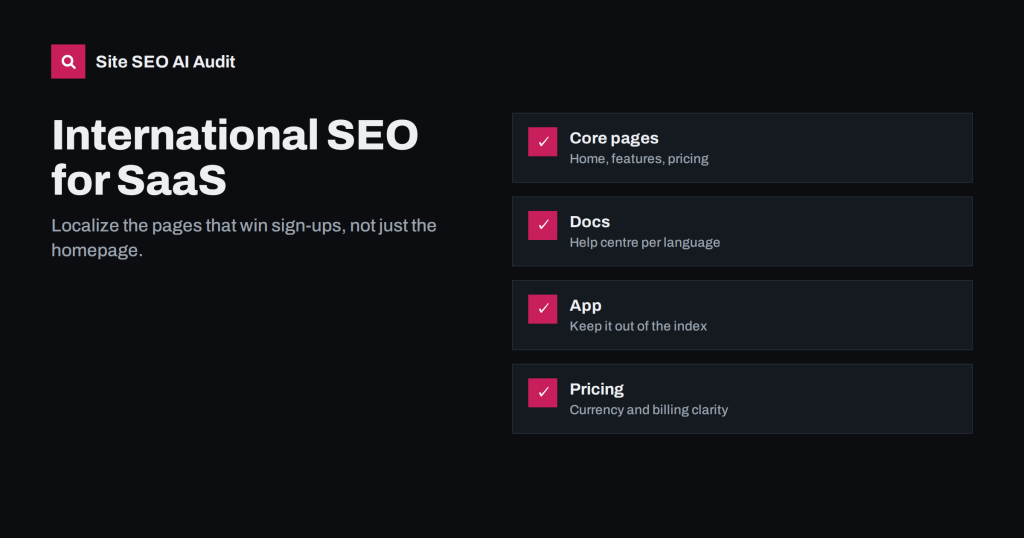
International SEO for SaaS: Localizing Product and Content
How SaaS companies grow organic sign-ups abroad: which pages to localize, pricing and currency, docs and help centres, app subdomains and language signals.
 2026. gada 10. sept. · Lasīšanas laiks: 8 min
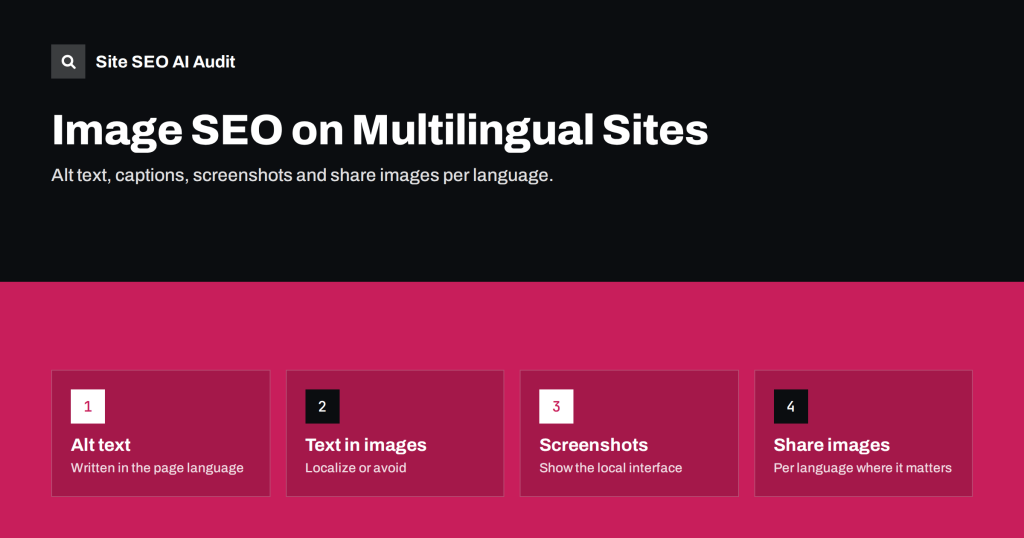
Image SEO on Multilingual Sites: Alt Text, Files and Text
Images on translated pages need localized alt text, captions and in-image text. How to handle media, file names, screenshots and share images per language.
 2026. gada 9. sept. · Lasīšanas laiks: 7 min
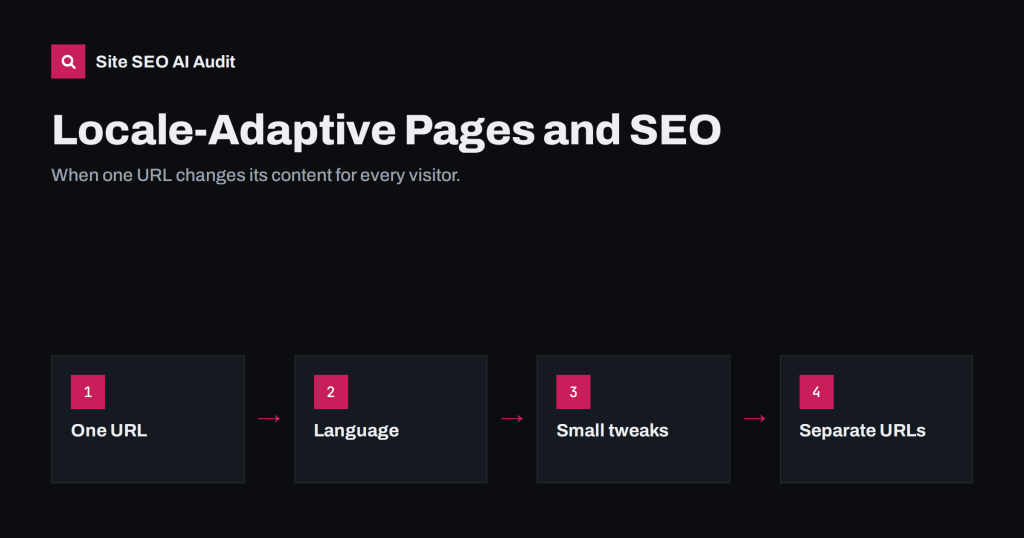
Locale-Adaptive Pages: Why One URL for All Markets Is Risky
Pages that change language, currency or content by visitor location on one URL can hide versions from search engines. When adaptation is fine, and…
 2026. gada 8. sept. · Lasīšanas laiks: 7 min
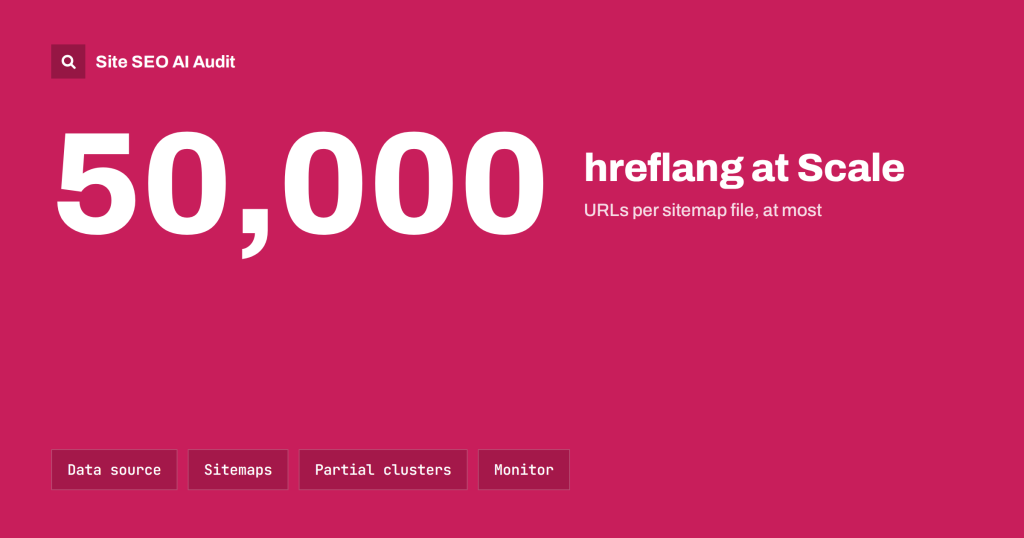
hreflang at Scale: Managing Large Multilingual Websites
On sites with thousands of pages and many languages, hreflang needs a system: sitemap limits, generation from data, partial clusters and monitoring.
 2026. gada 7. sept. · Lasīšanas laiks: 7 min
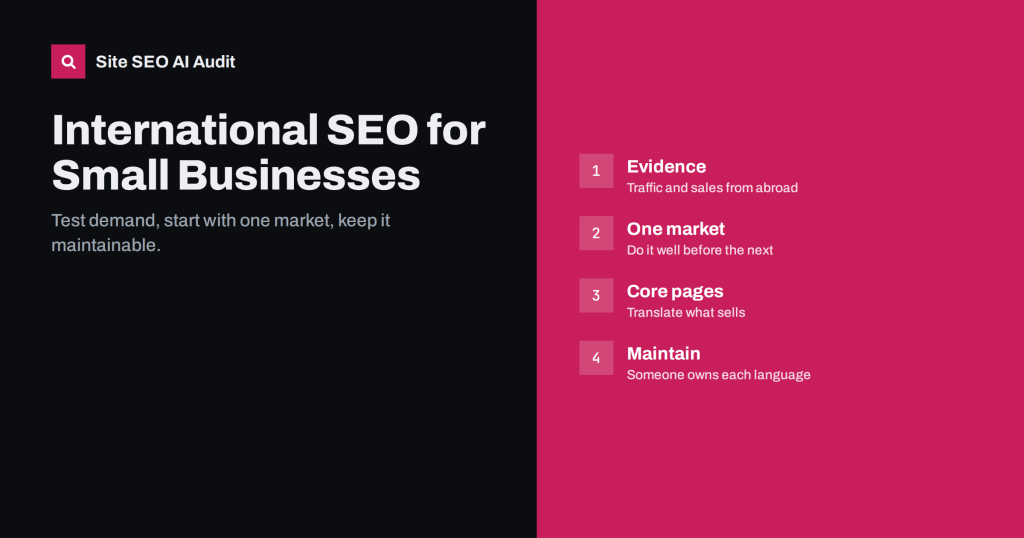
International SEO for Small Businesses: When It Pays Off
Is going international worth it for a small business? How to test demand, start with one market, keep costs low and avoid wasting translation…
 2026. gada 4. sept. · Lasīšanas laiks: 7 min
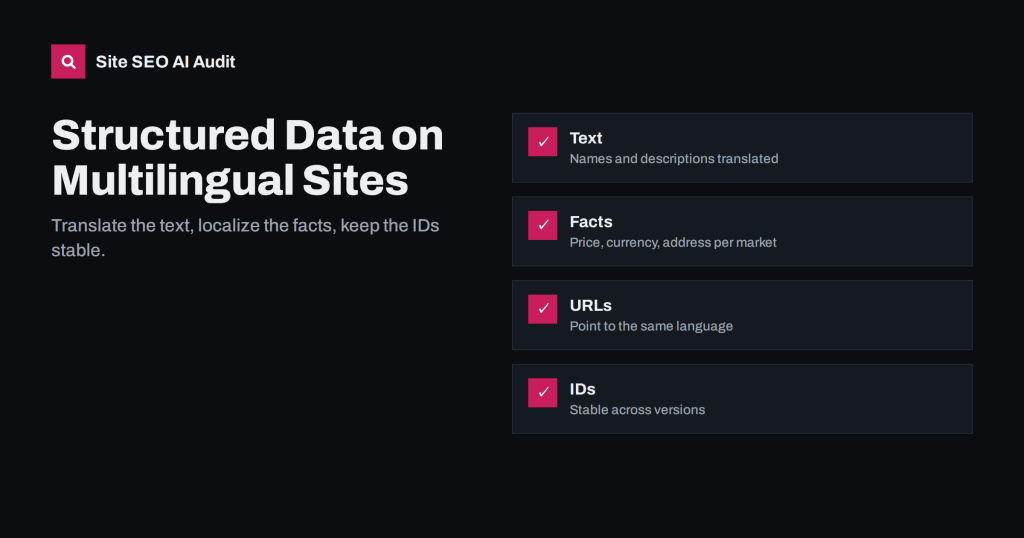
Structured Data on Multilingual Sites: What to Translate
How to handle schema markup on translated pages: localized text, inLanguage, prices and currency per market, URLs, and the mismatches that break rich results.