ENEnglish
 LTLietuviškai
 DEDeutsch
 FRFrançais
 RUРусский
 ESEspañol
 PLPolski
 ITItaliano
 UKУкраїнська
 CSČeština
 PTPortuguês
 JA日本語
 LVLatviešu valoda
 ETEesti
 HUMagyar
 IDBahasa Indonesia
 TRTürkçe
 HIहिन्दी
 ELΕλληνικά
 ARالعربية
 THไทย
 VITiếng Việt
 RORomână
 MSBahasa Melayu
 BNবাংলা
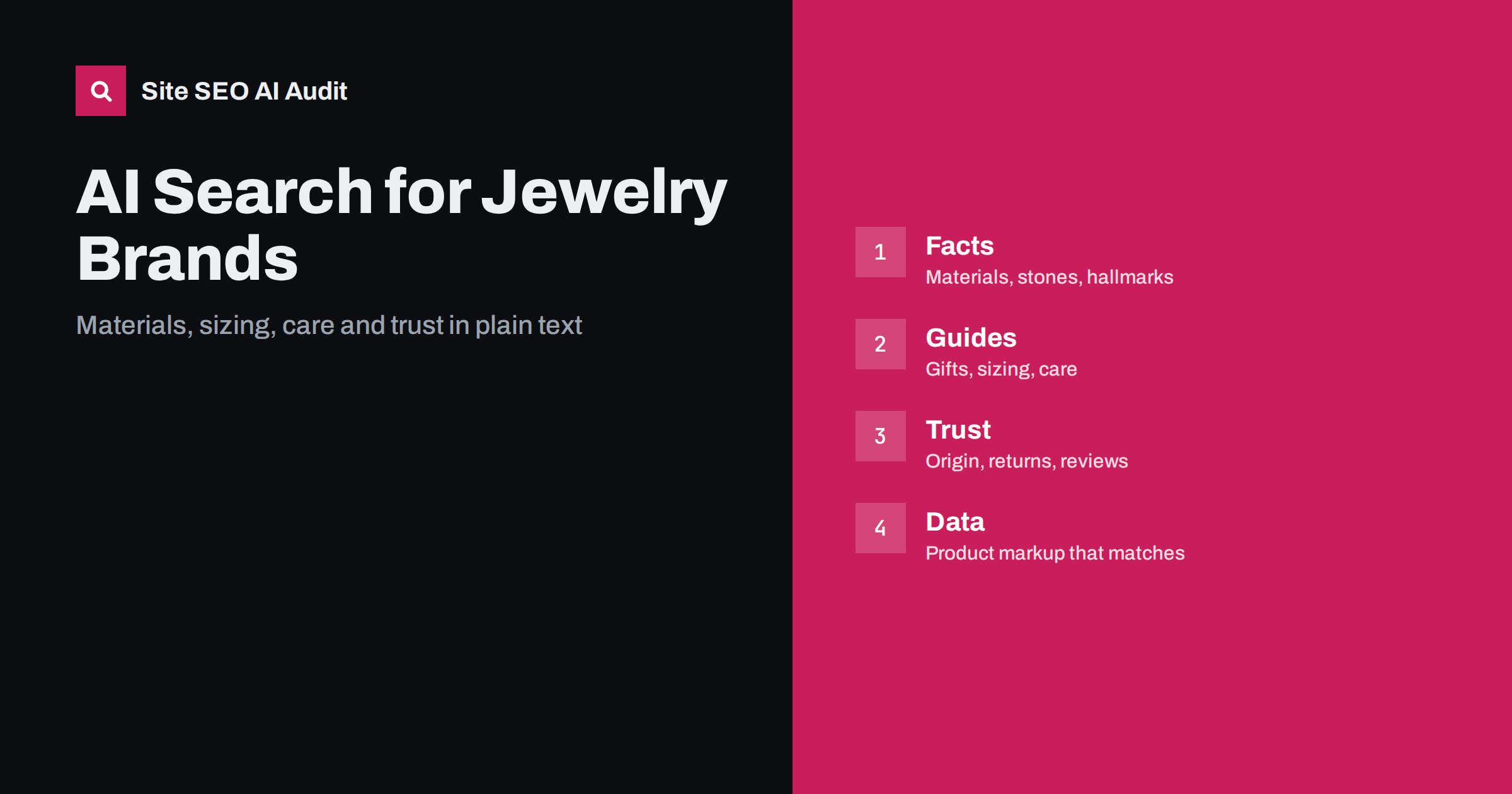
Short answer: Jewelry and luxury brands are cited by AI assistants when their pages state precise facts: metal and purity, stone type, size and weight, origin, certification, care instructions, price, delivery and return terms. Add buying guides for gifts, sizing and materials, show who makes the pieces and how authenticity is verified, mark up products with data that matches the visible page and allow the crawlers you want. A page that offers only mood photography and the words “contact us” gives assistants nothing to quote.
Buying jewelry involves emotion, but the questions are practical. Is it solid gold or plated? What does the carat number mean? How do I find a ring size without visiting a shop? Which gift suits a thirtieth birthday and a certain budget? Which jeweler can be trusted with a repair? People now put these questions to assistants and receive a short answer with a few named sources. Luxury brands often resist detail, preferring atmosphere and mystery, yet the pages that get cited are the ones that explain. This guide shows how to keep your style while publishing the facts. For the mechanics of citation, read how AI search engines work.
Know the questions shoppers ask
Gather real questions from customer emails, chats, store conversations, returns and reviews. They fall into recognisable groups: material questions about gold, silver, platinum, plating, allergies and tarnishing; stone questions about natural and lab-grown gems, cut, colour and clarity; fit questions about ring, bracelet and chain sizes; gift questions about occasions, budgets and meaning; care questions about cleaning and storage; and trust questions about origin, certificates, insurance, repairs and returns. Give each group a clear page or section, and write the answer in the first lines. Review the list every quarter, because seasons such as holidays and weddings change what people ask.
Publish product facts that can be quoted
Every product page should state the facts in text, near the top and not only in images or a gallery caption. Include the metal and its purity, the weight, the dimensions, the stone type, size and quality grade, the finish, the clasp or setting type, the collection, the country and workshop where it was made, any hallmark and the certificate or grading report that comes with it. Say whether the piece is made to order and how long it takes. Use the same names for the same materials across the shop, since inconsistent terms confuse both shoppers and systems. Basic product page guidance is in the product page guide, and shopping-specific advice is in product pages for AI shopping.
Explain materials, stones and certificates
Write short, accurate guides that help people compare. Explain what purity numbers mean, how plated and solid pieces differ, which metals suit sensitive skin, what the main quality factors for diamonds are, how natural and lab-grown stones differ and how to read a grading report. Be exact and avoid exaggeration; a claim such as “the best diamonds in the world” cannot be checked, while “a one-carat round stone graded by an independent laboratory” can. Name the author, such as a gemologist or a master jeweler, and give the date of the last review. Content with real expertise supports the signals described in E-E-A-T and AI search.
Create gift, occasion and sizing guides
Many searches begin with an occasion, not a product. Build guides for anniversaries, graduations, weddings, birthdays and holidays, organised by budget and recipient, each linking to real products. Add a sizing page that explains how to measure a finger or wrist at home, includes a printable guide described in text, lists size conversions between countries and states how resizing and exchanges work. People who find a clear sizing answer are less likely to return the item. Keep seasonal pages on one stable address and refresh them yearly, as explained in seasonal pages and SEO.
Pay attention to the language you use. Words such as “classic”, “timeless” and “exquisite” tell an assistant nothing, while “18-carat yellow gold, 4 mm band, polished finish, available in sizes from 48 to 62” can be quoted directly. Keep the poetic copy, but add a short specification block beside it. The same applies to titles and image descriptions, which should name the piece, the material and the style in words a shopper would type.
Show origin, authenticity and policies
Luxury buyers want proof. Explain where the materials come from, how the pieces are made, who the makers are and how authenticity is guaranteed. State the delivery options, insurance during shipping, the return and exchange rules, warranty, repair and cleaning services and how to contact a real person. Put the policies in text, on their own pages, and summarise the key points on product pages. Do not promise what you cannot deliver, because an assistant may repeat the claim and a customer may hold you to it. If an assistant gives wrong information about your brand, follow the steps in what to do when AI gets your business wrong.
Use reviews and reputation carefully
Reviews carry weight for expensive purchases. Collect them from real buyers after delivery, ask about fit, quality and service and show them on the product pages with dates. Reply to complaints in public and resolve them. Mention the products by name so that the review text itself carries detail. Never copy reviews from other sites and never mark up ratings that visitors cannot see. More guidance is in reviews and reputation in AI recommendations and review schema and star ratings.
Add structured data and handle variants
Mark up products with name, image, description, brand, price, currency, availability and identifiers, but only with values that appear on the visible page. Jewelry has many variants, such as sizes, metals and stones, so decide which are separate pages and which are options on one page, following the product variants guide. Mark up the business with organization data, as shown in organization schema for AI search. Test after every change, and keep prices and stock in step between the page, the feed and the markup. Also check that firewalls and bot protection do not block the crawlers you want, using the AI crawlers and robots.txt guide.
Pay special attention to the questions that decide a purchase at the last moment: how long delivery takes before a date, whether the item arrives in gift packaging, whether a receipt can be hidden, what happens if the size is wrong and how a customer can verify that a piece is genuine years later. Answer each on a short page and link to it from the product pages. These details seem small, but they are the ones people ask assistants when they are about to pay.
Cover repairs, custom orders and local services
Many jewelers earn more from services than from stock: resizing, repairs, engraving, cleaning, valuation and custom design. Describe each service on its own page with what is offered, typical timescales, how to send or bring an item, how it is insured while in your care and how the price is set, even if only as a range. For custom work, explain the steps from the first conversation to sketch, approval, making and delivery, and show finished examples with the permission of the customers. If you have a shop or a workshop, publish the address, the opening hours, whether an appointment is needed and how to reach it, and keep the details identical in the map profile, as described in AI search for local businesses. People asking an assistant for a trustworthy jeweler nearby are often looking for exactly this evidence, and few competitors publish it.
Measure and keep the facts current
Once a month, ask a fixed set of questions about your category and brand in several assistants, record which sources appear and compare the details with your pages. Prices, metal costs, stock and policies change, so give each page an owner and a review date. Retire discontinued pieces with care, keeping the page for a time and pointing to a replacement, as in out-of-stock product pages. Small steady improvements in the quality of facts will do more than a redesign, and they also help human visitors who want to decide with confidence.
Site SEO AI Audit crawls your shop like a search engine, checks titles, structured data, status codes, images, orphan pages and speed on each page, and lists the fixes ranked by the points they add. The first audit of up to 200 pages is free; larger sites can see the pricing page.
Related reading
- AI Search for Fashion and Apparel Stores
- AI Search for Beauty and Cosmetics Brands
- AI Search for Furniture and Home Decor
- Image SEO: File Names and Captions
The bottom line
Jewelry and luxury brands win citations by stating materials, stones, sizes, origin, policies and care in plain text, backed by expert guides, honest reviews and matching product data. Keep it current and review the answers every month.
FAQ
Will detailed product facts hurt a luxury image?
No. Place the facts below the first impression, in a clean layout. Buyers of expensive items want proof, and assistants need text to quote.
Should I name the gemstone grading laboratory?
Yes, when a report comes with the piece. State the report type and what it covers, and make sure the details match the item.
Do I need a separate page for each ring size?
Usually not. Treat sizes as options on one page, and give each distinct design, metal or stone combination its own page when shoppers search for it.
How should I describe plated or lab-grown pieces?
Say so clearly in the title or the first lines and in the details. Clear wording builds trust and avoids returns and disputes.
Which pages should I start with?
Begin with your bestselling products, the sizing guide, the materials guide and the delivery and return policies, then add gift and care guides.