ENEnglish
 LTLietuviškai
 DEDeutsch
 FRFrançais
 RUРусский
 ESEspañol
 PLPolski
 ITItaliano
 UKУкраїнська
 CSČeština
 PTPortuguês
 JA日本語
 LVLatviešu valoda
 ETEesti
 HUMagyar
 IDBahasa Indonesia
 TRTürkçe
 HIहिन्दी
 ELΕλληνικά
 ARالعربية
 THไทย
 VITiếng Việt
 RORomână
 MSBahasa Melayu
 BNবাংলা
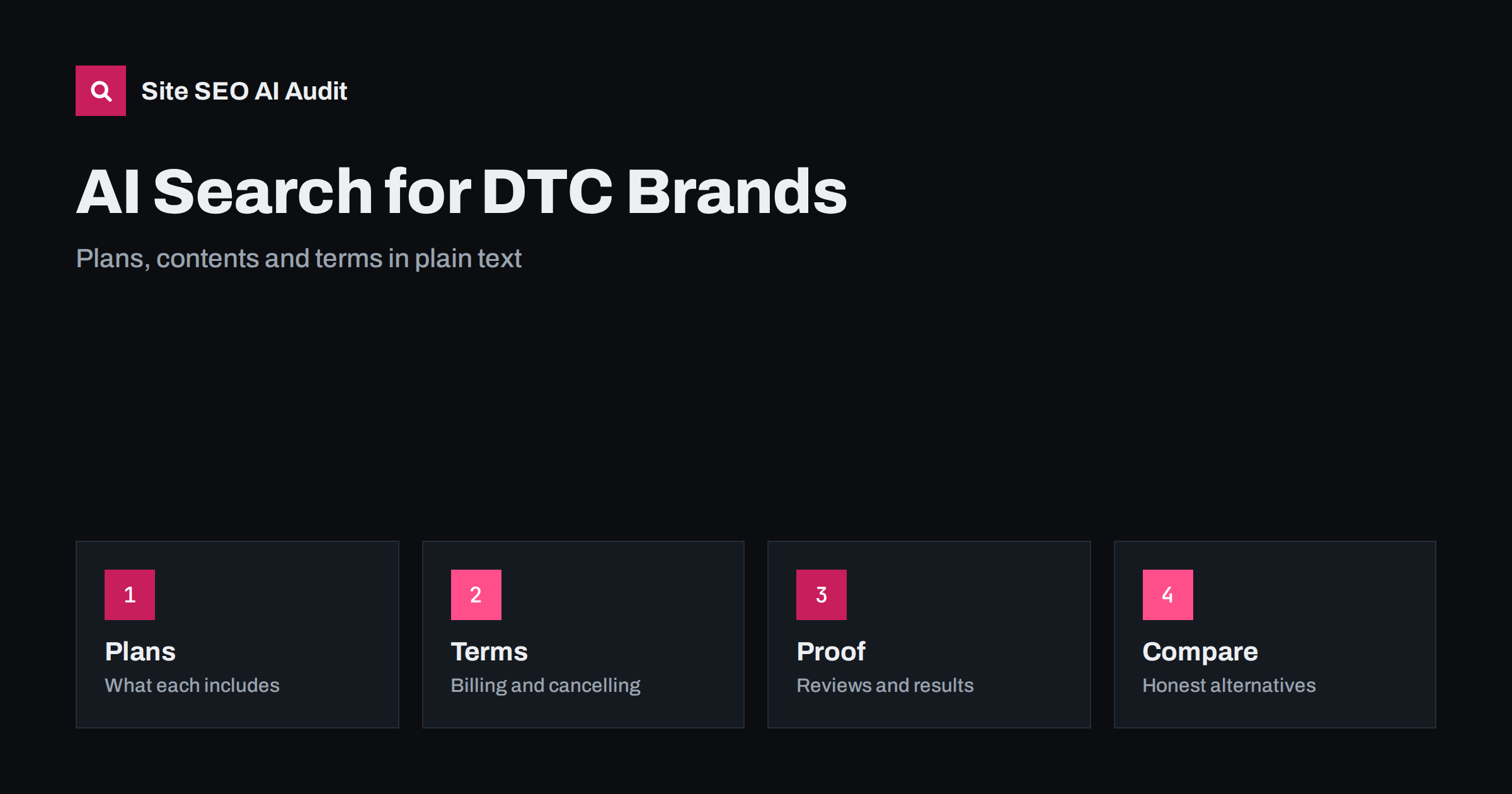
Short answer: Shoppers ask assistants which coffee subscription is best for espresso, whether a meal box suits one person or which razor brand delivers to their country. Subscription and direct-to-consumer brands are named when their pages explain each plan, what arrives and how often, the price per delivery, shipping coverage, how to pause or cancel and what independent customers say. Hidden terms and vague promises make a brand hard to recommend and easy to distrust.
Direct-to-consumer brands sell without a shop or a marketplace, so their own website carries the whole job of explaining the product and the offer. Subscription brands add a layer: the buyer commits to repeat charges, and worries about cancellation, quality changes and surprises. Assistants know this, and they favour sources that state terms clearly. This guide explains what to publish for brands that sell by subscription or direct online, and how to structure it so that it can be understood and quoted. General principles are in the generative engine optimization guide.
Questions buyers ask
Typical questions include which subscription suits a certain need, how much it costs per month, what is in the box, how to skip a month, whether there is a minimum term, how long delivery takes, whether the brand ships abroad and how it compares with alternatives. Some questions ask for a verdict: is it worth it? Others look for facts: is it vegan, does it contain a certain ingredient, is it sold in shops? Pages should hold the facts, and honest context for the verdicts.
Describe every plan precisely
Create a page for each plan, or a clear comparison table if the plans are few. For each state the price per delivery or per month, the currency, the delivery frequency, what is included, the quantity or size, any variations and personalisation options and the discount for longer commitments. Explain how pricing changes after an introductory offer, because surprises damage trust. State the date or condition under which an intro price ends.
List the contents in plain words: ingredients, materials, sizes, brands, typical items. If boxes vary, say how, for example that a monthly selection changes while the base items stay the same. If you use product names that mean nothing to a newcomer, add a plain description. Mark up the products and offers with structured data that matches the visible information, as described in the guide to product schema.
Publish the terms in the open
Billing and cancellation are the main objections to subscriptions, so address them before they are asked. Explain when the first payment is taken, how renewals work, how to pause, skip, change or cancel and where to do it, how soon a change must be made before the next shipment and what happens to an order already packed. Put the information in a visible page and link to it from product pages and the footer. Do not hide it in long legal text alone; write a plain summary and link to the full terms.
Include delivery details: countries served, carriers, lead times, tracking, costs, free-shipping thresholds, what happens if a parcel is lost and how returns or refunds work. Different regions often have consumer rules about subscriptions, withdrawal rights and renewal notices, so take legal advice for your markets and reflect the rules accurately. Do not claim terms that you do not offer. The structure of shipping and returns content is covered in the guide to shipping and returns pages.
Own the story and the facts
Without a shop, the brand story is how people judge whether to trust you. Say who founded the company, where it is based, how products are made or sourced, who the suppliers are where you can name them and what standards or certifications you hold. State claims precisely. Better to say that a product is made in a named country with named ingredients than to say it is premium. If you make health, environmental or performance claims, support them with evidence and follow the advertising rules of your market. Publish a page on how you test products and what you do when something goes wrong.
People pages, with names and roles of the founders or specialists, strengthen the signals of experience that assistants use, as discussed in the guide to E-E-A-T and AI search. Keep branding consistent across your site, marketplaces, social profiles and press mentions, so that the brand is recognised as one entity, a point covered in the guide to brand name confusion.
Reviews and proof
Independent reviews matter more than your own claims. Collect honest customer reviews on platforms that the public trusts, ask for them at a sensible point in the customer journey and respond to critical ones with practical help. On your own site, show reviews with permission and mark them up according to the rules. Press mentions, test results from independent labs, expert endorsements and user-generated photos all add to the evidence. Do not fabricate or buy reviews, and do not hide a negative review that you can answer. The guide to reviews and reputation explains why assistants weigh them.
Comparisons and alternatives
People compare brands, and assistants build comparisons from what is available. Publish your own honest comparison pages: how your plans differ from buying the same product in a shop, from a competing subscription or from a different type of solution. State where a competitor is stronger if it is true. A comparison that is fair is more likely to be quoted, while one that only praises you looks like an advertisement. Keep the facts verifiable and update them. The structure is described in the guide to comparison pages for AI search.
Answer questions about the category
Many buyers are new to the category. A person who has never ordered a meal kit or a skincare subscription wants guidance: how to choose, how to start, what to avoid. Educational content brings them in and shows expertise. Write guides in your own voice, such as how to choose the right coffee grind for a method, how to read an ingredient list on a cosmetic product or how to plan portions in a week. Link the guides to the matching plans, without turning every sentence into an advertisement.
Technical foundations
Make sure the pages can be read without logging in or running a quiz. Many direct brands guide visitors through a multi-step funnel that loads each step with scripts, and crawlers may see nothing. Provide static pages for plans, terms, FAQs and guides, and keep the funnel for conversion. Check that AI crawlers are allowed on these pages, as described in the guide to AI crawlers and robots.txt. Keep the site fast on phones, and avoid pop-ups that cover the content.
Pay attention to naming. If the same plan is called starter in the header, classic in the cart and basic in emails, systems cannot tell they are one thing. Choose names, use them everywhere and keep a short glossary for your team. Do the same for countries, currencies and units. Consistency helps customers as much as machines.
Here is a short example. A tea subscription brand had a beautiful site with a quiz, and no static text about plans. After adding a page for each plan with the price per box, the number and type of teas, the delivery schedule and a plain explanation of how to skip or cancel, plus a page listing the countries served and the delivery times, assistants began to include the brand when asked about monthly tea boxes in its country, and the support team reported fewer questions about cancellation, because the answers were now easy to find.
A second brand, selling razors direct, wrote an honest comparison with supermarket razors and with a competing subscription, with prices per blade and notes on skin types. It said openly that for people who shave rarely, a shop-bought razor is cheaper. That honesty made the page more quotable, and the brand’s recommendations from assistants became more consistent.
Think about retention content too. Existing customers ask assistants how to get the most from a product, how to store it, how to change a delivery date or what to do with an unfamiliar item in a box. Help pages, usage guides and recipes or routines written for subscribers answer such questions and keep the brand present after the first purchase. Make these pages public where they contain no personal data, so that assistants can quote them. They also reduce support load, and they signal to new buyers that the brand takes care of customers after the sale, which is one of the biggest worries about any subscription.
Site SEO AI Audit crawls your pages and checks status codes, titles, descriptions, duplicate and thin content, links, structured data, speed and AI visibility settings, so you can see whether plan and terms pages are reachable and consistent. It does not manage subscriptions or billing. The first audit of up to 200 pages is free, and the pricing page lists plans for larger sites.
Related reading
The bottom line
Subscription and direct brands are recommended when plans, contents, delivery, billing and cancellation are explained plainly, backed by honest reviews and fair comparisons.
FAQ
Should cancellation terms be public?
Yes. Explain how to pause, skip and cancel in a visible page, in plain words, with a link to the full terms.
How should plans be presented?
One page or table per plan with price, contents, frequency, shipping and what changes after any introductory offer.
Do comparison pages help?
They do when they are fair and factual. Pages that only praise your own brand are rarely quoted.
Can a quiz funnel hurt visibility?
If it is the only way to see plans, yes. Keep static pages for plans, terms and guides.
How do I make claims safely?
State them precisely, support them with evidence and follow the advertising rules in each market.