 ENEnglish
 LTLietuviškai
 DEDeutsch
 FRFrançais
 RUРусский
 ESEspañol
 PLPolski
 ITItaliano
 UKУкраїнська
 CSČeština
 PTPortuguês
 JA日本語
 LVLatviešu valoda
 ETEesti
 HUMagyar
 IDBahasa Indonesia
 TRTürkçe
 HIहिन्दी
 ELΕλληνικά
 ARالعربية
 THไทย
 VITiếng Việt
 RORomână
 MSBahasa Melayu
 BNবাংলা
SEO técnico
Guides on the technical side of search: crawling, indexing, status codes, canonicals, redirects and sitemaps. Each article starts from a real issue found by a deep crawl and explains why it hides pages from search. We show how to find the affected pages and how to fix them on common platforms, including WordPress. The focus is on problems that affect many pages at once, because they cost the most visibility. Examples come from online shops, company websites and blogs. Read these guides before a redesign, a migration or a big content update.
 30 de set. de 2026 · 8 min de leitura
Custom 404 Pages: What a Helpful Not Found Page Needs
A custom 404 page must return the right status code and still help lost visitors. Learn how to set it up, test it and…
 30 de set. de 2026 · 9 min de leitura
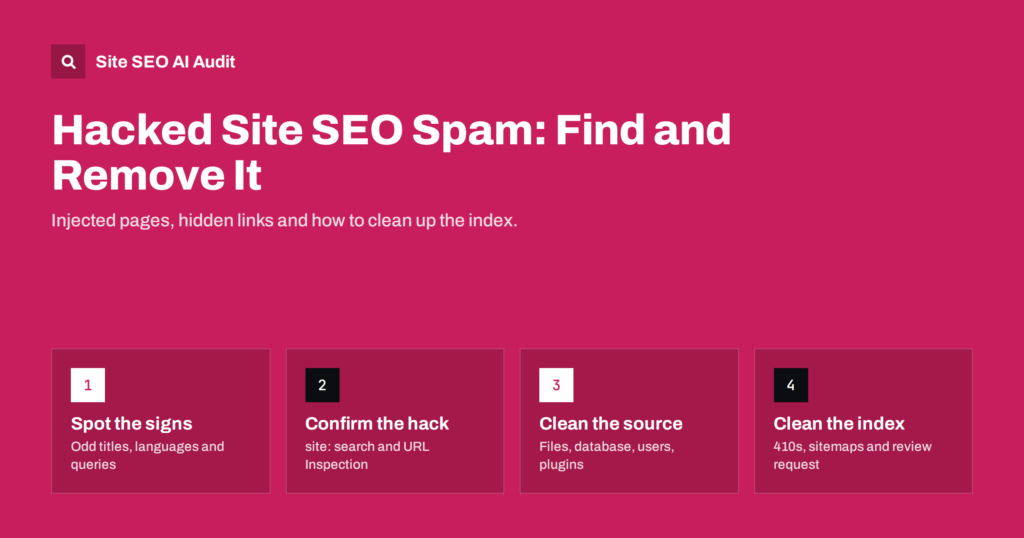
Hacked Site SEO Spam: How to Find and Remove Injected Pages
SEO spam hacks add hidden links and fake pages that search engines index. Learn the warning signs, how to confirm the hack and how…
 29 de set. de 2026 · 8 min de leitura
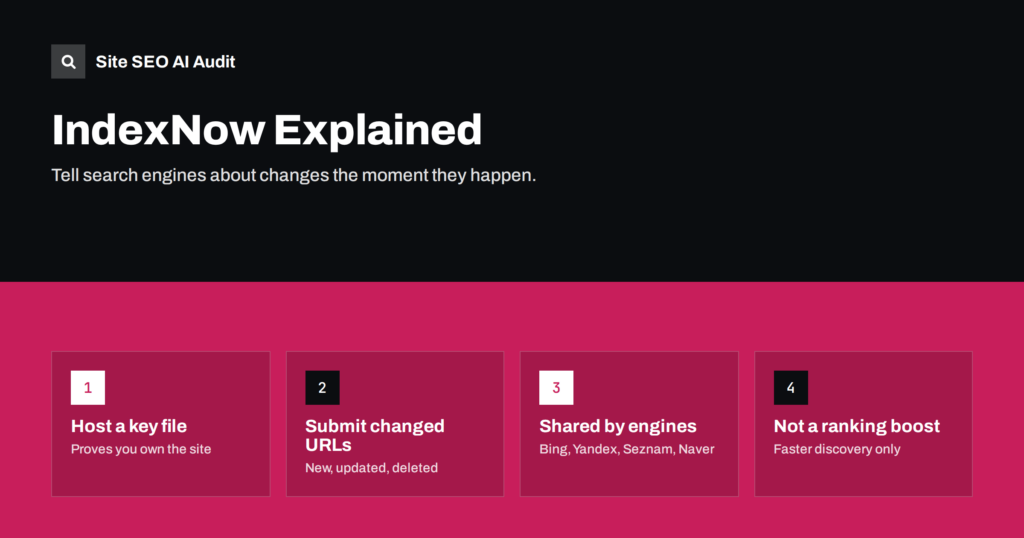
IndexNow Explained: Should Your Site Ping Search Engines?
What IndexNow is, which search engines use it, how to set it up with a key file or plugin, what it does not do,…
 29 de set. de 2026 · 8 min de leitura
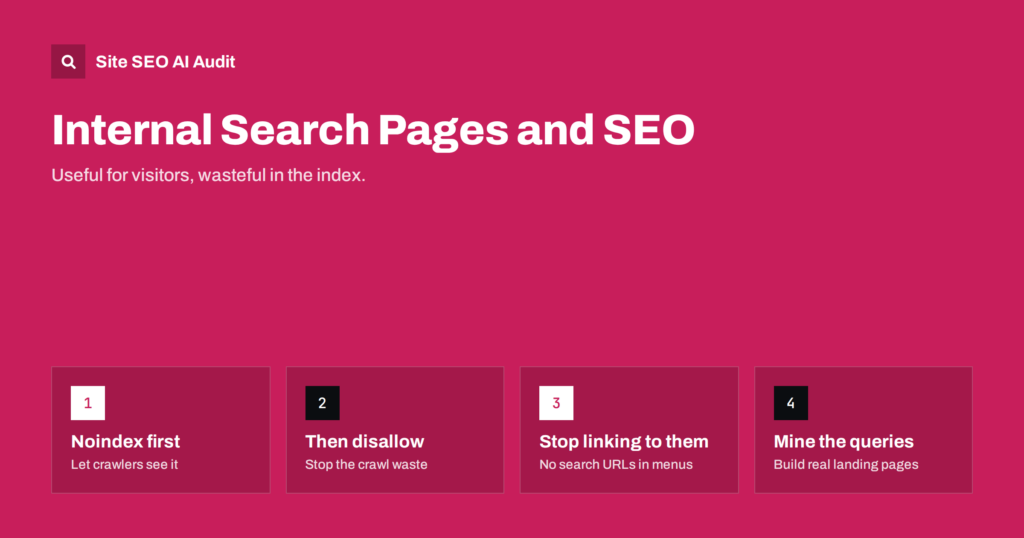
Internal Site Search Pages: Keep Them Out of the Index
Why internal site search result pages should usually stay out of Google, how to block them with noindex or robots.txt, and how to use…
 29 de set. de 2026 · 8 min de leitura
Website Downtime and SEO: What Outages Do to Rankings
What happens to rankings when a website goes down, how long is too long, how to handle planned maintenance with 503, and how to…
 29 de set. de 2026 · 8 min de leitura
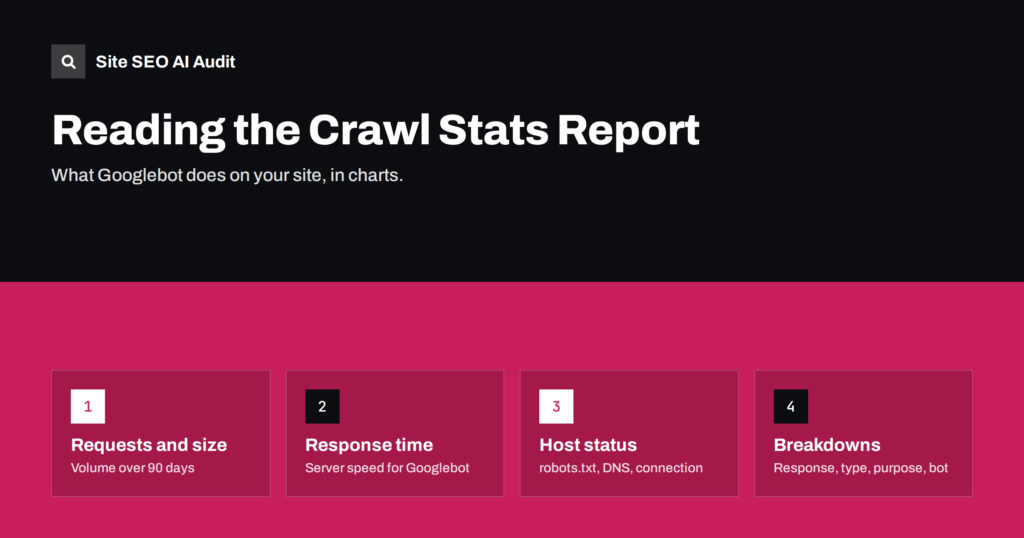
Crawl Stats Report in Search Console: How to Read It
A plain guide to the Search Console Crawl Stats report: what each chart and breakdown means, which patterns are normal, and which ones point…
 29 de set. de 2026 · 8 min de leitura
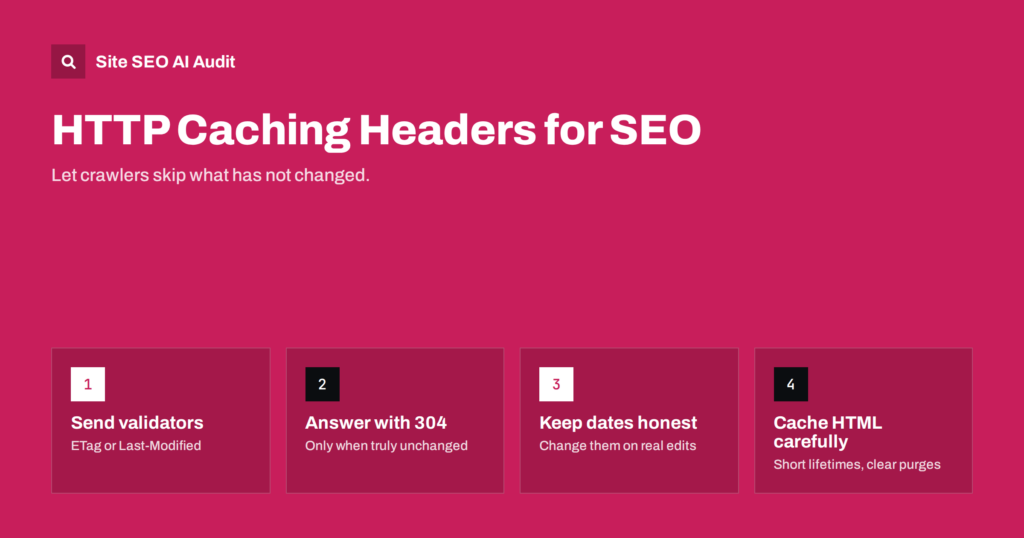
Last-Modified, ETag and 304: HTTP Caching Headers for SEO
How Last-Modified, ETag and 304 Not Modified responses help crawlers and visitors, how to test your headers, and caching mistakes that confuse search engines.
 27 de set. de 2026 · 7 min de leitura
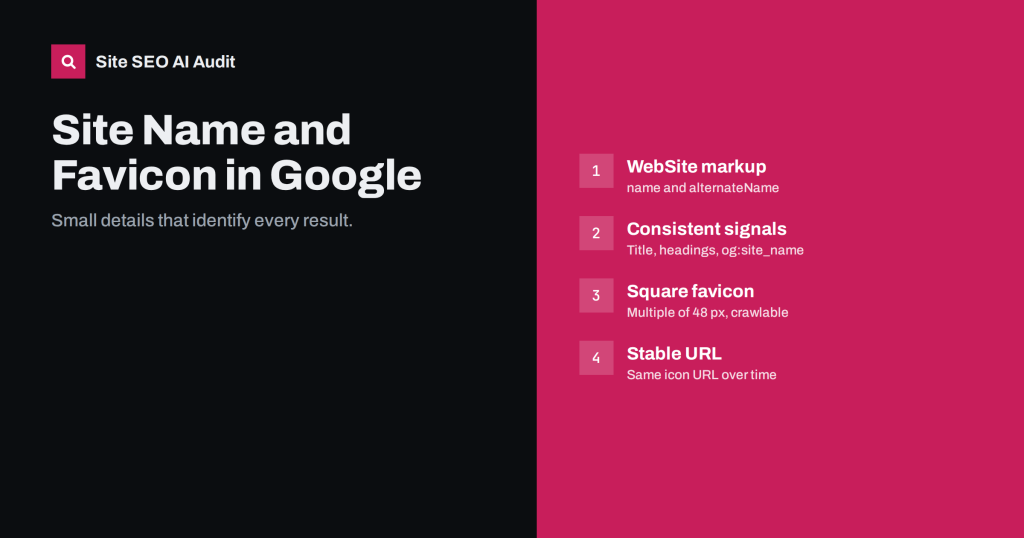
Site Name and Favicon in Google Results: How to Set Them
Google shows a site name and favicon next to results. How it picks them, the WebSite markup and favicon rules to follow, and what…
 26 de set. de 2026 · 7 min de leitura
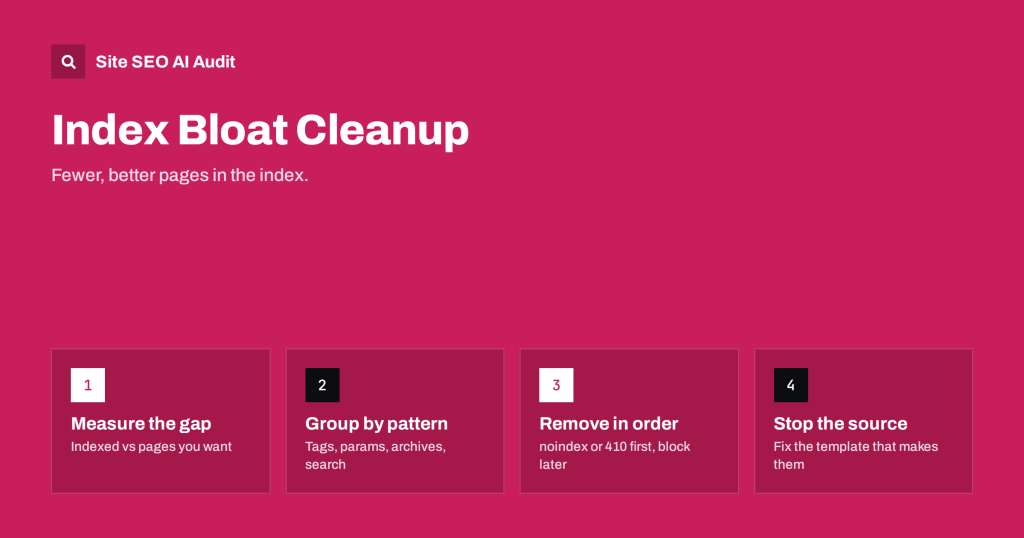
Index Bloat: How to Find and Clean Up Unwanted Indexed URLs
Index bloat means search engines hold many URLs you never meant to rank. How to measure it, which URL types cause it, and how…
 25 de set. de 2026 · 8 min de leitura
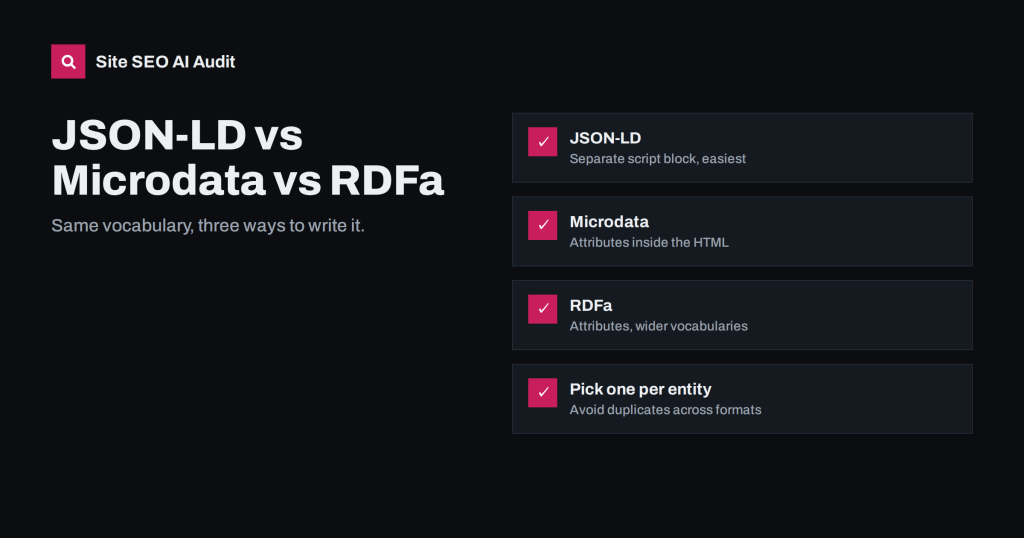
JSON-LD vs Microdata vs RDFa: Which Structured Data Format?
Three formats can carry Schema.org structured data. How JSON-LD, Microdata and RDFa differ, which one to choose, and how to migrate from one to…
 23 de set. de 2026 · 7 min de leitura
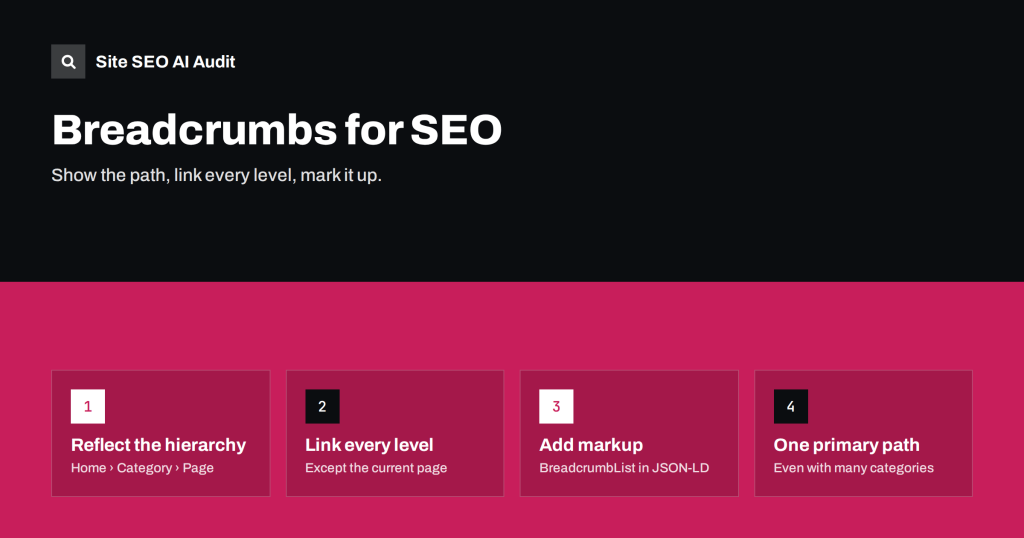
Breadcrumbs for SEO: Navigation and BreadcrumbList Markup
Breadcrumbs help visitors and search engines understand where a page sits. How to design them, add BreadcrumbList structured data and avoid the common mistakes.
 22 de set. de 2026 · 8 min de leitura
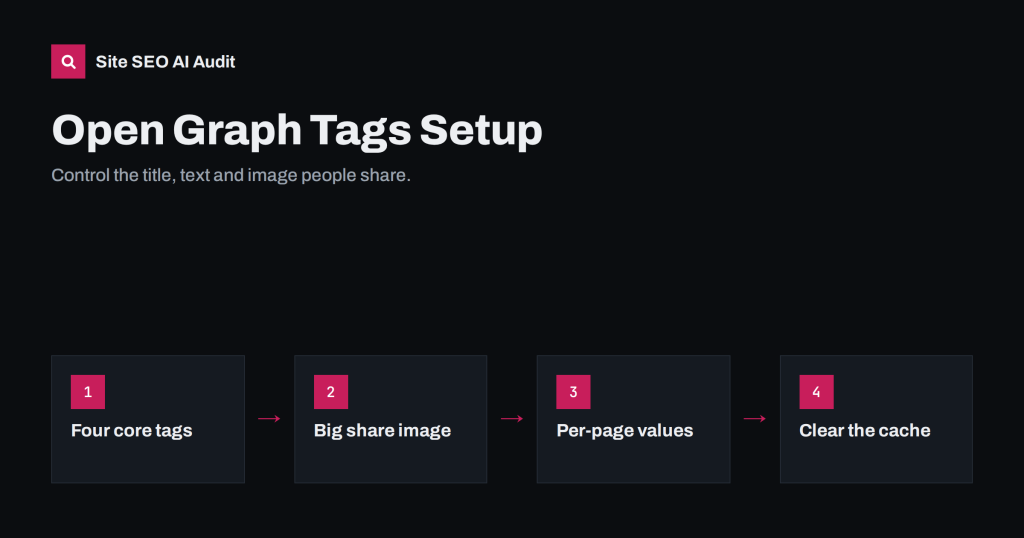
Open Graph Tags: How to Control Link Previews Everywhere
Open Graph tags decide how your pages look when shared in social apps and messengers. The tags you need, image sizes that work, and…