 ENEnglish
 LTLietuviškai
 DEDeutsch
 FRFrançais
 RUРусский
 ESEspañol
 PLPolski
 ITItaliano
 UKУкраїнська
 CSČeština
 PTPortuguês
 JA日本語
JA日本語 LVLatviešu valoda
 ETEesti
 HUMagyar
 IDBahasa Indonesia
 TRTürkçe
 HIहिन्दी
 ELΕλληνικά
 ARالعربية
 THไทย
THไทย VITiếng Việt
 RORomână
 MSBahasa Melayu
 BNবাংলা
#Localization
Localization means adapting content for a specific market, not just translating the words. It includes currency, units, date formats, examples, legal details, contact information and the terms local people actually search for. Good localization makes a page feel native to its readers, which helps both conversions and search visibility. Poor localization often shows up as mixed languages, untranslated templates or prices in the wrong currency. Articles under this tag explain what to localize and how to check that it has been done well.
 1 de out. de 2026 · 7 min de leitura
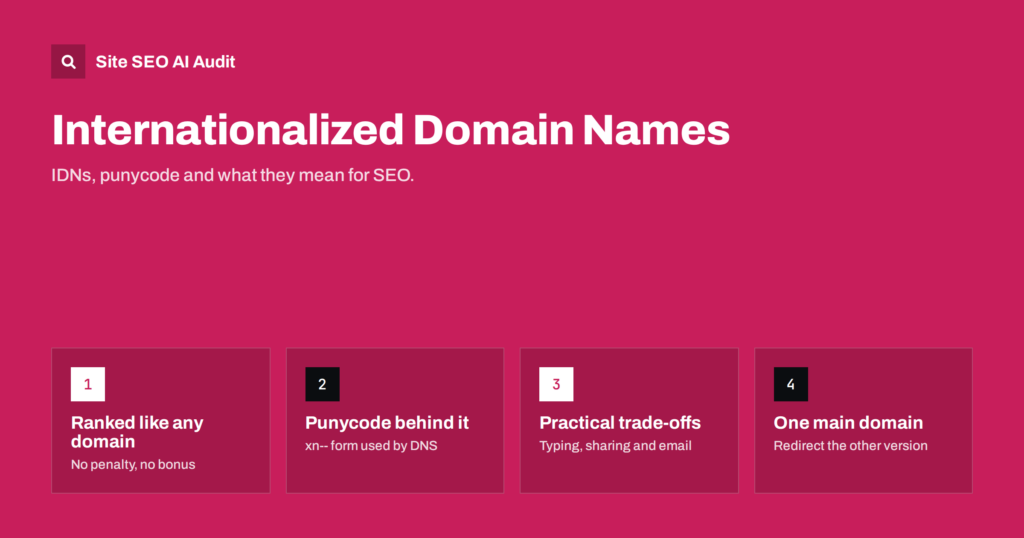
Internationalized Domain Names: IDNs, Punycode and SEO
Domains with local letters like ü, ą or Cyrillic work in search, but they bring practical trade-offs. How IDNs and punycode work and when…
 1 de out. de 2026 · 8 min de leitura
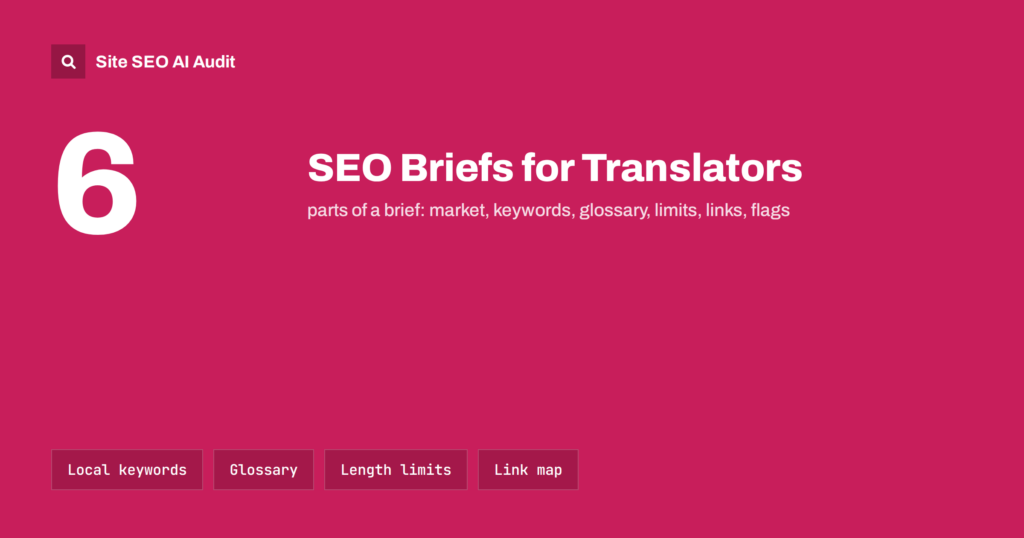
SEO Briefs for Translators: What to Hand Over
A translator can only localise for search if they know what to aim for. What to put in an SEO brief: keywords, glossary, limits,…
 1 de out. de 2026 · 8 min de leitura
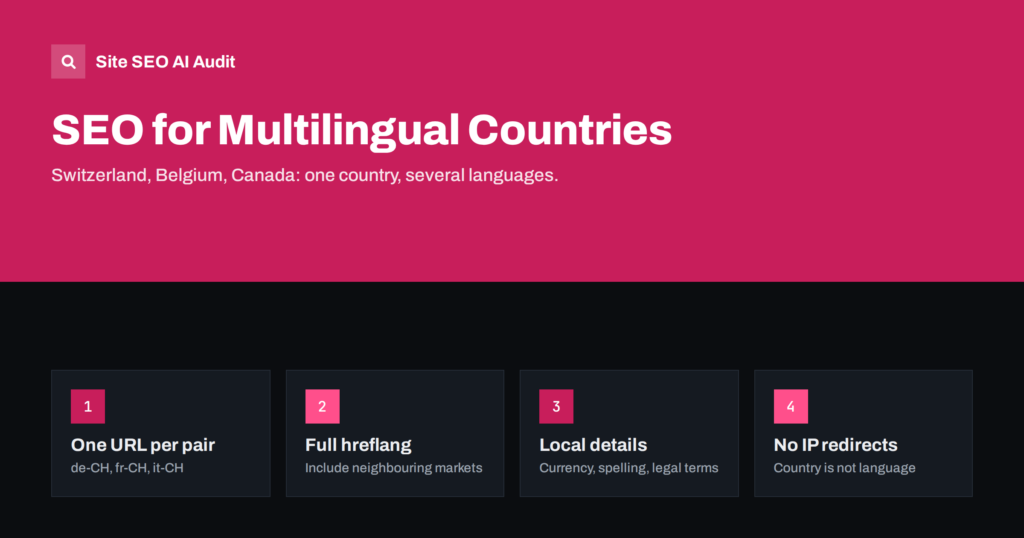
SEO for Multilingual Countries: Switzerland, Belgium, Canada
One country, several languages: how to structure URLs, hreflang, content and language switching for Switzerland, Belgium, Canada and similar markets.
 1 de out. de 2026 · 8 min de leitura
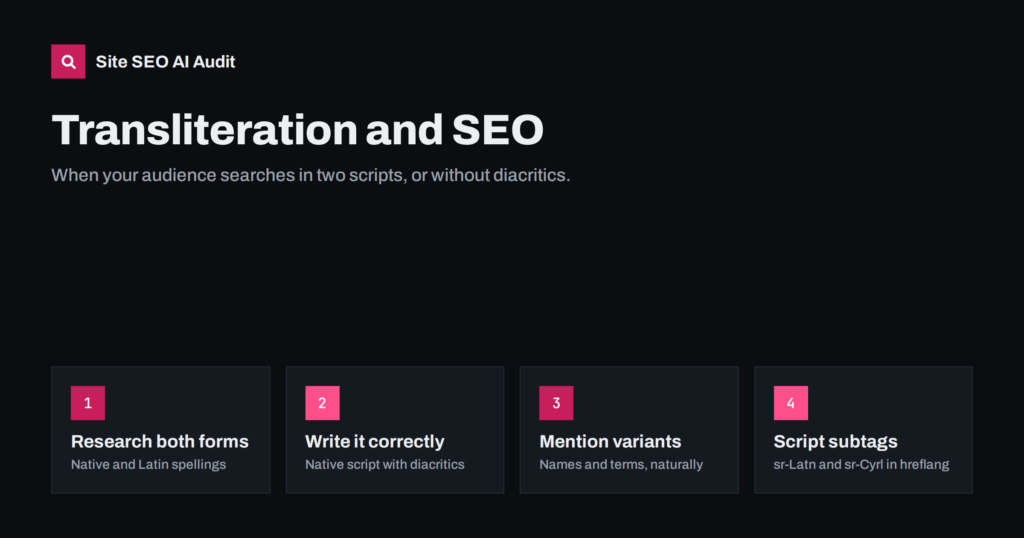
Transliteration and SEO: Searches in Two Scripts
Many people search in Latin letters for Cyrillic, Greek, Arabic or Hindi words, or skip diacritics. How to research, target and structure pages for…
 30 de set. de 2026 · 8 min de leitura
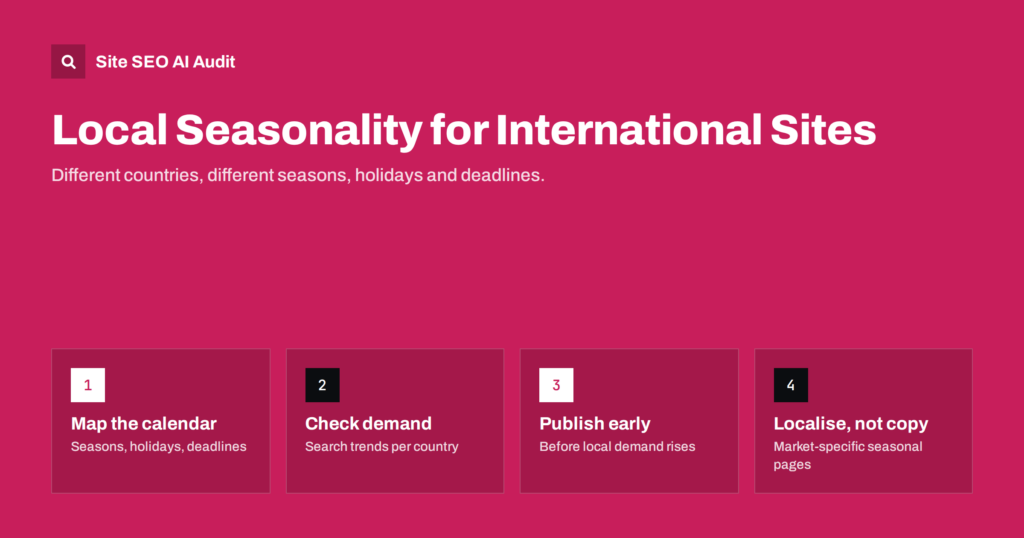
Local Seasonality: Plan Content for Each Market’s Calendar
Seasons, holidays, sales periods and tax deadlines differ by country. Learn how to build a market calendar and time seasonal content for each language…
 30 de set. de 2026 · 7 min de leitura
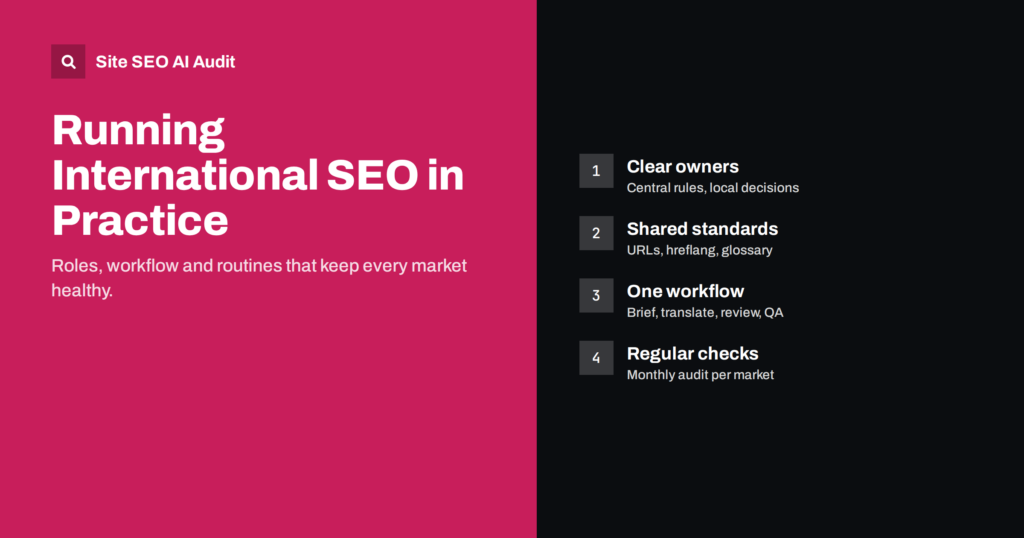
Running International SEO: Roles, Workflow and Ownership
Multilingual sites fail less from bad hreflang than from unclear ownership. Learn which roles, workflows and routines keep every market version healthy.
 30 de set. de 2026 · 7 min de leitura
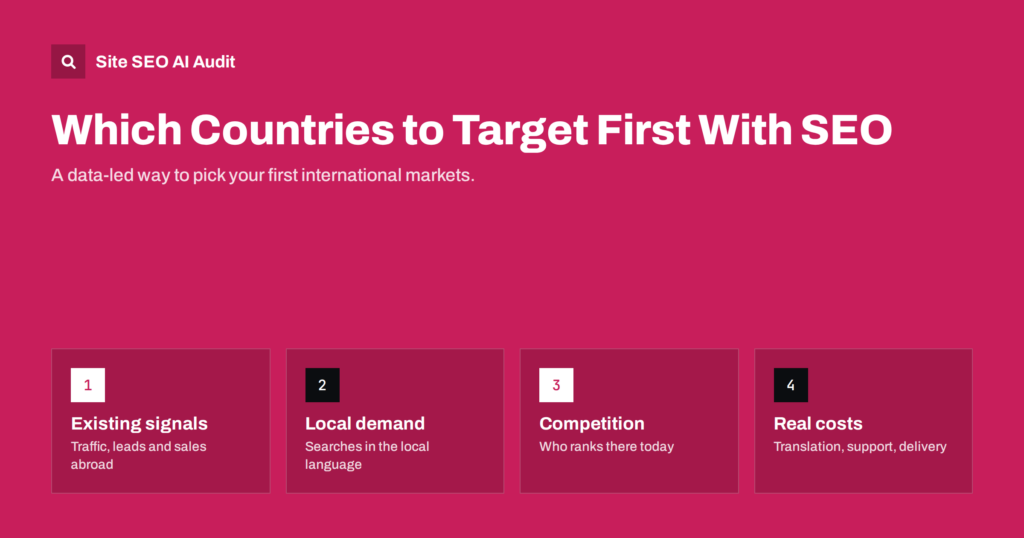
Choosing Which Countries to Target First With SEO
Expanding abroad works best one market at a time. Use existing traffic, local demand, competition and real costs to choose which countries to target…
 30 de set. de 2026 · 8 min de leitura
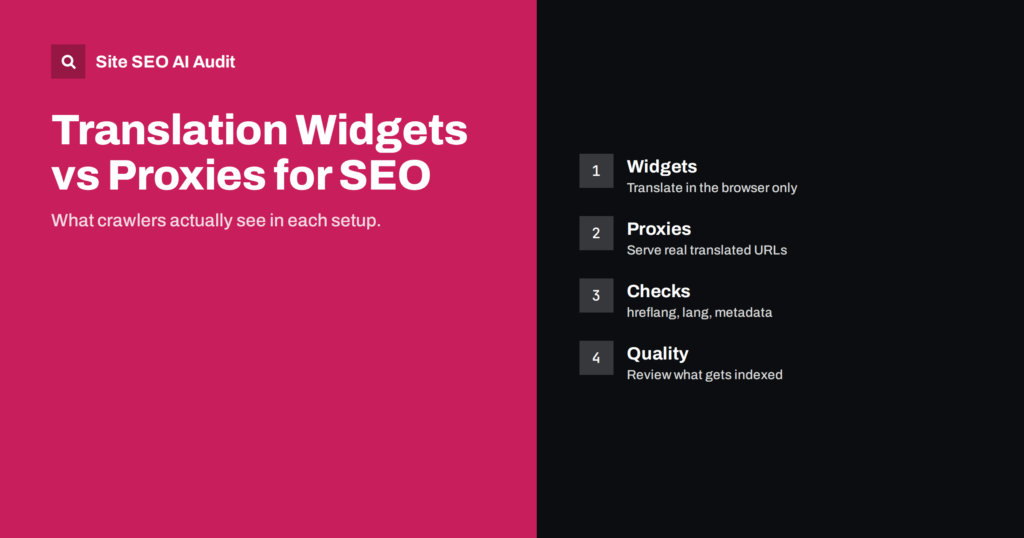
Translation Widgets and Proxies: Will Translated Pages Rank?
Browser translation widgets and translation proxies look similar to visitors but behave very differently for SEO. Here is what crawlers see in each setup.
 29 de set. de 2026 · 8 min de leitura
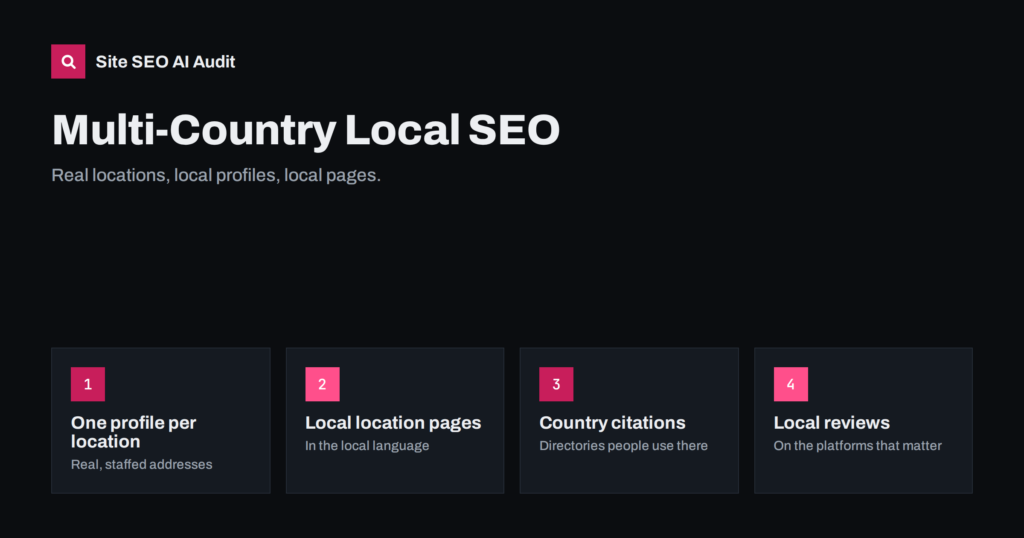
Multi-Country Local SEO: Offices and Profiles Abroad
How to run local SEO for a business with locations in several countries: business profiles, location pages per language, local citations, reviews and markup.
 29 de set. de 2026 · 8 min de leitura
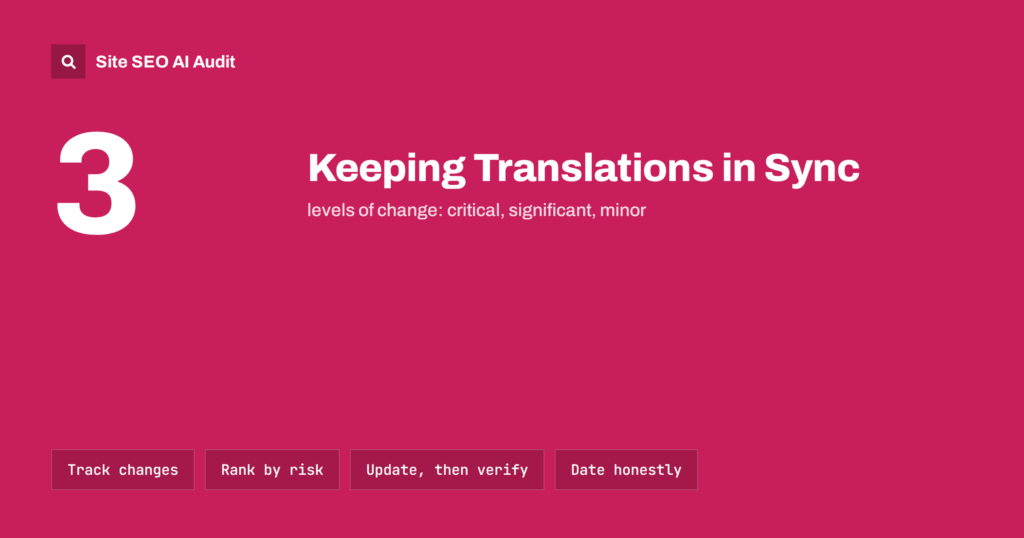
Keeping Translations in Sync When the Original Changes
How to keep translated pages in step with the original: tracking changes, deciding what to update first, workflows for small teams and the SEO…
 29 de set. de 2026 · 8 min de leitura
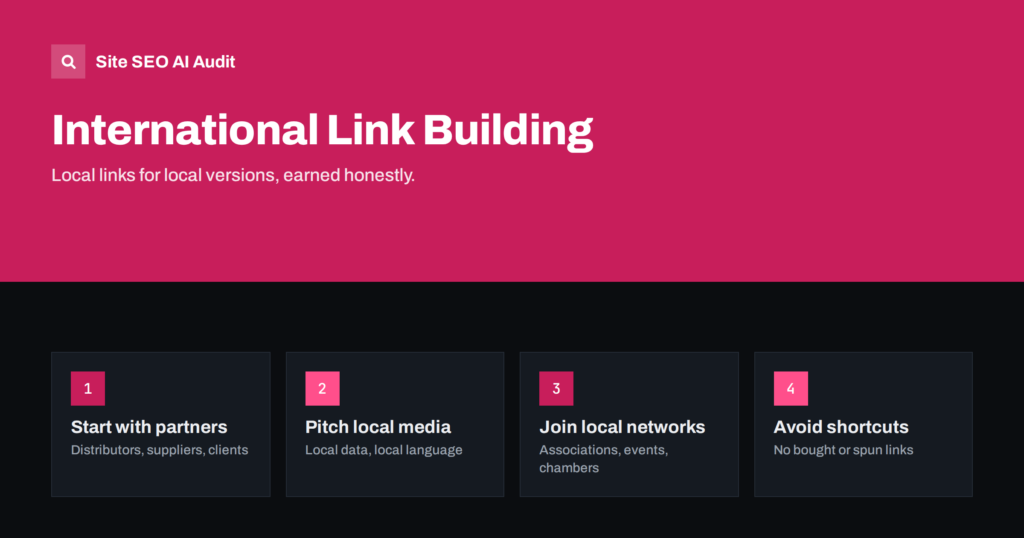
International Link Building: Earning Links in Each Market
How to earn links for each country or language version of your site: which local sources count, how structure affects link value, and what…
 29 de set. de 2026 · 8 min de leitura
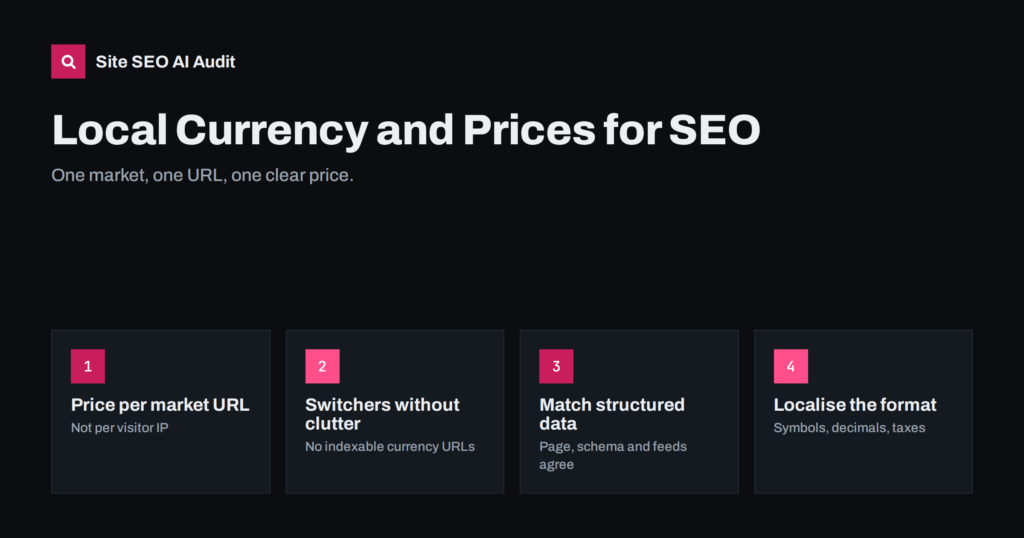
Local Currency and Prices on International Sites for SEO
How to show local currencies and prices on an international site without hurting SEO: URL setup, currency switchers, structured data, taxes and common mistakes.