 ENEnglish
 LTLietuviškai
 DEDeutsch
 FRFrançais
 RUРусский
 ESEspañol
 PLPolski
 ITItaliano
 UKУкраїнська
 CSČeština
 PTPortuguês
 JA日本語
JA日本語 LVLatviešu valoda
 ETEesti
 HUMagyar
 IDBahasa Indonesia
 TRTürkçe
 HIहिन्दी
 ELΕλληνικά
 ARالعربية
 THไทย
THไทย VITiếng Việt
 RORomână
 MSBahasa Melayu
 BNবাংলা
#International SEO
International SEO is the work of making a website findable by searchers in more than one country or language. It covers how the site is structured, how language and country versions are signalled to search engines, and how content is adapted for each market. Typical tasks include choosing between country domains, subdomains and subfolders, adding hreflang annotations and keeping translations consistent. It also includes local keyword research, because people in different markets search with different words. Articles under this tag explain the concepts in plain language and show how to check and fix the most common problems.
 6 Ağu 2026 · 8 dk okuma
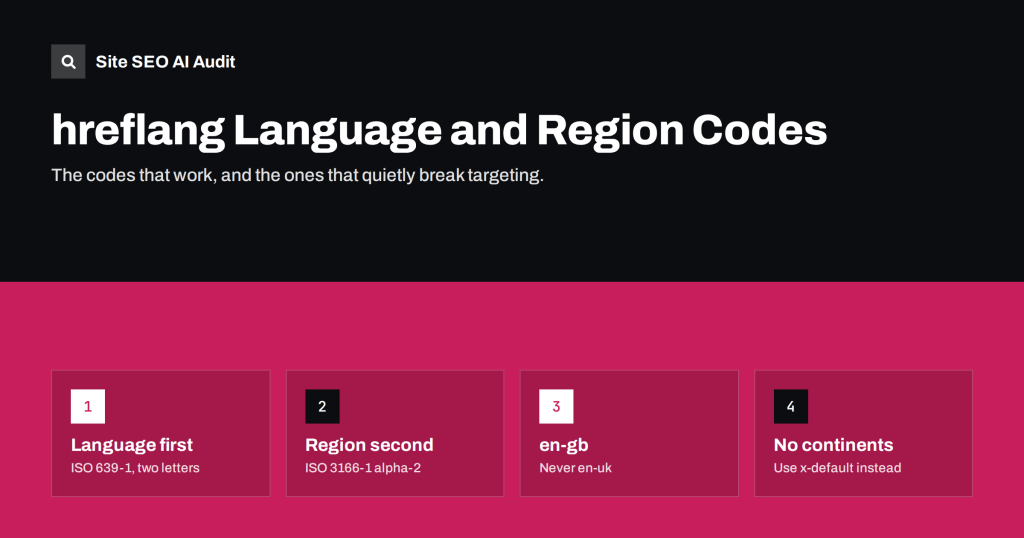
hreflang Language and Region Codes: A Practical Reference
Use the right hreflang codes: ISO 639-1 languages, ISO 3166-1 regions, en-gb not en-uk, and how to handle Chinese, Norwegian and Spanish for Latin…
 5 Ağu 2026 · 8 dk okuma
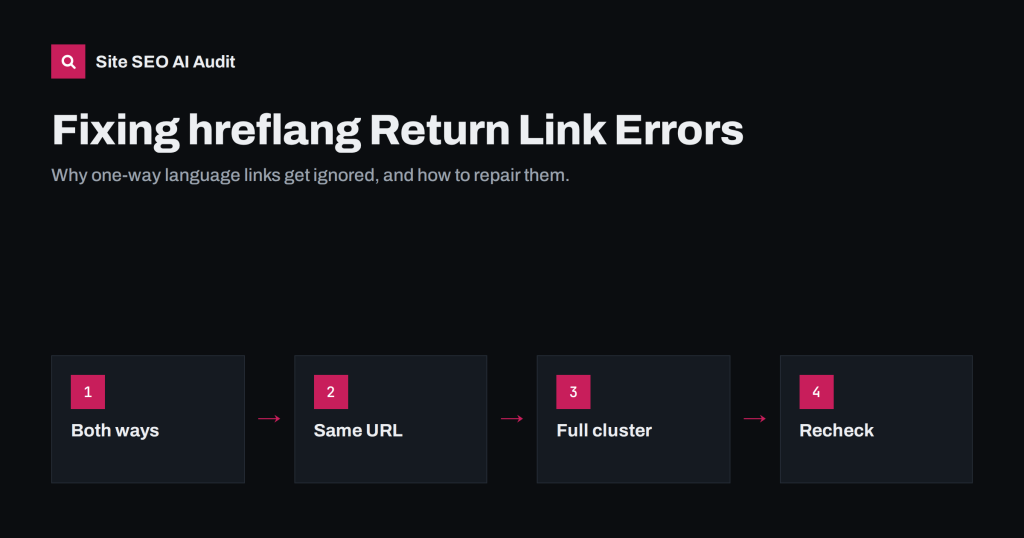
hreflang Return Links: How to Fix “No Return Tags” Errors
A missing hreflang return link makes search engines ignore your language annotations. Learn why return tags break, how to find them and how to…
 4 Ağu 2026 · 8 dk okuma
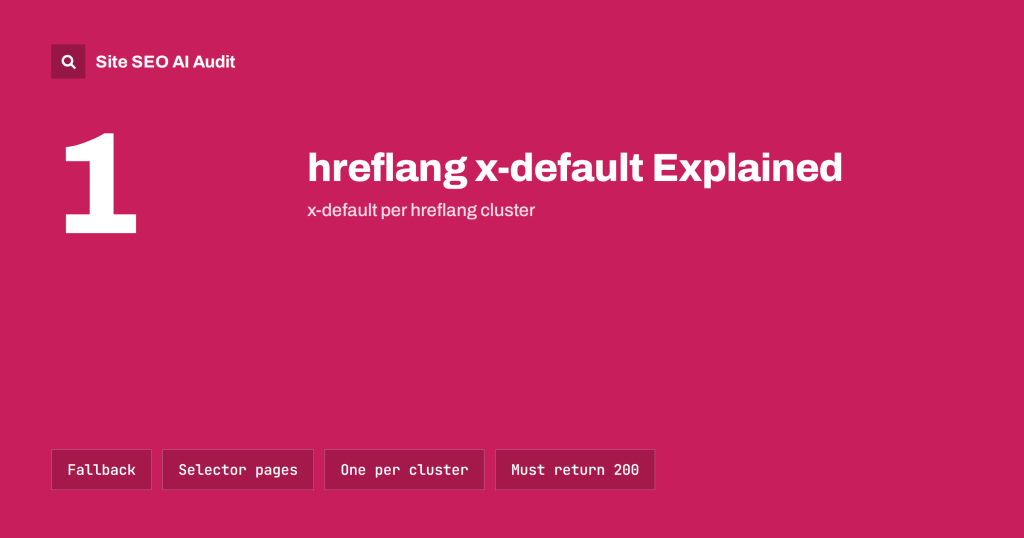
hreflang x-default: When to Use It and How to Set It Up
The x-default hreflang value tells search engines which page to show when no language version fits. Learn when to use it, where to point…
 3 Ağu 2026 · 8 dk okuma
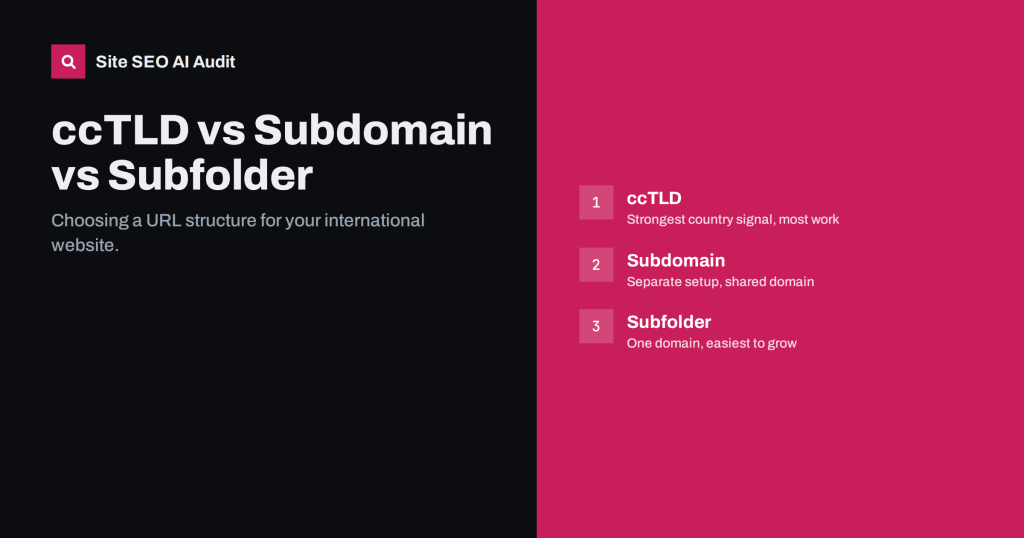
ccTLD vs Subdomain vs Subfolder for International Sites
Country domains, subdomains or subfolders? Compare the three international URL structures on cost, signals, maintenance and SEO, and pick the right one.
 1 Ağu 2026 · 8 dk okuma
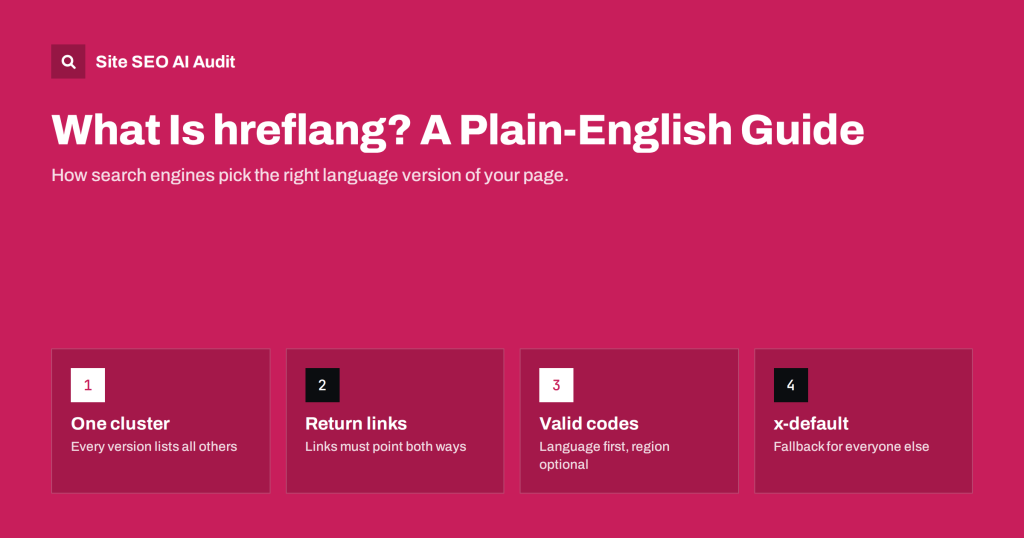
What Is hreflang? A Plain-English Guide for Site Owners
Hreflang tells search engines which language or country version of a page to show. Learn how it works, where to put it and how…