 ENEnglish
 LTLietuviškai
 DEDeutsch
 FRFrançais
 RUРусский
 ESEspañol
 PLPolski
 ITItaliano
 UKУкраїнська
 CSČeština
 PTPortuguês
 JA日本語
 LVLatviešu valoda
 ETEesti
 HUMagyar
 IDBahasa Indonesia
 TRTürkçe
 HIहिन्दी
 ELΕλληνικά
 ARالعربية
 THไทย
 VITiếng Việt
 RORomână
 MSBahasa Melayu
 BNবাংলা
#Content quality
Content quality describes how well a page satisfies the person who landed on it. Search engines try to reward pages that are helpful, accurate, original and written with real knowledge of the subject. Typical quality problems include thin pages with little useful text, near-duplicate pages, outdated information and content written for keywords rather than readers. Improving quality usually means adding substance, removing padding and merging or retiring weak pages. The guides under this tag show how to judge, measure and improve content quality across a website.
 22 oct. 2026 · 8 min de lecture
Evergreen Content: How to Build Pages That Keep Ranking
Evergreen pages earn traffic for years when they are planned, maintained and linked well. Learn how to choose topics, structure pages and keep them…
 22 oct. 2026 · 7 min de lecture
AI Search for Municipalities and Public Sector Websites
Residents ask AI assistants how to renew a permit or where to pay a fee. Learn how municipal and public sector websites can give…
 21 oct. 2026 · 8 min de lecture
SEO Style Guide: Editorial Rules for a Consistent Blog
A short style guide keeps titles, headings, links and formatting consistent across writers. Learn what to put in it, how to enforce it and…
 21 oct. 2026 · 8 min de lecture
AI Search for Banks, Insurers and Financial Advisers
Money questions are answered by AI assistants with extra caution. Learn how banks, insurers and advisers get cited: clear facts, named experts, dates and…
 21 oct. 2026 · 8 min de lecture
Recipe Schema Guide: Rich Results for Food Websites
Recipe structured data can earn rich results with photos, ratings and cooking times. Learn the required fields, common errors and how to test the…
 19 oct. 2026 · 8 min de lecture
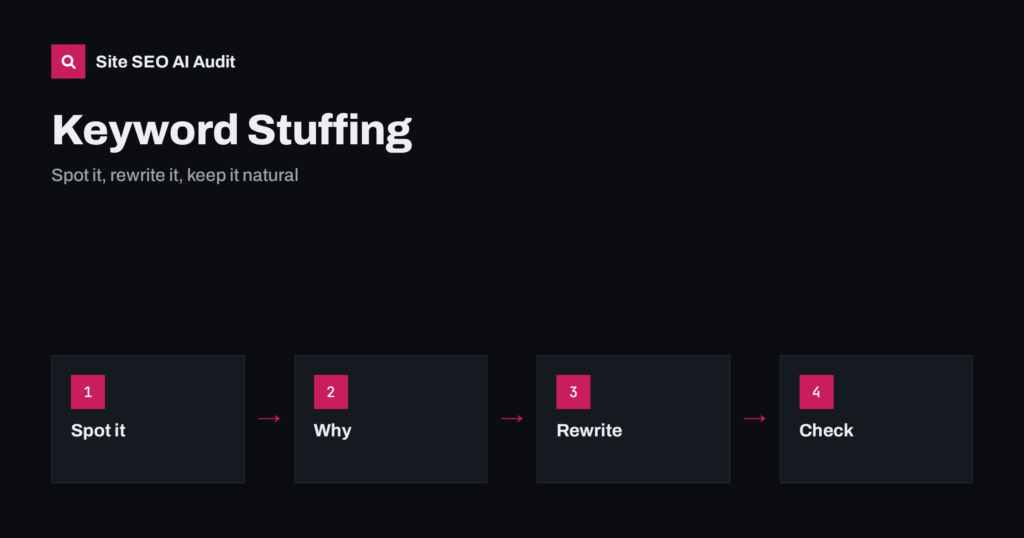
Keyword Stuffing: How to Spot It and Fix It Naturally
Keyword stuffing makes pages hard to read and can hurt trust and rankings. Learn how to spot it, rewrite for clarity and use related…
 16 oct. 2026 · 8 min de lecture
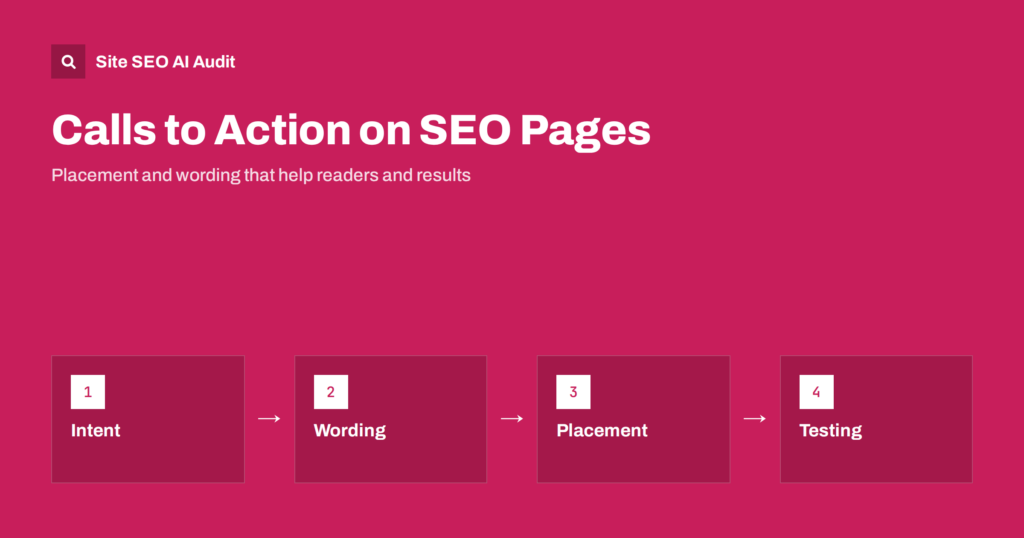
Calls to Action on SEO Pages: Placement and Wording
A call to action should help the reader take the next step without hurting the page. Learn where to place it, how to word…
 15 oct. 2026 · 8 min de lecture
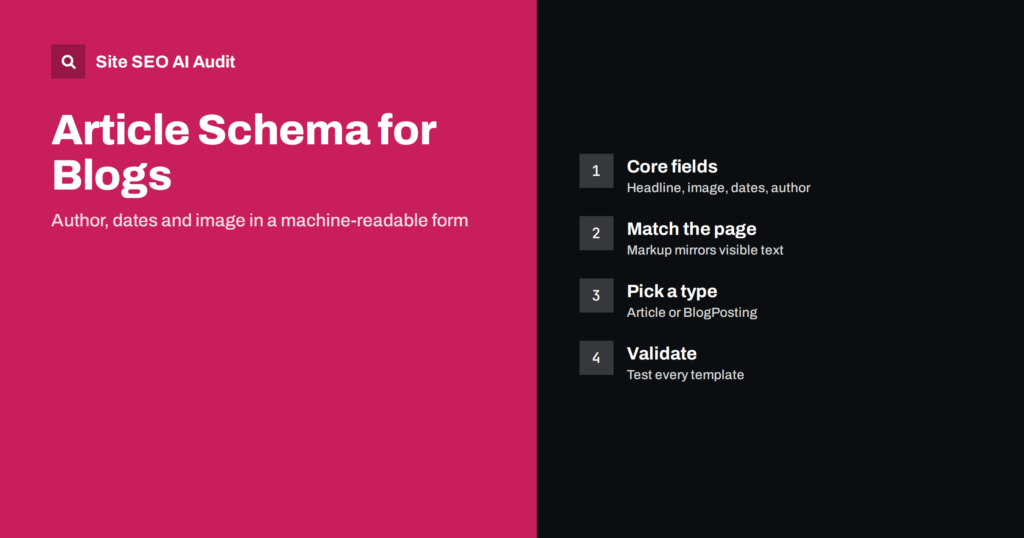
Article Schema for Blog Posts: Fields That Matter
Article and BlogPosting markup tells machines who wrote a post, when and what it is about. See the fields to include, a clean example…
 15 oct. 2026 · 8 min de lecture
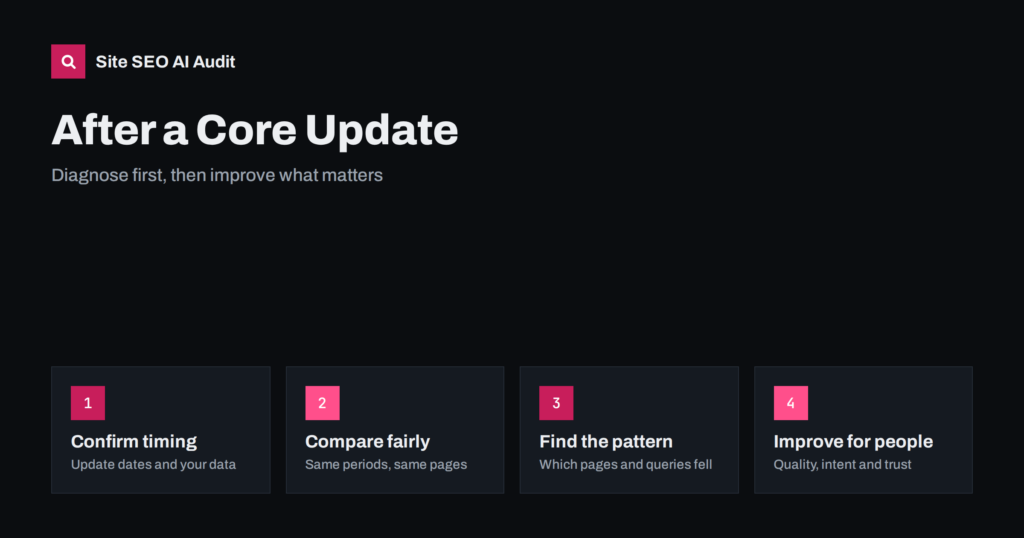
Google Core Updates: How to Respond to a Ranking Drop
Rankings fell after a core update? Learn how to confirm the cause, compare the right data, avoid panic edits and improve pages that lost…
 13 oct. 2026 · 8 min de lecture
HTML Tables and SEO: When Data Tables Help a Page Rank
A clear HTML table can earn a table snippet and get quoted by AI answers, while a table pasted as an image says nothing.…
 10 oct. 2026 · 8 min de lecture
Blog Comments and User Reviews: SEO Benefits and Risks
Comments and reviews add fresh, real-world text to pages, but spam and thin threads can hurt. When user content helps SEO, how to moderate…
 30 sept. 2026 · 8 min de lecture
Boilerplate Text: How Repeated Blocks Affect Your Pages
Headers, footers, disclaimers and templated blocks repeat on every page. Learn when boilerplate is harmless, when it makes pages look alike and how to…