 ENEnglish
 LTLietuviškai
 DEDeutsch
 FRFrançais
 RUРусский
 ESEspañol
 PLPolski
 ITItaliano
 UKУкраїнська
 CSČeština
 PTPortuguês
 JA日本語
JA日本語 LVLatviešu valoda
 ETEesti
 HUMagyar
 IDBahasa Indonesia
 TRTürkçe
 HIहिन्दी
 ELΕλληνικά
 ARالعربية
 THไทย
THไทย VITiếng Việt
 RORomână
 MSBahasa Melayu
 BNবাংলা
#Localization
Localization means adapting content for a specific market, not just translating the words. It includes currency, units, date formats, examples, legal details, contact information and the terms local people actually search for. Good localization makes a page feel native to its readers, which helps both conversions and search visibility. Poor localization often shows up as mixed languages, untranslated templates or prices in the wrong currency. Articles under this tag explain what to localize and how to check that it has been done well.
 21 août 2026 · 8 min de lecture
Should You Translate URL Slugs on a Multilingual Site?
Translated or original-language slugs? The SEO and usability trade-offs, handling accents and non-Latin scripts, and changing slugs without losing traffic.
 19 août 2026 · 8 min de lecture
Machine Translation and SEO: What Is Safe to Publish
Can you publish machine-translated pages without hurting SEO? What search engine policies say, where the real risks are and a review workflow that works.
 18 août 2026 · 8 min de lecture
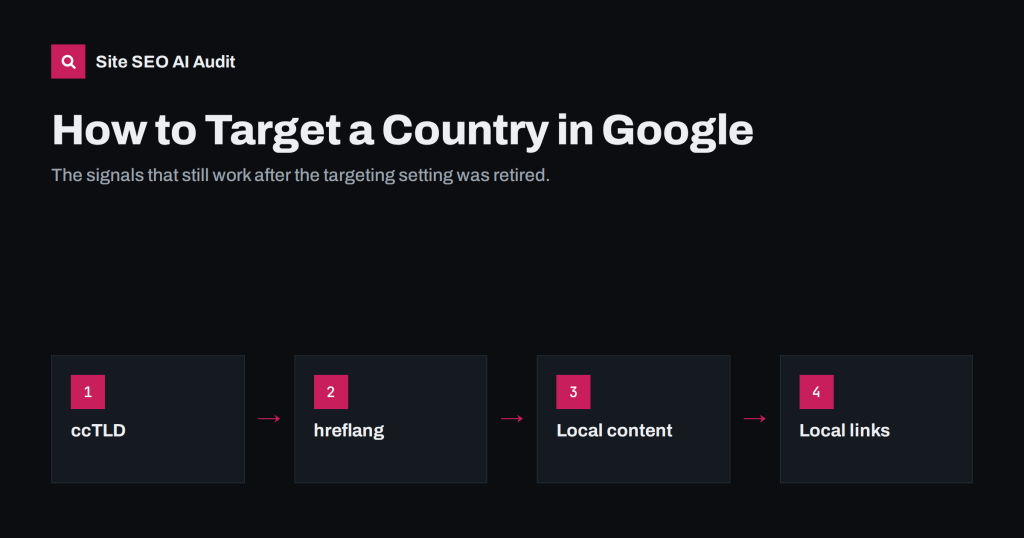
How to Target a Specific Country in Google Search Today
Google retired its country targeting setting, so how do you target a country now? The signals that still work: domains, hreflang, local content and…
 17 août 2026 · 8 min de lecture
Same Language, Different Countries: How to Target en-US and en-GB
How to run separate pages for the US, UK, Australia or Spain and Mexico without duplicate trouble: when to split, what to change and…
 13 août 2026 · 8 min de lecture
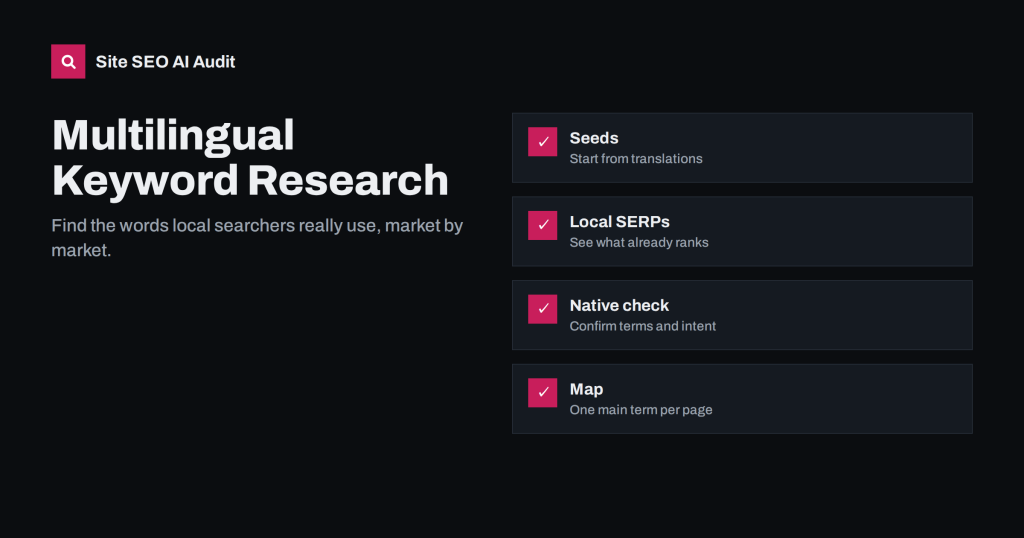
Multilingual Keyword Research: Finding Real Local Search Terms
How to research keywords in other languages and countries: seed terms, local SERPs, native reviewers and mapping terms to pages, without trusting translations.
 12 août 2026 · 8 min de lecture
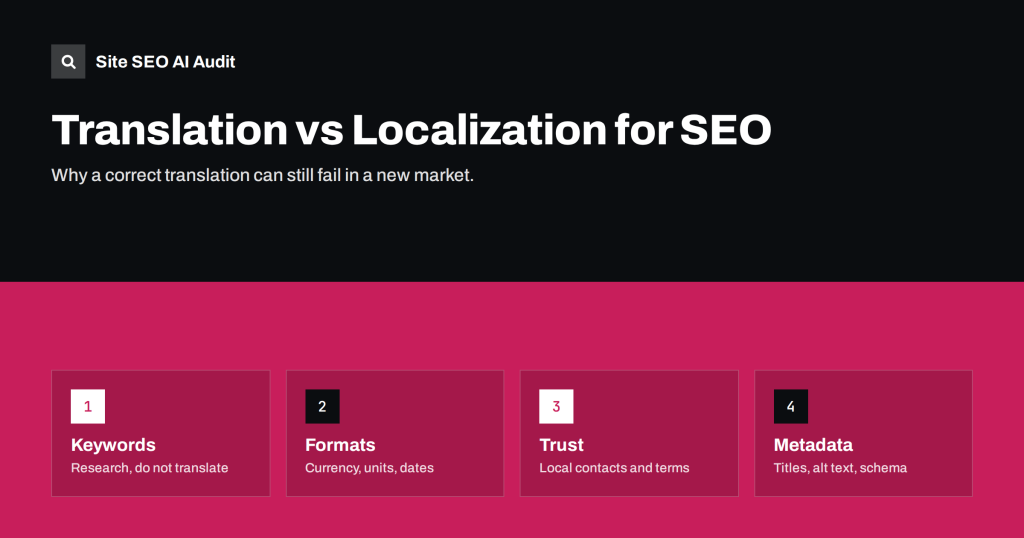
Translation vs Localization for SEO: What Actually Changes
Translation changes the words; localization adapts the page to a market. See what to localize for SEO, from keywords and currency to metadata and…
 7 août 2026 · 8 min de lecture
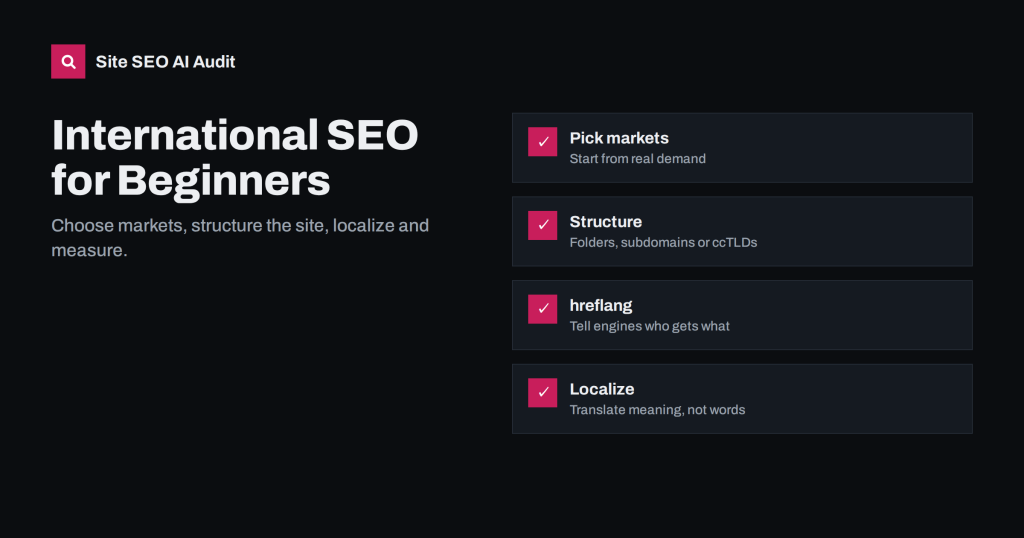
International SEO for Beginners: How to Take a Site Global
New to international SEO? Learn how to choose markets, structure URLs, set up hreflang, localize content and measure results, step by step and in…
 6 août 2026 · 8 min de lecture
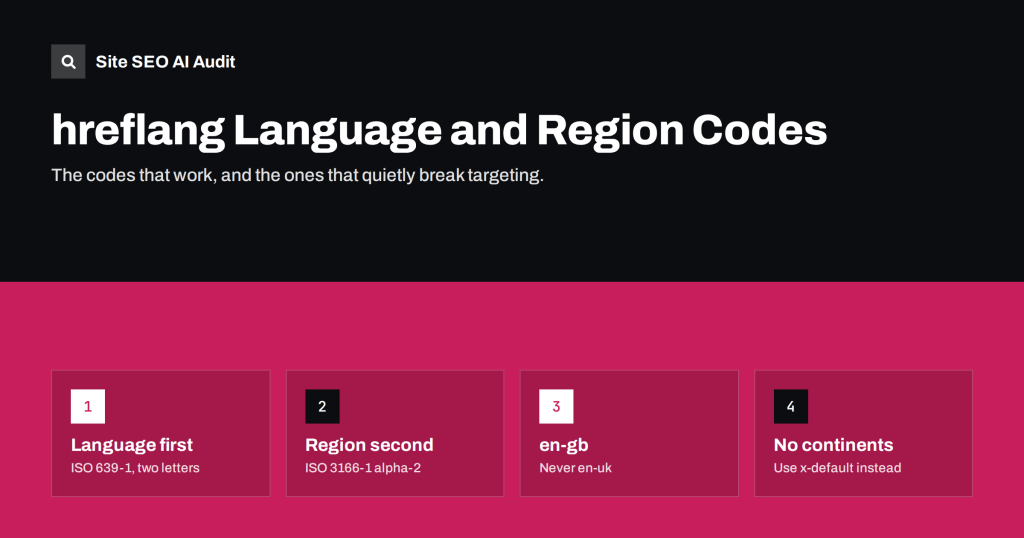
hreflang Language and Region Codes: A Practical Reference
Use the right hreflang codes: ISO 639-1 languages, ISO 3166-1 regions, en-gb not en-uk, and how to handle Chinese, Norwegian and Spanish for Latin…