ENEnglish
 LTLietuviškai
 DEDeutsch
 FRFrançais
 RUРусский
 ESEspañol
 PLPolski
 ITItaliano
 UKУкраїнська
 CSČeština
 PTPortuguês
 JA日本語
 LVLatviešu valoda
 ETEesti
 HUMagyar
 IDBahasa Indonesia
 TRTürkçe
 HIहिन्दी
 ELΕλληνικά
 ARالعربية
 THไทย
 VITiếng Việt
 RORomână
 MSBahasa Melayu
 BNবাংলা
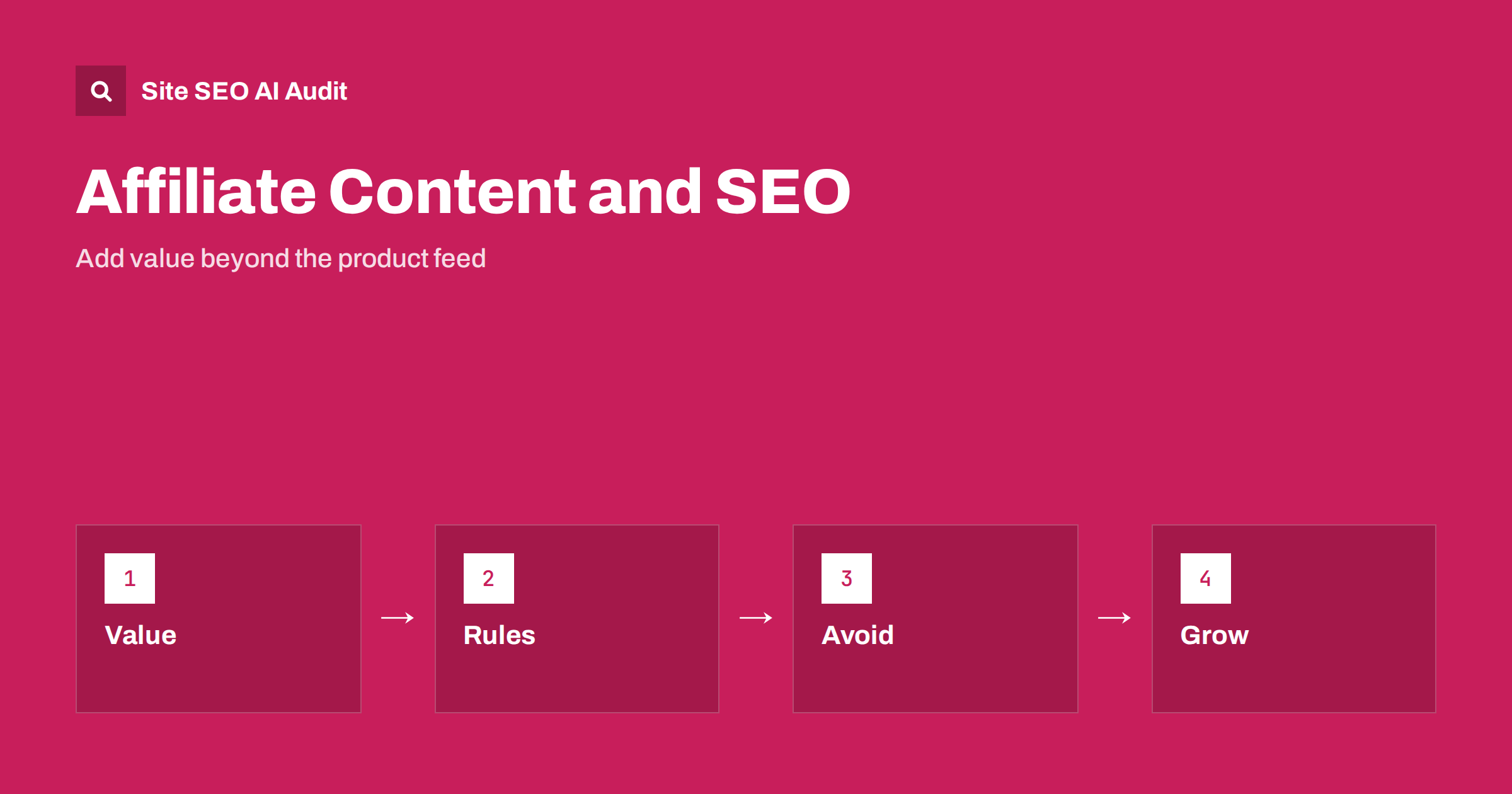
Short answer: Affiliate content earns commission by recommending products or services, and it does well in search only when it adds real value beyond what the merchant already publishes. Pages that repeat feeds, descriptions or lists of offers are treated as thin affiliate content and may be demoted. To stand out, test or use the products, show evidence, compare honestly, explain who each option suits, disclose commercial relationships clearly, mark affiliate links with the sponsored attribute and keep prices and facts current. Trust built over time is the real asset.
Affiliate publishing is crowded. Thousands of sites review the same products, copy the same descriptions and link to the same merchants, and search engines see little reason to show one over another. At the same time, readers do want help choosing: which laptop for a student, which hosting for a small shop, which software for invoicing. A page that helps them decide, and says honestly how it is paid, can still earn visibility. The difference lies in experience, evidence and honesty. This guide explains how to create content that deserves to rank, how to handle links and disclosure and how to build a site that lasts longer than a single algorithm change. For the quality background, see the Google spam policies guide.
What search engines expect from affiliate pages
Search engines do not reject affiliate links; they reject pages with little original value. Guidance on spam describes thin affiliate pages as pages with product descriptions and reviews copied from the merchant, with little or no original content. Guidance on product reviews asks for evidence of real use, such as photographs, measurements and comparisons, and a discussion of benefits and drawbacks. In practice the question is simple: if the commission links were removed, would the page still help the reader? If so, it has value. If the page exists only to pass visitors to a merchant, it adds nothing to the web.
Show real experience and evidence
The strongest affiliate content comes from people who used what they recommend. Describe how you tested, how long, in what setting and with what result. Add your own photographs, screenshots, measurements and notes, and include the downsides, not only the strengths. Explain who the product suits and who should skip it. A short, well-argued review with evidence beats a long page that rewrites a brochure. Name the author, show their background and keep the page updated when the product changes. These practices support the signals described in E-E-A-T and AI search.
Compare honestly and help people decide
Comparison and selection pages help readers most when they are clear about criteria. Explain how you evaluated, which factors matter, which options win for which purpose and why. Use tables where they help, and list prices and key specifications with the date checked. Include options for which you earn no commission when they are a better fit, since this shows independence and builds trust. Avoid ranking by commission rate without saying so. Structure comparison content so that each option has a clear name, summary and verdict that can be read alone, which suits both skimming readers and AI answers, as discussed in comparison pages and AI search.
Disclose relationships and mark links
Readers should know when you earn money from a link. Place a clear disclosure near the top of the page, in plain language and before the first affiliate link, not hidden in a footer. Rules about endorsements and advertising apply in many countries, so check the requirements for your audience. For search engines, mark affiliate links with the sponsored attribute, and add the nofollow attribute if you wish, as explained in the nofollow, sponsored and UGC guide. Do not disguise affiliate links as ordinary editorial links, and do not use link cloaking in a way that hides the destination. Honest labelling protects you from penalties and from loss of trust.
Avoid thin and duplicated pages
A catalogue of automatically generated pages from a product feed is the classic thin affiliate site. If many pages share the same description, differ only in the product name and offer nothing original, they should be improved, merged or removed. Choose fewer topics and cover them deeply, with one strong page for each purchase decision instead of many weak ones. Where you must list many products, add useful original text for each, such as tested results or a clear summary of fit. The cleaning approach is explained in the thin content guide and the content pruning guide.
Match search intent at every stage
Affiliate traffic comes from several kinds of query. Some people are exploring a problem, some compare options, some look for a specific product and some want a discount or a how-to after purchase. Build content for each stage: guides that solve the problem, comparisons that help to choose, reviews that go deeper and support pages that help people after they buy. A site that helps before and after the sale earns return visits and links, and is less dependent on a single type of page. Read the query results to see what format dominates, and write the page that serves the intent better than the existing ones. The principles are covered in the search intent guide.
Keep prices, facts and links current
Outdated offers destroy trust. Review pages regularly: check that products still exist, prices and features are correct, links work and deals have not expired. Show the date you last checked, and remove or rewrite pages for discontinued products. Merchants change programmes, so keep a record of which links you use and where. A page with correct, current information is more useful to readers and to assistants that quote facts. Add a process for monitoring, such as a monthly check of the top pages and a quarterly check of the rest.
Build a brand, not only pages
Affiliate sites that survive changes in search are usually brands. They have a clear audience, a consistent voice, authors with names, newsletters or communities and content that people mention and share without a commission in mind. Diversify your traffic and revenue: do not rely on one merchant, one programme or one search feature. Invest in original research, tools or videos that others cite. Over time, readers who trust your recommendations come back directly, which is the best protection against any algorithm change.
Choose programmes and products carefully
Your choice of what to recommend shapes your reputation. Prefer products you have used or can test honestly, from merchants with clear terms, reliable support and fair return policies. Read the programme rules before you join: some forbid certain kinds of promotion, require specific wording or reduce commission when links are used in certain ways. Do not recommend a poor product because it pays more, because returned goods, complaints and negative reviews affect both income and credibility. Keep a record of the programmes you use, their terms and the dates of any changes. A smaller set of programmes that you understand well is easier to manage than a long list of links you never check, and it leads to better content because you know what you are writing about.
A practical way to start is to audit what you already have. List your affiliate pages, mark which ones contain original evidence, which only repeat merchant text and which are out of date. Improve the strongest first by adding photographs, test notes and a clear verdict, merge pages that cover the same decision and remove those that no longer help anyone. Then set a simple publishing standard: every new page needs an author, a testing note, a disclosure, labelled links and a review date. A short standard applied consistently lifts quality across the site more than occasional large rewrites, and it makes the site easier to run when more people contribute.
Finally, remember the reader on a phone. Many affiliate visits come from mobile devices, so test your pages for speed, readable tables, visible disclosure and buttons that are easy to tap. Avoid pop-ups that cover the content, heavy scripts from many partners and links that open confusing pages. A fast, clear page is more likely to be read to the end, and a reader who finishes is more likely to follow a recommendation.
Site SEO AI Audit does not evaluate affiliate programmes or the quality of your reviews. It crawls your pages like a search engine and reports thin and duplicate content, titles and descriptions, broken links, nofollow links, structured data and speed, which helps you find the technical problems that hold good content back. The first audit of up to 200 pages is free; larger sites can see the pricing page.
Related reading
The bottom line
Affiliate content ranks when it helps readers more than the merchant’s own page. Show real experience, compare honestly, disclose and label links, avoid thin copies, keep facts current and build a brand people return to.
FAQ
Are affiliate links bad for SEO?
No. Pages with little original value are the problem. Label affiliate links with the sponsored attribute and focus on useful content.
Where should I put the affiliate disclosure?
Near the top of the page, in plain words and before the first affiliate link. A footer note alone is not clear enough.
Can I use merchant product descriptions?
Avoid copying them. Write your own summary based on use and testing, and add original photographs, data and a verdict.
How many affiliate pages should I publish?
Fewer, stronger pages are better than many thin ones. Cover each decision thoroughly and prune pages that add nothing.
How do I show independence?
Explain your criteria, include downsides, mention options without commission when they fit better and disclose how you earn money.