ENEnglish
 LTLietuviškai
 DEDeutsch
 FRFrançais
 RUРусский
 ESEspañol
 PLPolski
 ITItaliano
 UKУкраїнська
 CSČeština
 PTPortuguês
 JA日本語
 LVLatviešu valoda
 ETEesti
 HUMagyar
 IDBahasa Indonesia
 TRTürkçe
 HIहिन्दी
 ELΕλληνικά
 ARالعربية
 THไทย
 VITiếng Việt
 RORomână
 MSBahasa Melayu
 BNবাংলা
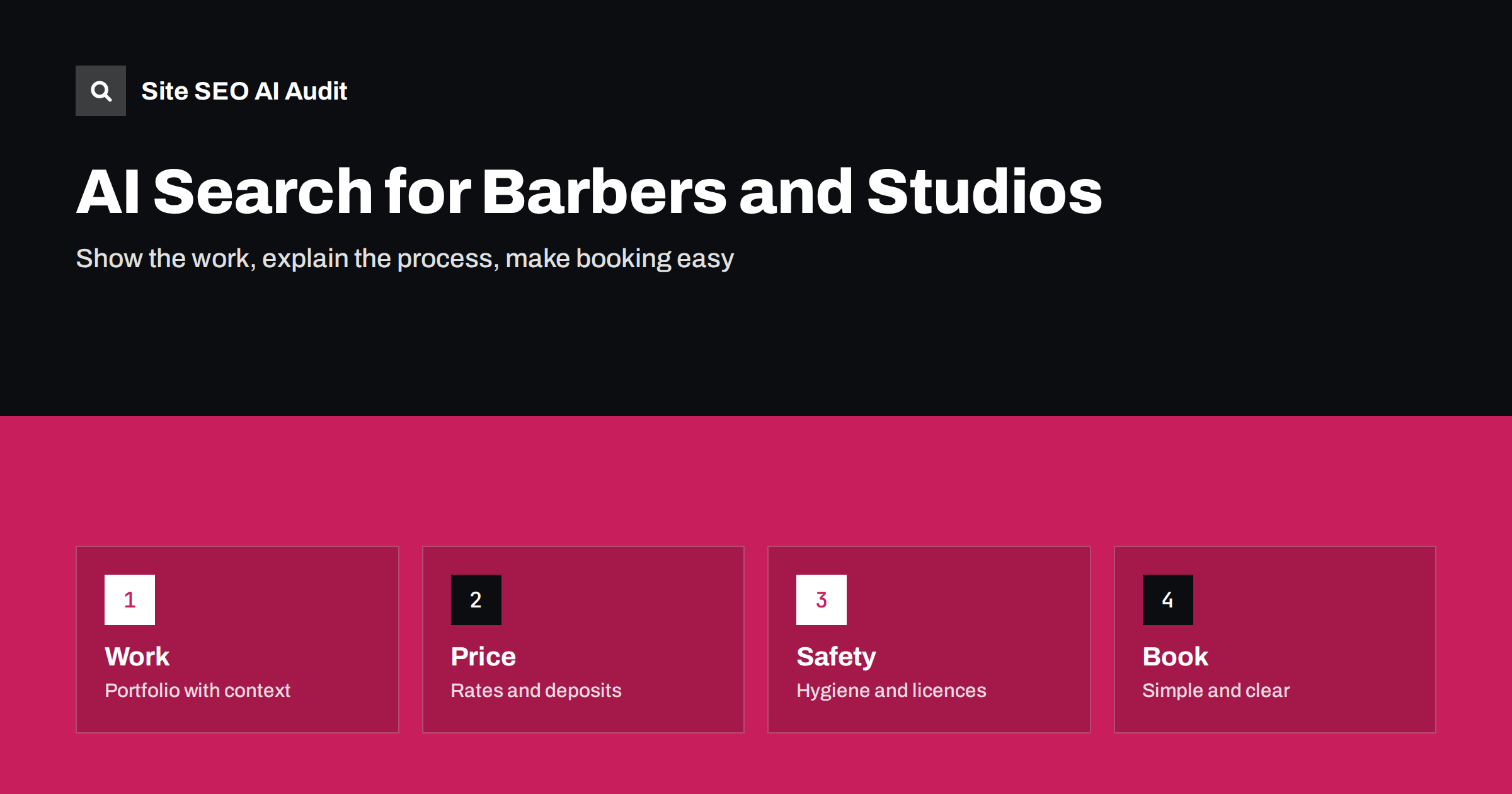
Short answer: People ask assistants where to get a fade, a beard trim, a first tattoo or a piercing, and who is safe and good. Studios that appear in answers publish a portfolio with context for each piece of work, clear price guidance and deposit rules, visible hygiene and licensing information, artist or barber profiles with specialities, simple booking and aftercare advice, and consistent local details. Specific pages beat a gallery of unlabelled photos.
Personal-care businesses live on reputation and visual proof, but their websites often consist of an image feed and a phone number. Search engines cannot see what a photo shows, and assistants cannot recommend a studio whose style, prices and safety practices are not written down. The work you already do for clients, explaining and advising, is exactly what needs to be published. This guide shows how barbers, tattoo artists and piercers can do it. For the general method, see the AI search visibility checklist.
What people ask before booking
Questions differ by service. For barbers: who does the best skin fade nearby, how much is a haircut and beard trim, do I need an appointment, do you cut children’s hair. For tattoo studios: who specialises in fine line or traditional styles, how much does a small tattoo cost, how does a consultation work, what is the deposit, how should I care for a new tattoo. For piercings: which jewellery materials are safe, what age is allowed, how long does healing take.
Collect the actual questions from messages, comments and consultations. Group them into style, price, process, safety and aftercare. Each group becomes a page or a section that begins with a direct answer.
Turn the portfolio into searchable content
Galleries without text are invisible to machines. Give each portfolio item or collection a heading, a short description and metadata that people care about: the style, the placement on the body, the approximate size, the time it took, the artist or barber and, with consent, the type of client. For haircuts, name the cut, the products and the maintenance advice. Use descriptive file names and alt text, following the image alt text guide.
Organise work by style and service, such as fine line, blackwork, cover-ups, classic cuts and beard design, with a page for each. A visitor who wants a specific style should land on a page about it, with examples and the person who does it best. Get consent before publishing client photos, avoid identifying details and respect the wishes of clients who prefer privacy. Technical guidance for images is in the guide to file names and captions.
Introduce the people
Customers choose a person as much as a studio. Create a profile for each barber or artist with a short biography, specialities, years of experience, training, awards if verifiable, languages spoken and which services they offer. Add a link to their own portfolio section and to booking. Explain who does consultations and how to choose between artists.
Profiles should reflect genuine expertise and be updated when someone joins or leaves. A real photo and a plain description help trust. They also supply the personal, experience-based details that search systems look for, as covered in the E-E-A-T guide. Avoid unsupported superlatives such as “the best in the city”.
Pricing, deposits and policies
Price is a decision factor, and the best answer is a range with explanation. For haircuts, publish a price list with durations. For tattoos, explain that prices depend on size, detail, placement and time, give an hourly rate or minimum charge, and show examples with approximate prices. Describe how deposits work, whether they are refundable, how rescheduling and cancellations are handled and what happens with late arrivals.
Spell out age and identification requirements and any restrictions, such as aftercare conditions or refusal of work in certain cases. Clear policies prevent conflict and show professionalism. Keep them on a dedicated page linked from booking and service pages.
Hygiene, licences and safety
Safety information is critical for tattoo and piercing studios and reassuring for barbers. Describe your hygiene practices in plain words: single-use needles and razors, sterilisation of equipment, glove use, surface disinfection and waste disposal. State your licence, registration or inspection status as your local rules require, and link to the authority’s public record if available. Mention materials used for jewellery and inks, with standards where they apply, and explain what happens if a client has an allergy or medical condition.
Do not make medical claims beyond your role, and recommend that clients consult a doctor when appropriate. Accurate safety content builds trust with customers and with systems that favour careful sources, in the same way as in the guide for beauty and wellness businesses.
Aftercare and educational pages
Aftercare guides are among the most searched topics for tattoos and piercings. Write clear, step-by-step instructions for each service: cleaning, products to use and avoid, healing stages, signs of problems and when to see a doctor. For barbers, guides on maintaining a cut, caring for a beard or choosing products are useful. Date the pages, show the author and review them periodically.
Educational content also answers first-timer questions: how to prepare for a session, what to eat, what to wear, how to choose a design and how to talk to an artist. These pages attract people early in their decision and demonstrate care for the customer.
Consultations, custom work and managing expectations
Much of a tattoo or piercing business is custom work, so explain how it starts. Describe the consultation: whether it is free, how long it takes, what to bring, how designs are developed and how many revisions are included. Say what you will not do, such as copying another artist’s work, tattooing certain areas or working on intoxicated clients. Straight talk about limits and the creative process prevents misunderstandings and signals integrity.
For barbers, describe the consultation at the chair: how you assess hair type and head shape, how you agree the style and what you recommend for maintenance. A short page about first visits, or about what to ask for when you are not sure, answers many questions and helps new customers feel at ease. Include realistic notes about how long different services take, so that clients can plan their day and avoid delays for the next appointment.
Reviews, social proof and keeping content fresh
Reviews matter greatly here, but so do your own words about outcomes. Invite feedback after appointments, answer calmly and never offer rewards for positive ratings. Show a few genuine testimonials on service pages with permission. Link your social profiles to the website and make sure the studio name, address and hours match everywhere.
Update your portfolio regularly, but keep the structure stable so that older pages are not lost. Review prices and policies each season, refresh aftercare guides when advice changes and remove staff who have left. Every few months, ask several assistants the questions your customers ask and note whether your studio is mentioned and correctly described. Correct the source pages when something is wrong. This regular upkeep keeps you visible in a field where trust and freshness both count.
Local details and booking
Keep your address, hours, phone number, parking and accessibility information consistent across your website and profiles, and mark them up with local business data as in the LocalBusiness schema guide. Say whether walk-ins are welcome and how far ahead appointments are usually booked. Make booking simple: a visible button, a short form or an online calendar, a confirmation message with the details and a reminder before the appointment.
If you take enquiries by message, explain what information helps, such as references, placement and size, and how long you typically take to reply. Fast, clear communication influences reviews, which in turn influence recommendations, as discussed in the guide to reviews and AI recommendations.
Finally, think about accessibility and inclusion. Say whether the studio has step-free access, whether you welcome clients of all backgrounds and ages within the legal limits, which languages your team speaks and whether you can accommodate clients with sensory or mobility needs. These details answer real questions, widen your audience and show the welcoming attitude that many people look for before booking a first visit to an unfamiliar studio. Keep them factual and specific rather than relying on slogans, and update them when your premises or team change.
Site SEO AI Audit crawls your website and checks status codes, titles, descriptions, headings, image alt text, broken links, structured data, page speed and AI visibility settings, which helps you find gallery pages with no text or missing image descriptions. It does not assess the quality of your work or your licences. The first audit of up to 200 pages is free, and larger sites can see the pricing page.
Related reading
- AI Search for Beauty and Cosmetics Brands
- Local Business AI Search
- AI Search for Events, Weddings and Creatives
The bottom line
Describe the work, the people, the prices and the safety practices in text, and make booking effortless.
GYIK
Should a tattoo studio publish prices?
Yes, as ranges, hourly rates and minimums with the factors that change the cost, plus deposit rules.
Can I post client photos?
Only with clear consent, and without identifying details if the client prefers privacy.
Do I need a page for each artist?
Yes. Customers choose a person, so each profile should show style, experience and a link to relevant work.
How should I present hygiene information?
In plain text on a dedicated page, with licence or inspection details and a link to the authority where possible.
Are aftercare guides worth writing?
Yes. They answer very common questions, help clients and show that you care about outcomes.