ENEnglish
 LTLietuviškai
 DEDeutsch
 FRFrançais
 RUРусский
 ESEspañol
 PLPolski
 ITItaliano
 UKУкраїнська
 CSČeština
 PTPortuguês
 JA日本語
 LVLatviešu valoda
 ETEesti
 HUMagyar
 IDBahasa Indonesia
 TRTürkçe
 HIहिन्दी
 ELΕλληνικά
 ARالعربية
 THไทย
 VITiếng Việt
 RORomână
 MSBahasa Melayu
 BNবাংলা
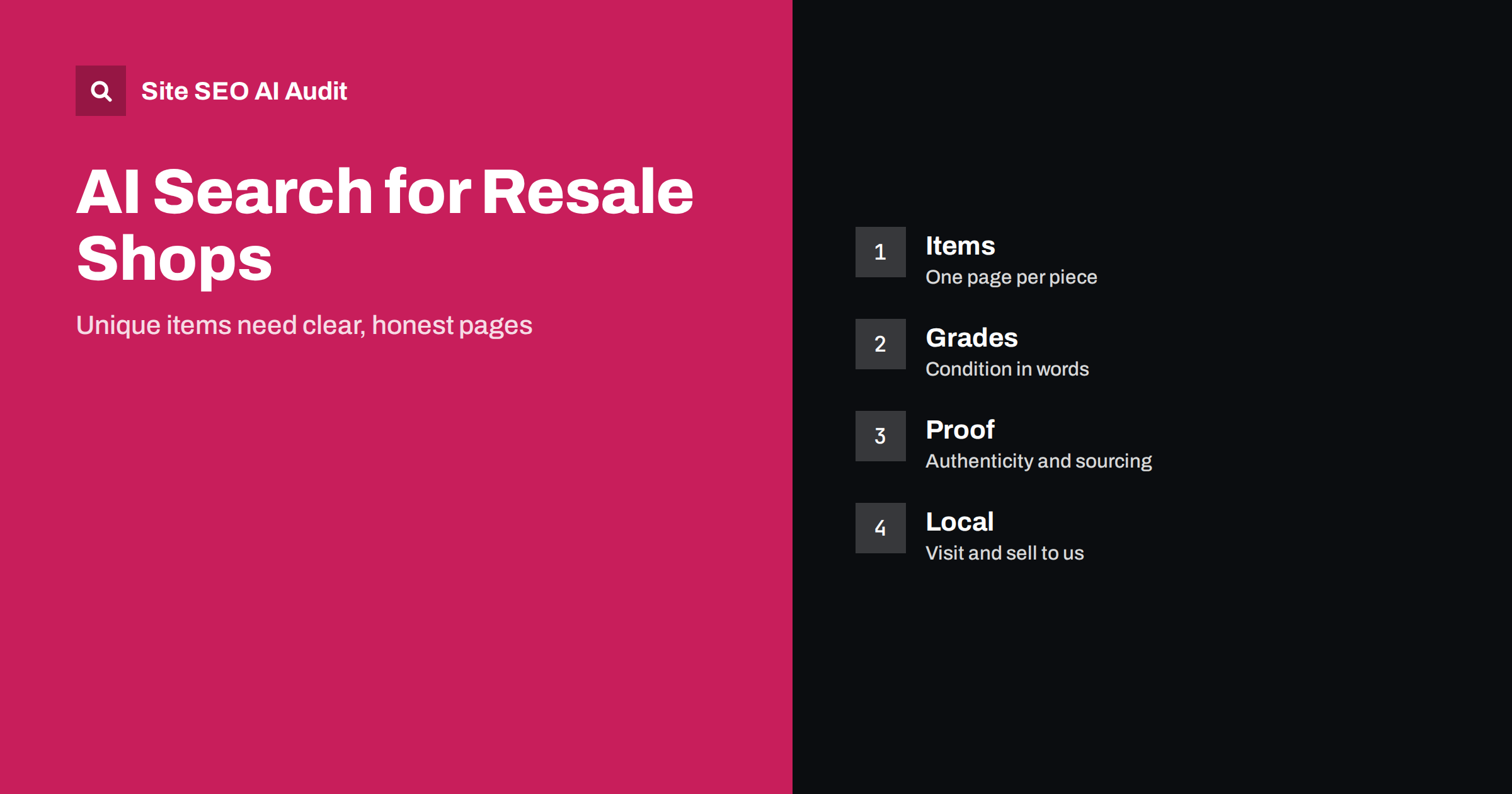
Short answer: People ask assistants where to find a vintage leather jacket, a second-hand pram in good condition or a shop that buys used furniture. Resale and vintage shops are named when their pages describe each item precisely, define condition grades in plain words, explain how items are sourced and authenticated and give clear local details and terms for selling to the shop. Unique stock needs unique, honest text, since no two pieces are alike.
Second-hand shopping is growing, for reasons of price, style and sustainability. Buyers of used goods need more reassurance than buyers of new ones. They worry about condition, authenticity, hygiene and returns, and they cannot compare against a standard product. Assistants therefore look for sources that answer these worries clearly. This guide explains what charity shops, consignment stores, vintage dealers and online resale sellers can publish, and how to handle the awkward fact that every item is sold only once. The general approach is in the generative engine optimization guide.
What buyers ask
Questions focus on a type of item and a quality: a mid-century teak sideboard in good condition, a vintage band t-shirt from a certain decade, a second-hand baby stroller that is safe, a pre-owned watch with papers. Others ask about the shop: is there a vintage store near me, who buys used designer bags, where can I donate furniture, does the shop offer a warranty? Pages should answer each kind of question with facts and clear terms.
Give each item a full page
Because items are unique, a good page does the work of a salesperson. Include a title with the type, brand, era or model, size and colour; the price; a description of the style, materials and construction; exact measurements; the condition with specific notes on wear, repairs and flaws; the origin or history if known; care or cleaning done before sale; and the terms of sale. Use real photographs from several angles, with close-ups of labels, marks and flaws, in good light on a plain, not white, background.
Plain, concrete language works best: a wool coat, size medium by the label, shoulder to shoulder 44 centimetres, length 98 centimetres, small repaired seam at the left cuff, no odours. A description such as great condition tells nothing. Mark up the item with product data that matches the page, including availability, as explained in the guide to product schema.
Define your condition grades
Terms such as excellent, very good and good mean different things to different sellers. Publish one page that defines your grades in plain words, with examples and photos, then use the same terms everywhere. For example, define what counts as a flaw, what is considered normal wear for the age of an item and what you do about stains, odours, missing parts or repairs. Explain what you test on electrical items and which checks you make on safety equipment such as child seats. For products with safety rules, state that you do not sell what cannot be sold used.
Honesty about flaws increases trust and reduces returns. Assistants quote a precise grade definition when asked what a condition label means, and a shop that defines its terms becomes the source for the answer.
Authenticity and sourcing
For designer goods, watches, collectibles and art, authenticity is the central concern. Explain how you verify items: who inspects them, what you check, whether you use outside authentication services and what happens if an item is found not to be genuine. Offer papers, receipts or serial numbers where available and mention them on the page. Do not use brand names to suggest an affiliation that does not exist, and follow trademark rules, describing items by what they are.
Describe where stock comes from: house clearances, consignment from private sellers, estate sales, donations, trade-ins or buying trips. Customers like provenance, and it supports claims about sustainability. Avoid claims you cannot prove, such as saving a precise amount of carbon for each item. Where a claim is based on a study, name the source. The need for evidence is discussed in the guide to original research and AI citations.
Handling items that sell once
A sold item is a problem for search: the page may be indexed, and visitors arrive to find a missing product. Do not delete these pages. Mark them as sold, keep the description and photos, and show similar items that are available. Such pages remain useful as references for price, era and brand, and they gather links. Over time they form an archive that proves expertise. Use structured data availability values that match the status. The topic is covered in the guide to out-of-stock product pages.
For items that you restock, such as a category of vintage jeans, create category pages with a stable address and a helpful introduction, and let the listings change. These category pages collect the ranking signals, while the item pages come and go. The structure is similar to the guide to category page SEO.
Sizing and fit for used clothing
Vintage sizes differ from modern ones, and labels are unreliable. Always provide measurements, and write a short guide to measuring and comparing with a garment the buyer owns. Explain eras and cuts in plain language, such as how a certain decade’s fit differs. Add model measurements only if you show items on a person, and say which size the model wears. A page that helps a buyer choose correctly reduces returns and shows expertise.
Local details and selling to the shop
Physical shops need accurate local information: address, hours, parking, accessibility and a note on whether items can be tried on or tested. Many questions are about selling or donating: what do you buy, how much do you pay, do you work on consignment, what is your commission, how long are items on sale, how do I book an appointment and what documents do I need. Create a page for each route, with clear terms and examples. For donations, explain what you accept and what you do with the rest.
Keep the details consistent across the website and listings, as covered in the guide to aligning a business profile with a website. If you hold events, such as swap days or repair workshops, give them pages with dates and times.
Returns, warranty and hygiene
Explain your return policy for used goods in plain language, including time limits, who pays for postage, what condition returns must be in and what rights buyers have under the consumer law of your country. If you offer a short warranty on electrical or mechanical items, state its length and what it covers. For clothing and items touching skin, describe how items are cleaned. These policies influence both purchase decisions and recommendations, and they should be easy to find from every item page. See the guide to shipping and returns pages for structure.
Pay attention to the crawl side. Resale shops produce huge numbers of pages that change daily, and a poorly controlled site can create endless filter addresses and thin pages. Make sure category and filter pages are controlled, sitemaps update quickly, sold pages return a normal status and AI crawlers are not blocked by mistake, in line with the guide to AI crawlers and robots.txt. Speed matters too, since many buyers browse on phones and image-heavy pages can be slow.
Here is a short example. A vintage clothing shop used photographs and the word vintage as the whole description of each item. After rewriting its pages, each piece had measurements, material, era, flaws and care notes, there was one page that defined its condition grades and another that explained how it verified designer labels, and sold items stayed as archive pages with links to similar pieces. When shoppers asked assistants for a 1980s wool coat in a given size, the shop’s pages gave the facts needed for a recommendation, and returns fell because the buyers knew what they were getting.
A small furniture resale shop took a different step: it wrote a short guide to checking solid wood against veneer, with photos from its own stock, and a page about how it restores items. The guide became its most visited page and brought customers who then browsed the stock. The expertise was real, and it was visible in the text.
Site SEO AI Audit crawls your shop and checks status codes, titles, descriptions, duplicate and thin content, image alt texts, structured data, links and page speed, which helps you find thin item pages and broken sold pages. It does not grade items or verify authenticity. The first audit of up to 200 pages is free, and the pricing page lists plans for larger shops.
Related reading
- AI Search for Fashion and Apparel Stores
- AI Search for Furniture and Home Decor
- AI Search for Jewelry and Luxury Brands
The bottom line
Resale and vintage shops are recommended when each unique item has a detailed page, condition grades are defined, authenticity and sourcing are explained and sold pages are kept.
GYIK
Should I delete pages of sold items?
No. Mark them as sold, keep the details and link to similar available items.
How do I describe condition?
Define your grades on one page and add specific notes on wear, repairs and flaws for each item.
What proves authenticity?
Papers, serial numbers, receipts and a clear description of who inspects items and how.
Do I need measurements for clothing?
Yes. Vintage labels vary, so give measurements and a short guide to comparing them.
Can I publish buying and consignment terms?
Yes. Explain what you buy, how you pay or share commission and how to book an appointment.