ENEnglish
 LTLietuviškai
 DEDeutsch
 FRFrançais
 RUРусский
 ESEspañol
 PLPolski
 ITItaliano
 UKУкраїнська
 CSČeština
 PTPortuguês
 JA日本語
 LVLatviešu valoda
 ETEesti
 HUMagyar
 IDBahasa Indonesia
 TRTürkçe
 HIहिन्दी
 ELΕλληνικά
 ARالعربية
 THไทย
 VITiếng Việt
 RORomână
 MSBahasa Melayu
 BNবাংলা
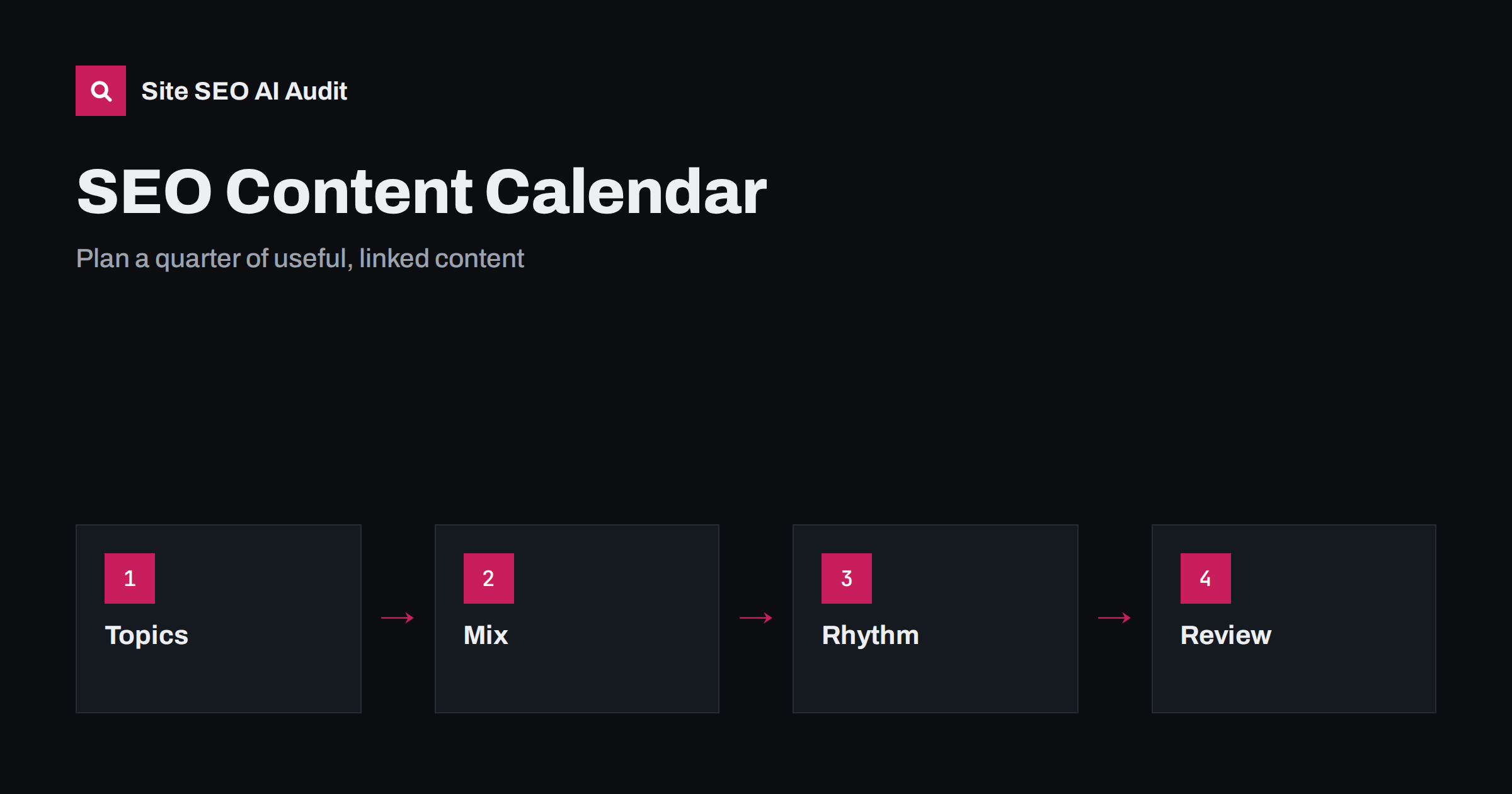
Short answer: An SEO content calendar is a plan that lists what you will publish or update, when, for which search topic, by whom and how you will judge it. To build one for a quarter, collect topics from keyword research and customer questions, group them into clusters, decide a realistic publishing pace, mix new pages with refreshes of old ones, schedule reviews and write down the goal for each item. Keep it simple enough that you actually follow it.
Most websites do not fail at content because of a lack of ideas. They fail because publishing happens in bursts, topics repeat, important pages are never updated and nobody checks whether anything worked. A calendar fixes the process, not the writing. It forces decisions about priority, links the topics to each other and gives you a way to see after three months what actually happened. This guide shows how to plan a quarter of content step by step, with a structure that works for a small team or a single owner.
Why a calendar helps SEO
Search engines and AI assistants reward sites that cover a subject thoroughly and keep it current. That is hard to achieve with random posts. A calendar helps in four ways. It turns scattered topics into clusters that support each other with internal links. It prevents duplicates and cannibalisation, because you see what already exists. It spreads work across the quarter so quality does not drop during busy weeks. And it creates a record to compare against results.
It is not a promise of rankings, and it should not become a cage. If a news event or a customer request creates a better opportunity, leave a few empty slots for it. A good plan is firm about priorities and flexible about dates.
Start with goals and capacity
Before choosing topics, answer two questions. What should the content achieve in the next three months: more visibility for a product category, more sign-ups from guides, fewer support questions, stronger local presence? And how much can you realistically produce with good quality? Count the hours you and your team have for research, writing, editing, images, publishing and promotion. A realistic plan of two strong pages a week beats an ambitious plan of ten thin pages that never gets finished.
Write the goal in one sentence and attach a way to measure it, such as clicks to a section of the site or sign-ups from content pages. Avoid goals you cannot track. The methods in measuring the effect of SEO changes explain how to judge results without fooling yourself.
Collect topics from real sources
Good topics come from evidence. Gather them in one sheet from several places and note the source of each.
- Keyword research: phrases your audience searches, grouped by intent. The process is explained in the keyword research guide.
- Search Console: queries that already bring impressions to pages that do not answer them well.
- Customer questions: emails, chats, sales calls and support tickets show the exact words people use.
- Competitor coverage: topics that others cover and you do not; see content gap analysis.
- AI answers: questions people ask assistants in your field, as described in prompt research.
- Your own product or service changes: launches, price updates and new features that need explanation.
Remove duplicates by meaning, not only by wording. Two ideas that would answer the same search intent should become one page, which prevents the problem described in keyword cannibalization.
Group topics into clusters and assign them to pages
Now organise the list. Group topics that belong to one subject and choose a main page for each group. This page is the hub; supporting pages answer specific questions and link back to it. The structure is described in topic clusters and pillar pages. For each topic decide whether it is a new page, an update of an existing page or a merge of weak pages.
Give every item a short brief: the target search intent, the main question the page must answer, the audience, the key facts to verify, the internal links to add and the goal. A brief of five lines saves hours later, and it helps when different people write. The guide to SEO content briefs shows what to include.
Balance new pages and refreshes
Many calendars list only new articles. That ignores the cheapest gains: pages that already have some visibility but are outdated, thin or poorly structured. As a rule of thumb, reserve a share of every quarter for updates. Review the pages that lost clicks, the ones that rank near the top of the second page and the ones with outdated facts. The process is described in how to refresh old content.
Also plan for pruning. Pages that are duplicate, empty or no longer relevant may be merged or removed with proper redirects, as explained in content pruning. Put these tasks on the calendar like any other, with a date and an owner, or they will never happen.
Choose a pace and a format you can sustain
Consistency matters more than volume. Pick a rhythm that fits your capacity, for example one in-depth guide every week and one update every week, or one guide every two weeks for a very small team. Avoid the common trap of publishing twenty posts in the first month and none afterwards. Spread the work: research and outlines in advance, writing in the middle of the week, editing and publishing at the end.
Vary the formats within your topic: a guide, a checklist, a comparison, a glossary page, a case study. Different formats answer different intents. For ideas on structure see how-to guide SEO and listicle SEO. Do not choose a format just for variety; choose the one that best answers the question.
Plan the details around each piece
A publishing date alone is not a plan. For each item add the steps that make it work: who writes, who fact-checks, who edits, who prepares images, who adds internal links from older pages and who updates the sitemap and any navigation. New pages should link to existing ones, and existing pages should link back to new ones, using descriptive anchors as explained in the internal linking strategy guide. Add a note for meta title and description, and plan images with descriptive alt text.
Think about seasons and events in your sector. If demand rises every year before a holiday or a busy period, publish or update the relevant pages weeks before the peak, so that they are indexed and ready. Keep the same URL year after year when the page serves the same need, which is the approach in seasonal pages and SEO.
Review results monthly and adjust the plan
Set a fixed monthly review. Look at which pages were indexed, which gained impressions and clicks, which attracted links or sign-ups and which did nothing. Give new pages time; many need several weeks before they show a pattern. Compare against the goal you wrote, not against vanity numbers. For underperforming pages ask three questions: does the page match the intent, is it linked well enough, and does it add something that competing pages do not?
Then update the calendar. Move low-value ideas out, promote topics that show demand and add refreshes for pages that slipped. Write down what you learned in a short note so that the next quarter starts from knowledge, not memory.
Keep the technical side healthy while you publish
A busy publishing schedule can create technical debt: duplicate titles, orphan pages, broken links, slow images and missing descriptions. Check these regularly, not only at the end of the year. Site SEO AI Audit crawls your pages, scores them across seven areas and ranks the fixes by impact, so you can add the top technical tasks to the calendar next to the content. The first audit of up to 200 pages is free, and the pricing page shows how to re-check after each publishing cycle.
Related reading
- Topic Clusters and Pillar Pages: How to Structure Content
- How to Refresh Old Content: A Practical Update Process
- SEO Content Briefs: What to Give Your Writers
- Content Gap Analysis: Find Topics Competitors Cover
The bottom line
A content calendar is a tool for decisions. Set a clear goal and a realistic capacity, collect topics from evidence, group them into clusters, mix new pages with refreshes and pruning, publish at a pace you can keep and review the results every month. A modest plan followed for three months beats an ambitious plan abandoned in the second week.
FAQ
How many posts should a quarterly calendar include?
As many as you can publish with good quality. For a small team that may be one or two items a week, including updates. Consistency matters more than volume.
Should I plan updates as well as new posts?
Yes. Refreshing outdated pages that already have some visibility is often cheaper and faster than writing new ones. Reserve part of each quarter for updates and pruning.
What tool do I need for a content calendar?
A shared spreadsheet is enough. Columns for topic, intent, target page, owner, status, date, goal and result cover the essentials. Choose a tool your team will actually open.
How do I avoid planning duplicate topics?
Check your existing pages by meaning before adding an idea. If two topics answer the same search intent, merge them into one page or update the existing one.
How often should I review the plan?
Once a month. Compare results with the goal, move weak ideas out, promote what shows demand and add refreshes for pages that lost visibility.