ENEnglish
 LTLietuviškai
 DEDeutsch
 FRFrançais
 RUРусский
 ESEspañol
 PLPolski
 ITItaliano
 UKУкраїнська
 CSČeština
 PTPortuguês
 JA日本語
JA日本語 LVLatviešu valoda
 ETEesti
 HUMagyar
 IDBahasa Indonesia
 TRTürkçe
 HIहिन्दी
 ELΕλληνικά
 ARالعربية
 THไทย
THไทย VITiếng Việt
 RORomână
 MSBahasa Melayu
 BNবাংলা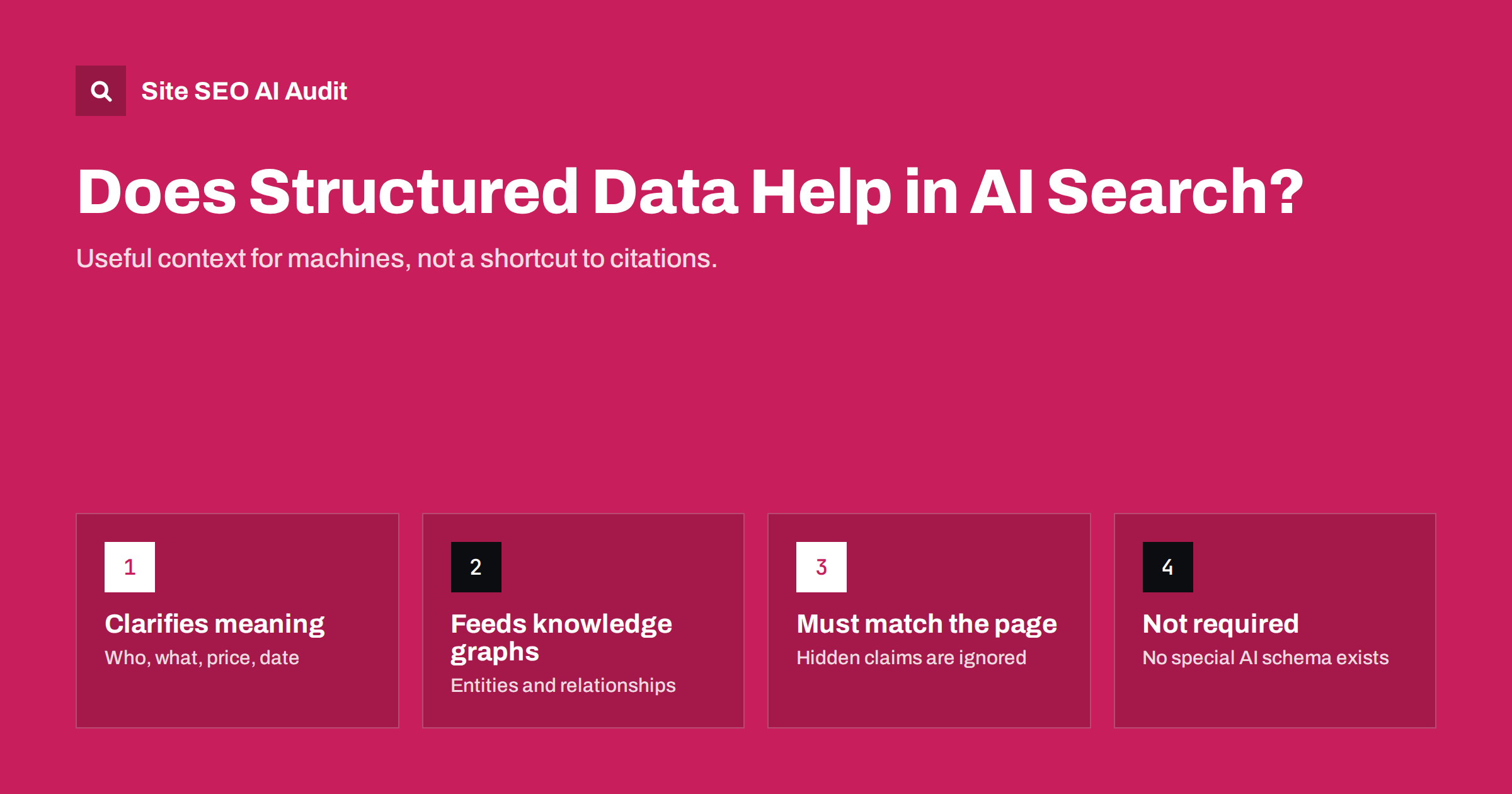
Short answer: Structured data helps AI search indirectly. It gives search engines precise, machine-readable facts about your pages and your business, such as product prices, authors, dates and organisation details, which feed rich results and knowledge graphs that AI features draw on. It does not directly earn citations, Google says no special markup is needed for its AI features, and the text on the page still has to answer the question. Add accurate markup for the types that match your content, and do not expect it to substitute for good pages.
What structured data is
Structured data is a standardised way of describing what a page contains, using a shared vocabulary. The dominant vocabulary is Schema.org, created jointly by major search engines, and the most common format is JSON-LD: a block of JSON inside a script tag in the page HTML.
A product page might describe the product’s name, brand, price, currency, availability and reviews. An article might describe its headline, author, publisher and publication date. A local business page might describe the address, opening hours and phone number. Humans read this information from the visible page; structured data states it in a form that software does not have to guess at.
The key word is “describe”. Structured data does not add new information that search engines should trust over the page. It labels information that should already be visible.
What we know about AI search and markup
There is a lot of speculation in this area, so it helps to separate what is documented from what is assumed.
- Documented: Google’s guidance on AI features states that there are no additional requirements for appearing in AI Overviews or AI Mode, and that structured data is not required. It also recommends that structured data matches the visible content.
- Documented: Structured data makes pages eligible for rich results in Google and Bing, and search engines use it to understand entities and page content.
- Reasonable inference: AI features built on search indexes benefit from whatever understanding the index already has, including facts extracted from markup.
- Unknown: Whether individual AI assistants read JSON-LD directly when they fetch a page. Operators do not document this, and when a model reads raw HTML it may or may not give markup special weight.
Anyone claiming a precise effect of schema on AI citations is going beyond the evidence. The honest position is that markup is a useful supporting signal with a low cost and some real benefits in classic search.
How markup helps indirectly
Even without a direct citation effect, structured data supports AI visibility through several routes:
- Disambiguation. Organization markup with a consistent name, logo, URL and
sameAslinks to official profiles helps search engines connect your site to the right entity in their knowledge graph. AI answers about your brand draw on that understanding. - Precise facts. Product markup states price, currency and availability explicitly. Shopping features and product answers depend on this kind of structured information.
- Dates and authorship. Article markup with
datePublished,dateModifiedand author details reinforces freshness and credibility signals. - Rich results. Enhanced listings in regular search can improve click-through, which matters more as AI summaries compete for attention.
- Consistency checks. When markup, visible text and third-party sources agree, machines have fewer contradictions to resolve.
Schema types worth adding
Add types that genuinely describe your content. More markup is not better; accurate markup is.
| Type | Use on | Key properties |
|---|---|---|
| Organization | Home or about page | name, url, logo, sameAs, contactPoint |
| LocalBusiness (or a subtype) | Location pages | address, telephone, openingHoursSpecification, geo |
| Product with Offer | Product pages | name, brand, sku, offers.price, priceCurrency, availability |
| Article or BlogPosting | Articles and guides | headline, author, datePublished, dateModified, image |
| Person | Author pages | name, jobTitle, sameAs, worksFor |
| BreadcrumbList | Most inner pages | itemListElement with names and URLs |
| FAQPage | Pages with a visible FAQ | mainEntity with questions and answers |
A note on FAQPage: Google limited FAQ rich results in 2023 to a small set of authoritative government and health sites. The markup is still valid and still describes the page, but most sites should not expect a visual rich result from it.
Rules that keep markup useful
Markup that misleads is at best ignored and at worst treated as spam. Follow these rules:
- Match the visible page. Every fact in the markup should be visible to users. Do not mark up reviews, prices or FAQs that are not on the page.
- Keep it current. Outdated prices or availability in markup are worse than none, because they may be shown in results.
- Use the most specific type that applies, for example Dentist rather than LocalBusiness for a dental clinic.
- Use absolute URLs for images, logos and profile links.
- Avoid duplicate conflicting blocks. Themes and plugins often both output markup. Two Organization blocks with different names confuse more than they help.
- Put JSON-LD in the server-rendered HTML. Markup injected by a tag manager may be missed by crawlers that do not run JavaScript.
Validating your markup
Validation catches most problems before they reach search engines:
- Use Google’s Rich Results Test to check eligibility for rich results and see errors and warnings.
- Use the Schema.org validator to check syntax and vocabulary, including types Google does not show as rich results.
- Review the enhancement reports in Search Console for errors across all pages of a type.
- View the raw page source to confirm the JSON-LD is present before JavaScript runs.
- After theme or plugin updates, re-test one page of each template, since updates often change markup output.
Structured data on WordPress
Most WordPress sites get their structured data from an SEO plugin, the theme, or both. That is convenient, but it means the markup reflects plugin settings rather than your deliberate choices. A short review usually pays off:
- Check the site representation settings in your SEO plugin. Choose whether the site represents an organisation or a person, and enter the correct legal or trading name, logo and social profiles.
- Look for duplicate output. View the source of a post and search for “application/ld+json”. If you see several blocks describing the same organisation or article with different values, disable the duplicate source, usually in the theme options.
- Set content types correctly. Most plugins let you choose the default schema type for posts and pages. Guides are typically Article or BlogPosting; service pages may fit Service or WebPage better.
- Handle shop markup in one place. WooCommerce outputs its own product markup, and some SEO plugins extend it. Make sure one source controls price and availability.
- Re-test after updates. Plugin updates occasionally change markup output or reset settings.
If you add custom JSON-LD by hand, place it in the page template or a dedicated field so that it is rendered on the server, not injected later in the browser.
Common mistakes audits find
- Invalid JSON caused by a stray comma or unescaped quote, which makes the entire block unreadable.
- Organization markup with the wrong name, such as the theme developer’s name or a placeholder.
- Missing dates on articles, or
dateModifiedupdated automatically on every page load. - Product markup without offers, or with prices in the wrong currency format.
- Markup for content that is not there, such as review stars copied from another site.
- No Open Graph tags, which does not affect search directly but makes shared links look poor on social platforms and in some chat apps.
How Site SEO AI Audit helps
Structured data is one of the seven areas in a Site SEO AI Audit report. The crawler checks Schema.org markup on each page, flags invalid JSON-LD, and reviews Open Graph tags and share images. The AI visibility area adds checks for AI crawler access, llms.txt, JavaScript-dependent content and the dates and structure that AI answers quote. On WordPress sites, each issue comes with the exact steps in wp-admin and your SEO plugin. You can run a free audit to see which pages have markup problems.
Related reading
- What Is Generative Engine Optimization? A Plain Guide
- Google AI Overviews: How Sources Are Chosen and How to Be One
- AI Search Visibility Checklist: 25 Things to Audit
The bottom line
Structured data is worth doing, but for the right reasons. It clarifies facts, supports rich results and helps search engines understand your business, all of which benefit AI features built on search indexes. It does not replace visible, well-written content, and no special “AI schema” exists. Add accurate markup for the types that fit, validate it and keep it in sync with the page.
FAQ
Is structured data required to appear in AI Overviews?
No. Google states there are no special requirements for its AI features beyond being indexed and eligible for a snippet. Structured data can help Google understand a page but is not required.
Do ChatGPT and Perplexity read JSON-LD?
Their operators do not document how they treat structured data. They may encounter it when reading raw HTML, and they rely partly on search indexes that use it, but there is no confirmed direct effect on citations.
Which schema type should I add first?
For most businesses, Organization or LocalBusiness markup on the home or contact page comes first, followed by Product for shops or Article for content sites. Choose the types that match what your pages actually contain.
Is FAQ schema still worth adding?
FAQ rich results are now shown mainly for authoritative government and health sites, so most sites will not get a visual benefit. The markup is still valid if the FAQ is visible on the page, but it is a low priority.
Can wrong structured data hurt my site?
Invalid markup is usually just ignored, but misleading markup, such as fake reviews, can lead to a manual action that removes rich results. Keep markup accurate and matched to visible content.