 ENEnglish
 LTLietuviškai
 DEDeutsch
 FRFrançais
 RUРусский
 ESEspañol
 PLPolski
 ITItaliano
 UKУкраїнська
 CSČeština
 PTPortuguês
 JA日本語
 LVLatviešu valoda
 ETEesti
 HUMagyar
 IDBahasa Indonesia
 TRTürkçe
 HIहिन्दी
 ELΕλληνικά
 ARالعربية
 THไทย
 VITiếng Việt
 RORomână
 MSBahasa Melayu
 BNবাংলা
#Core Web Vitals
Core Web Vitals are the user experience metrics that Google uses to measure loading, responsiveness and visual stability. Articles tagged here explain Largest Contentful Paint, Interaction to Next Paint and Cumulative Layout Shift. They show the difference between field data from real users and lab data from test tools. Each guide lists the most common causes of poor scores and how to fix them. You will learn which changes usually give the biggest improvement for the least work. Good vitals make pages feel fast and stable for visitors.
 16 Nov 2026 · 7 mnt baca
Speed and Core Web Vitals in Your Site SEO AI Audit
What the Speed and Core Web Vitals area of Site SEO AI Audit measures: mobile score, LCP, CLS, server response, compression and page weight,…
 11 Nov 2026 · 8 mnt baca
WordPress Caching Plugins: Speed Gains Without SEO Risks
How page caching, minification and delayed scripts speed up WordPress, which settings can hurt SEO, and how to test a caching plugin safely before…
 11 Nov 2026 · 7 mnt baca
Total Blocking Time and Long Tasks: A Practical Guide
What Total Blocking Time and long tasks mean, how they relate to Interaction to Next Paint, how to find the scripts behind them and…
 1 Nov 2026 · 7 mnt baca
SEO for Low-Bandwidth Audiences and Older Devices
Visitors on slow networks and older phones leave heavy pages quickly. See how lighter pages, efficient assets and tested budgets help rankings and conversions.
 30 Okt 2026 · 8 mnt baca
Sliders and Carousels: SEO, Speed and Usability Risks
How home page sliders and carousels affect search, speed and usability, with practical rules for markup, loading and accessibility, and when to skip them.
 23 Okt 2026 · 8 mnt baca
Performance Budgets: Set Speed Limits Before Pages Bloat
A performance budget sets limits on page weight, scripts and load times so speed does not decay with every release. Learn how to choose…
 18 Okt 2026 · 8 mnt baca
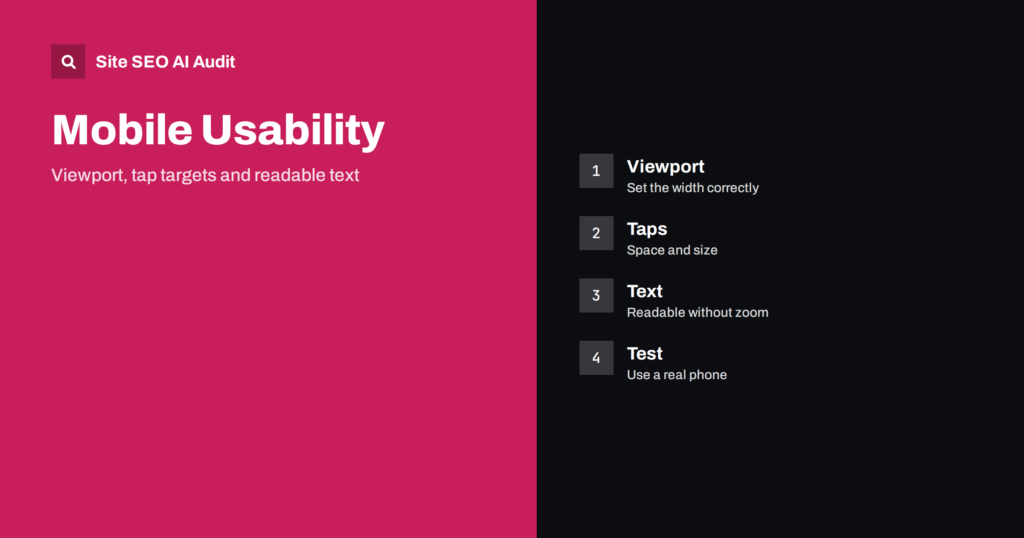
Mobile Usability: Viewport, Tap Targets and Font Size
Fix the mobile usability basics that frustrate visitors: the viewport tag, small tap targets, tiny text, wide content and fixed elements that block pages.
 14 Okt 2026 · 8 mnt baca
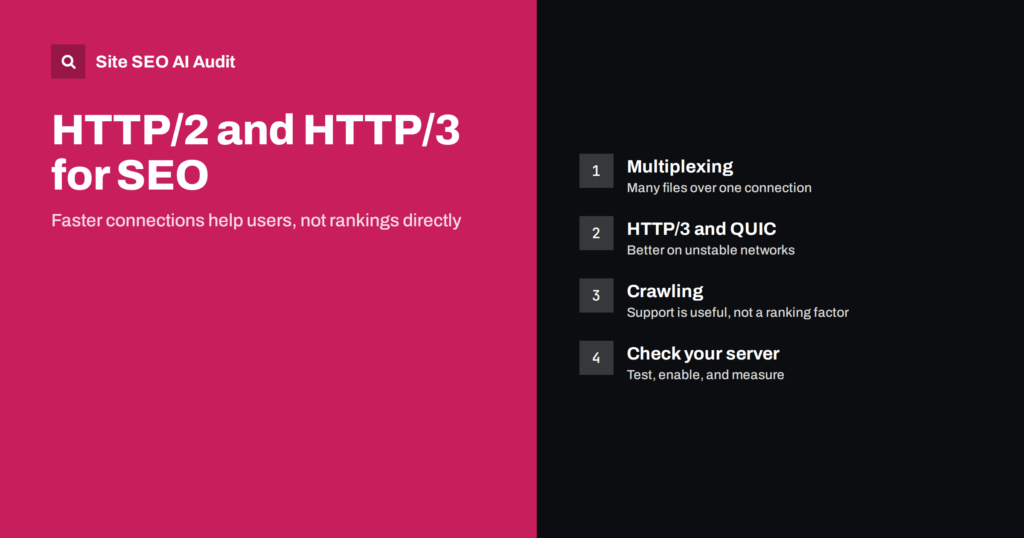
HTTP/2 and HTTP/3: Do They Matter for SEO and Speed?
HTTP/2 and HTTP/3 can make pages load faster for real users. What they change, how they relate to crawling and rankings, and how to…
 14 Okt 2026 · 8 mnt baca
Cookie Banners and SEO: Avoid Hiding Your Content
Consent banners are required in many places, but a poor one can block crawlers, slow pages and cover content. How to keep consent and…
 10 Okt 2026 · 8 mnt baca
Resource Hints: preload, preconnect and prefetch Explained
Resource hints tell the browser what to fetch early. When preload, preconnect, dns-prefetch and prefetch speed up a page, and when they slow it…
 9 Okt 2026 · 8 mnt baca
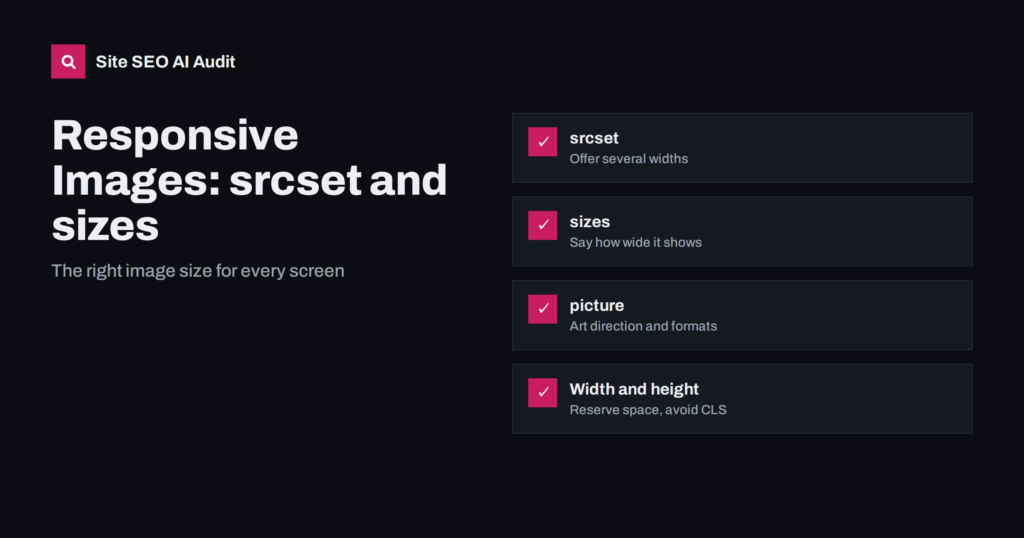
Responsive Images: srcset and sizes for Faster Pages
Serving one large image to every screen wastes data and slows LCP. How srcset, sizes and the picture element work, with examples and the…
 8 Okt 2026 · 8 mnt baca
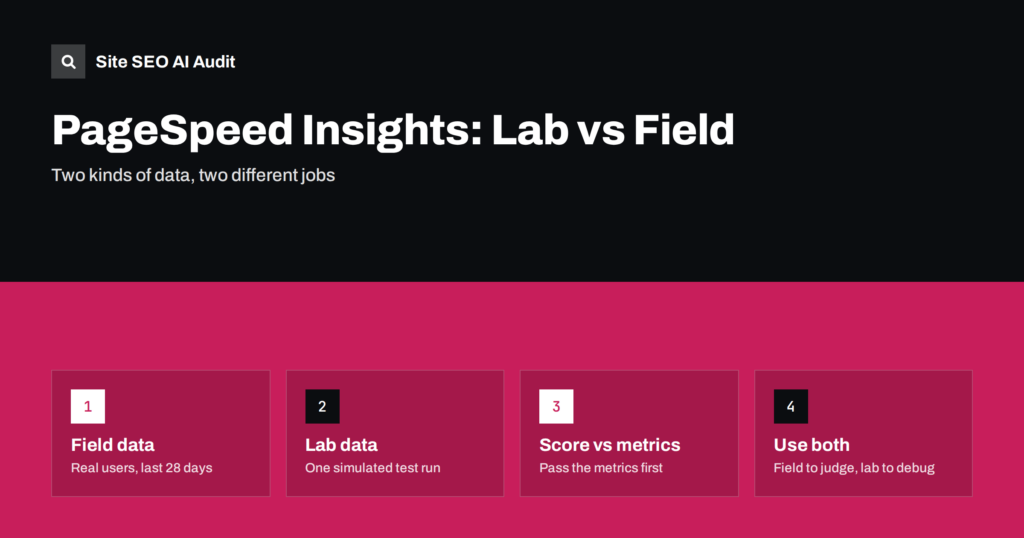
PageSpeed Insights: Lab Data vs Field Data Explained
PageSpeed Insights shows two kinds of data that often disagree. What lab and field data measure, which one Google uses and how to act…