 ENEnglish
 LTLietuviškai
 DEDeutsch
 FRFrançais
 RUРусский
 ESEspañol
 PLPolski
 ITItaliano
 UKУкраїнська
 CSČeština
 PTPortuguês
 JA日本語
JA日本語 LVLatviešu valoda
 ETEesti
 HUMagyar
 IDBahasa Indonesia
 TRTürkçe
 HIहिन्दी
 ELΕλληνικά
 ARالعربية
 THไทย
THไทย VITiếng Việt
 RORomână
 MSBahasa Melayu
 BNবাংলা
#International SEO
International SEO is the work of making a website findable by searchers in more than one country or language. It covers how the site is structured, how language and country versions are signalled to search engines, and how content is adapted for each market. Typical tasks include choosing between country domains, subdomains and subfolders, adding hreflang annotations and keeping translations consistent. It also includes local keyword research, because people in different markets search with different words. Articles under this tag explain the concepts in plain language and show how to check and fix the most common problems.
 19 ago 2026 · 8 min di lettura
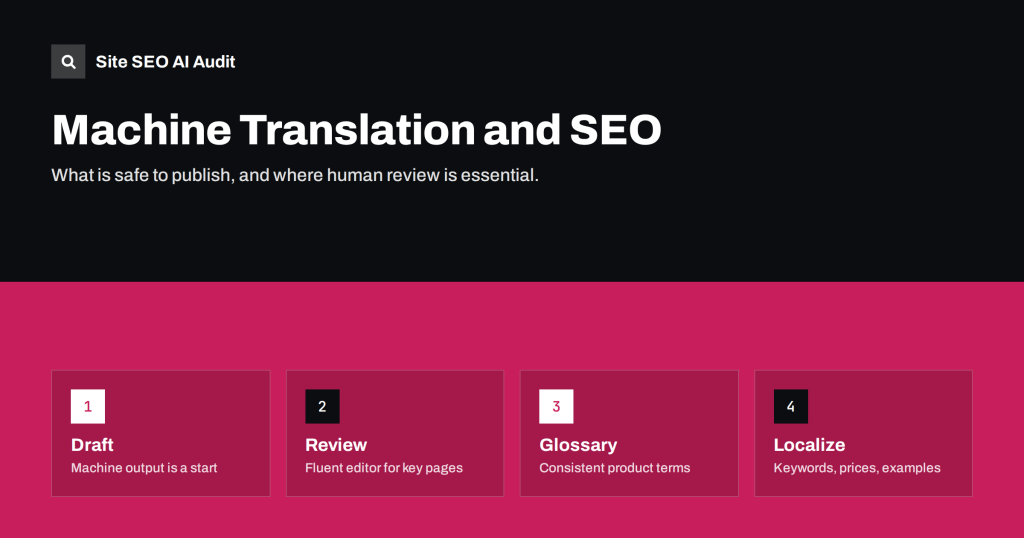
Machine Translation and SEO: What Is Safe to Publish
Can you publish machine-translated pages without hurting SEO? What search engine policies say, where the real risks are and a review workflow that works.
 18 ago 2026 · 8 min di lettura
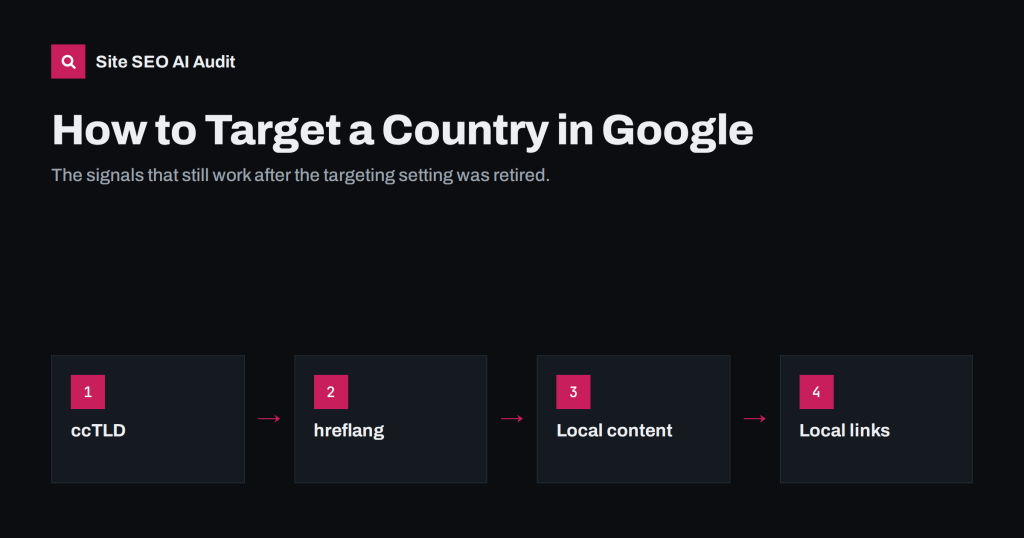
How to Target a Specific Country in Google Search Today
Google retired its country targeting setting, so how do you target a country now? The signals that still work: domains, hreflang, local content and…
 17 ago 2026 · 8 min di lettura
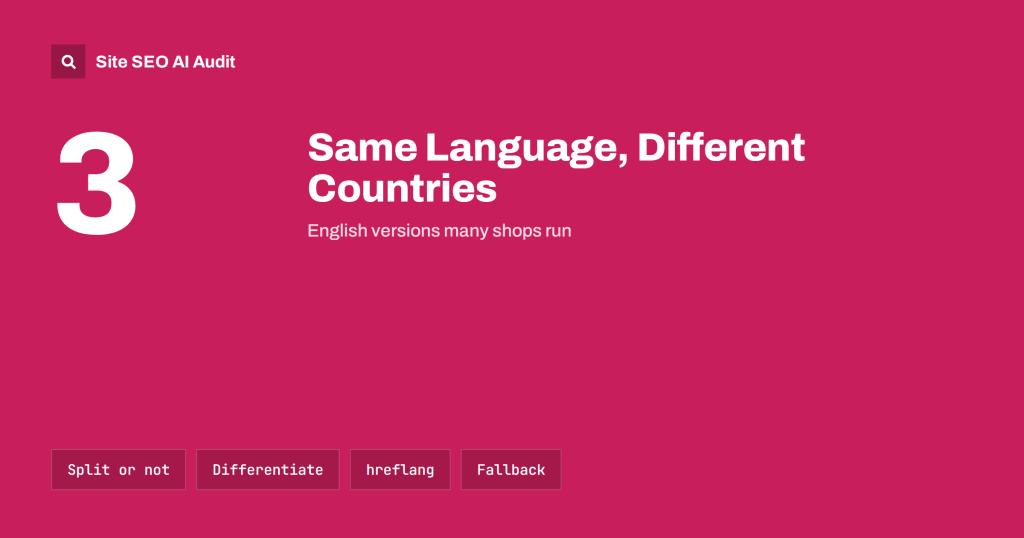
Same Language, Different Countries: How to Target en-US and en-GB
How to run separate pages for the US, UK, Australia or Spain and Mexico without duplicate trouble: when to split, what to change and…
 16 ago 2026 · 8 min di lettura
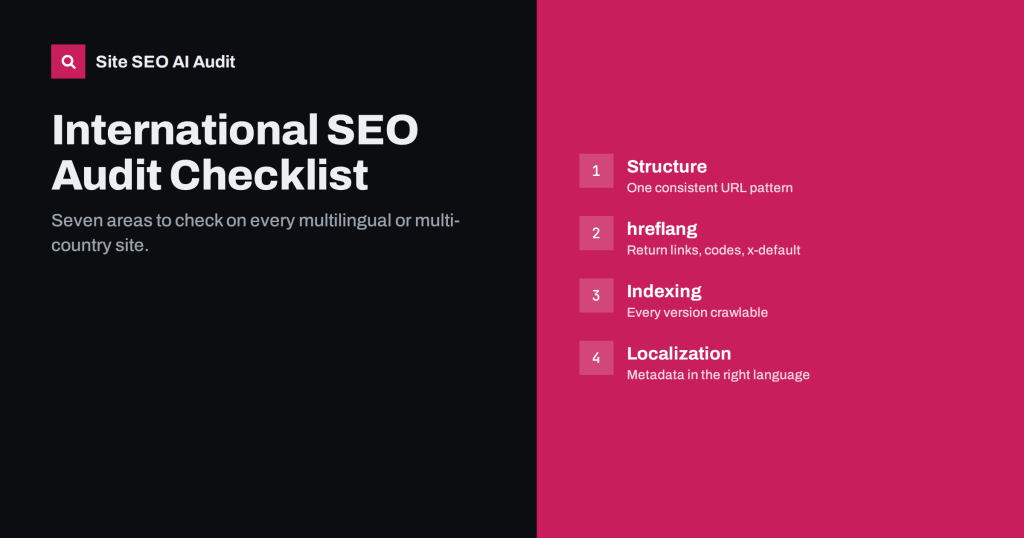
International SEO Audit Checklist for Multilingual Sites
A step-by-step international SEO audit: structure, hreflang, canonicals, indexing, redirects, localized on-page elements, sitemaps and reporting per market.
 15 ago 2026 · 8 min di lettura
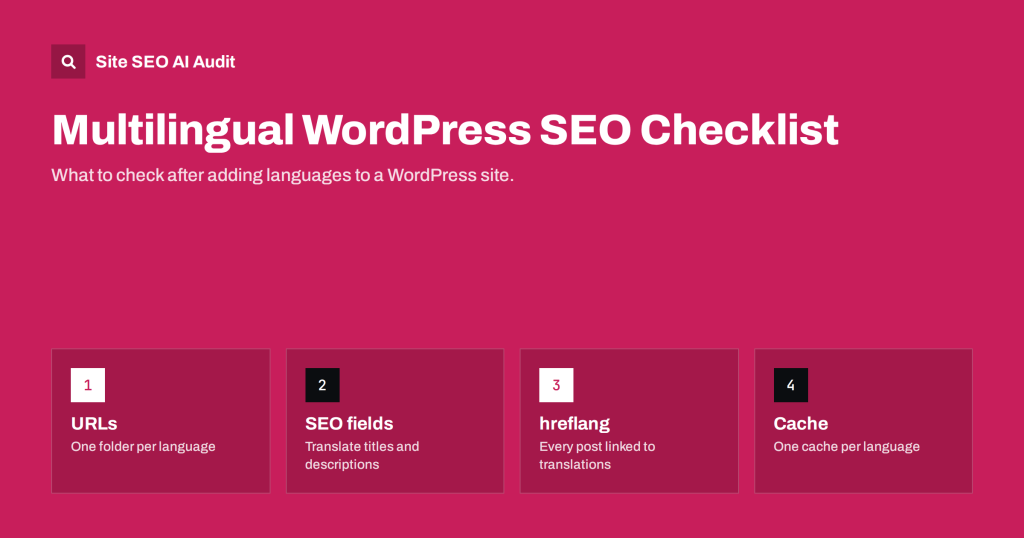
Multilingual WordPress SEO: A Checklist for Translated Sites
A practical checklist for multilingual WordPress sites: URL setup, hreflang, lang attributes, translated SEO fields, sitemaps, caching and plugin traps.
 13 ago 2026 · 8 min di lettura
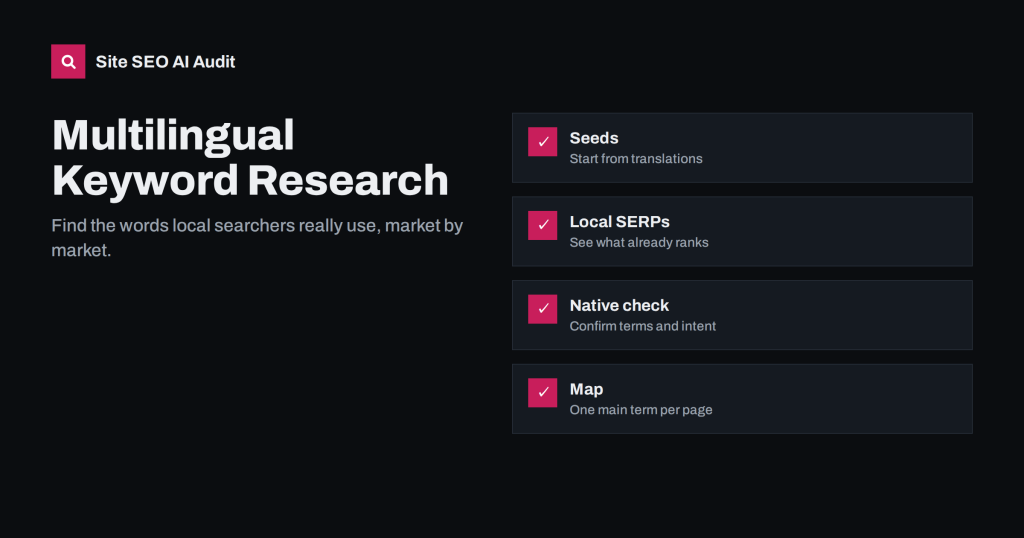
Multilingual Keyword Research: Finding Real Local Search Terms
How to research keywords in other languages and countries: seed terms, local SERPs, native reviewers and mapping terms to pages, without trusting translations.
 12 ago 2026 · 8 min di lettura
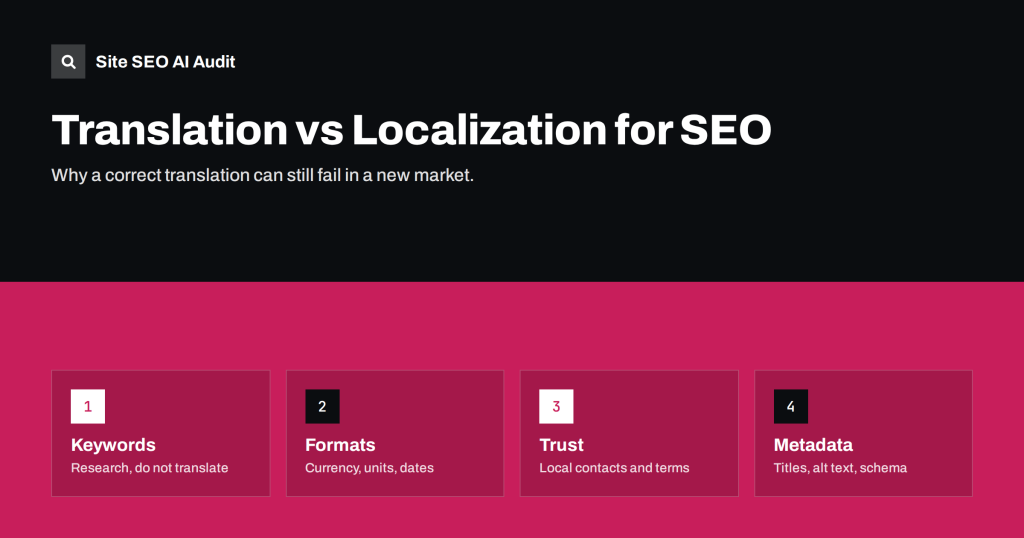
Translation vs Localization for SEO: What Actually Changes
Translation changes the words; localization adapts the page to a market. See what to localize for SEO, from keywords and currency to metadata and…
 11 ago 2026 · 8 min di lettura
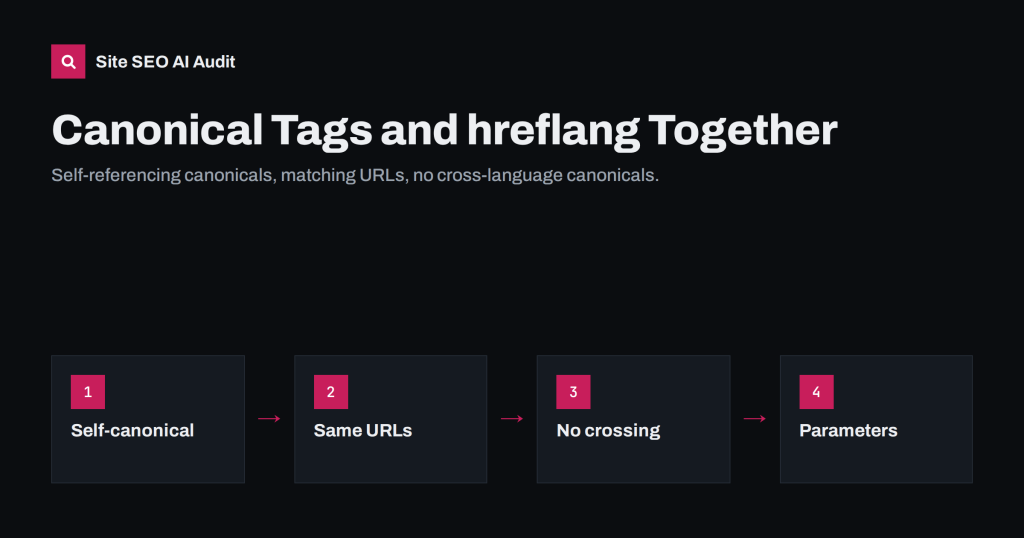
Canonical Tags and hreflang: How to Use Them Together
Canonical tags and hreflang answer different questions. Learn how to combine them and avoid the cross-language canonical that cancels hreflang.
 10 ago 2026 · 8 min di lettura
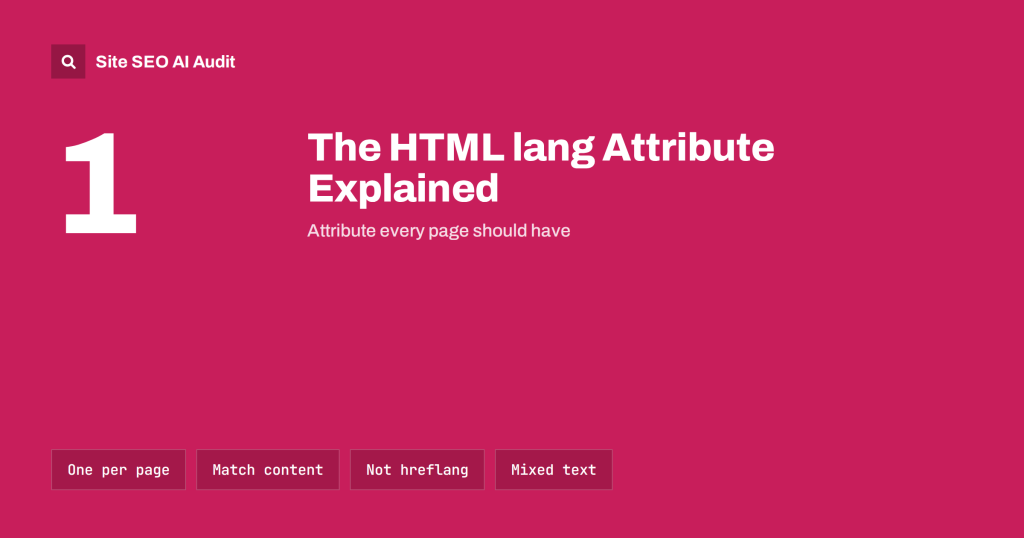
The HTML lang Attribute: What It Does for SEO and Users
What the HTML lang attribute does, how it differs from hreflang, whether Google uses it, and how to set it correctly on multilingual sites…
 9 ago 2026 · 8 min di lettura
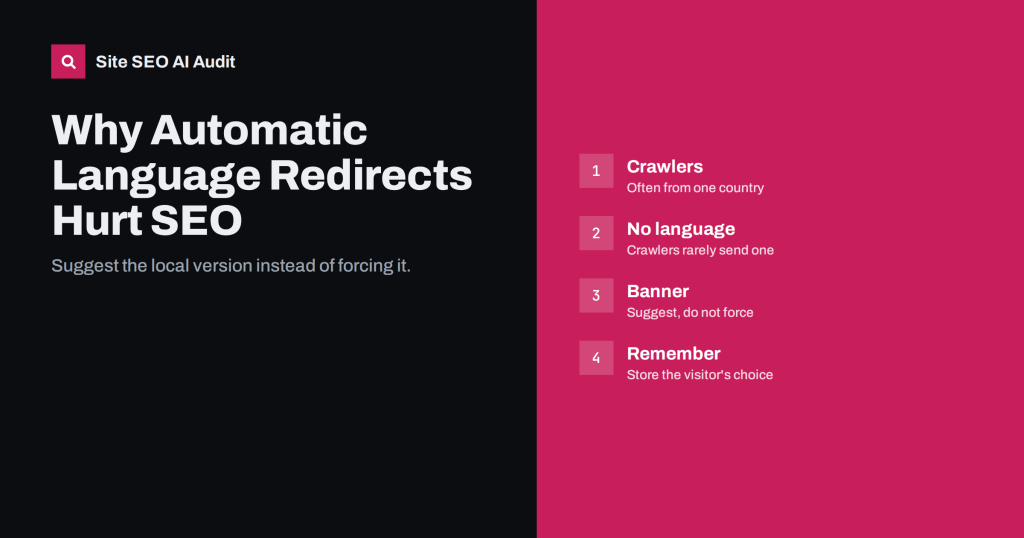
Automatic Language Redirects: Why They Hurt International SEO
Redirecting visitors by IP or browser language can hide whole language versions from search engines. See why, and what to do instead to keep…
 8 ago 2026 · 8 min di lettura
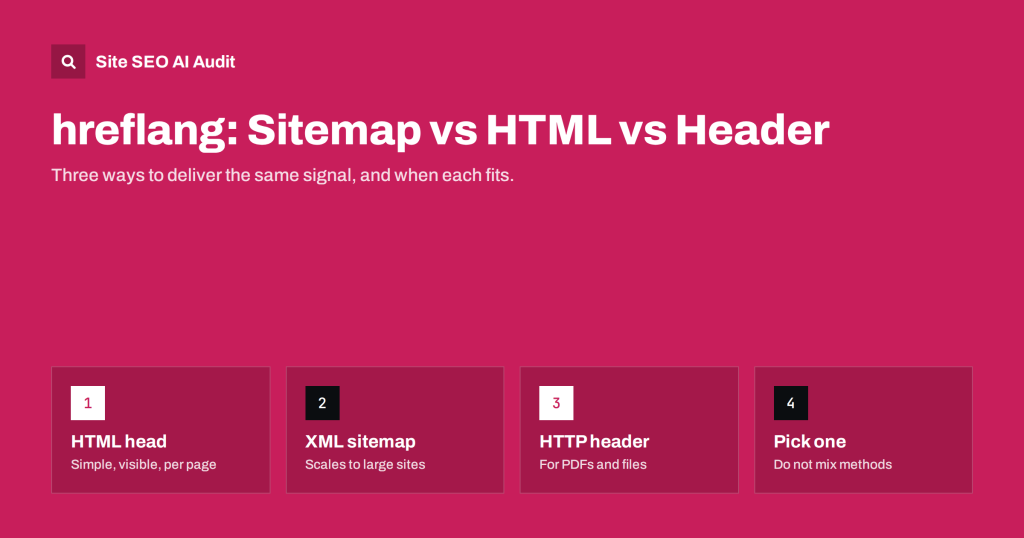
hreflang in XML Sitemaps vs HTML Head vs HTTP Headers
Should hreflang go in the HTML head, the XML sitemap or HTTP headers? Compare the three methods on scale, maintenance and debugging, with examples…
 7 ago 2026 · 8 min di lettura
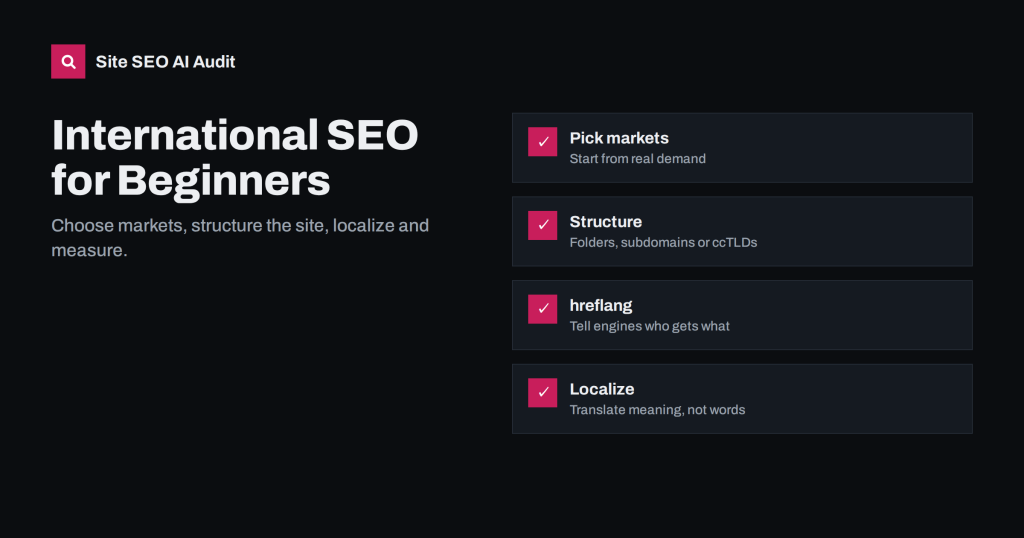
International SEO for Beginners: How to Take a Site Global
New to international SEO? Learn how to choose markets, structure URLs, set up hreflang, localize content and measure results, step by step and in…