ENEnglish
 LTLietuviškai
 DEDeutsch
 FRFrançais
 RUРусский
 ESEspañol
 PLPolski
 ITItaliano
 UKУкраїнська
 CSČeština
 PTPortuguês
 JA日本語
 LVLatviešu valoda
 ETEesti
 HUMagyar
 IDBahasa Indonesia
 TRTürkçe
 HIहिन्दी
 ELΕλληνικά
 ARالعربية
 THไทย
 VITiếng Việt
 RORomână
 MSBahasa Melayu
 BNবাংলা
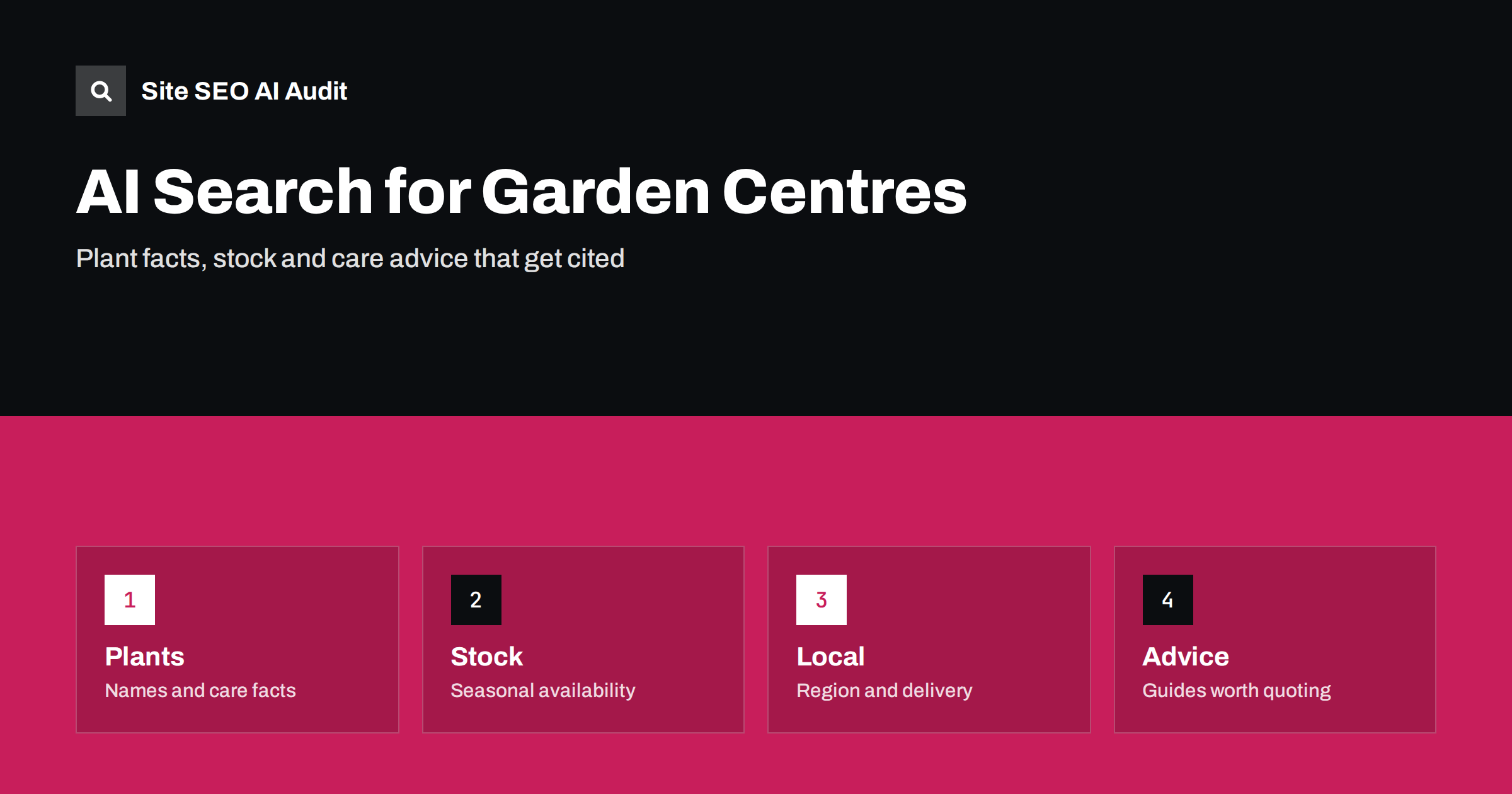
Short answer: Garden centres and plant retailers are recommended by AI assistants when their pages give precise plant information, such as the full botanical and common name, size on delivery, light and soil needs, hardiness and care, together with clear stock, delivery and location details. Publish helpful seasonal guides written by people who grow plants, mark up products and local business data, keep availability current and make it easy to see which plants suit which conditions. Accurate, specific advice is what assistants quote.
Gardening questions are ideal for AI assistants: which shrub grows in shade, what to plant in a small courtyard, when to sow tomatoes, how to revive a drooping houseplant. The answers combine plant knowledge with a recommendation of where to buy. A retailer that publishes only product names and prices supplies half of that picture at best. A retailer that explains each plant, offers seasonal guidance and shows what is in stock supplies all of it. Because plants are living products with seasons, sizes and risks, accuracy matters more than in many other shops. This guide explains what to publish and how to keep it correct. For the general method, see the AI search visibility checklist.
What gardening shoppers ask assistants
Questions fall into a few groups. Some are about choosing: a climbing plant for a north wall, flowers that attract bees, a low-maintenance hedge. Some are about doing: when to prune roses, how often to water a fern, how deep to plant bulbs. Some are about buying: where to find a particular variety near me, whether a nursery ships live plants, what size a tree is when it arrives. Your pages can serve all three, but only if each is written to answer the question directly. Listing customer questions from emails, phone calls and shop conversations gives you a reliable source of topics, and the wording customers use is the wording assistants receive.
Plant pages that state the facts
Each plant page should open with a plain description: common name, botanical name, type and what it is used for. Follow with the facts that decide success: mature height and spread, light needs, soil and drainage, water needs, hardiness range or the regions where it survives winter, flowering or fruiting season and any care tasks such as pruning. State the size supplied, for example the pot size and approximate height, and how it is delivered. Mention safety information where it matters, such as plants that are harmful to pets or children. Avoid claims that cannot be kept, such as promising flowers in the first year without conditions. When pages differ in a clear, factual way, assistants can pick the right plant for the right situation, and shoppers waste fewer plants.
Help people choose by conditions
Most buyers do not know plant names; they know their garden. Build pages and filters around conditions: shade, full sun, clay soil, containers, coastal gardens, pollinator planting, drought tolerance, evergreen screening. Each collection page needs introductory text explaining what the conditions mean and how to choose, followed by plants that suit them. This structure matches how people ask questions and gives assistants a ready answer with a source. Keep the filters crawlable where they create useful pages, and avoid generating thousands of thin combinations, a problem covered in faceted navigation and SEO. Category pages in general are discussed in the category page guide.
Seasonality, stock and delivery
Gardening is seasonal, and stock changes quickly. Make availability visible and truthful: in stock, available from a named month, bare-root season, sold out for this year. Explain delivery limits for live plants, such as the months when shipping is possible, how plants are packed and what happens if a plant arrives damaged. A page for a sold-out plant should be handled carefully; do not delete a page that earns visits every spring, but show the status and offer alternatives, as explained in out-of-stock product pages. Add seasonal content calendars so that guides are ready weeks before the sowing or planting window opens, and update them every year. The planning side is described in seasonal pages and SEO.
Guides written by people who grow plants
Helpful guides are where a garden retailer can show real experience: how to plant a bare-root rose, how to prepare a raised bed, how to pot up a houseplant, how to prune apple trees in winter. Write them in clear steps, add photographs from your own nursery and name the author, with a short description of their growing experience. Include practical details that only a grower knows, such as the signs of overwatering or the mistakes beginners make in the first season. These pages earn links and citations because they solve problems. Keep each guide focused on one task and link it to the plants and tools it mentions, which also lifts sales. The principles of trust and experience are explained in E-E-A-T and AI search.
Local details for garden centres
If you have a physical site, your local information must be correct and consistent: address, opening hours including seasonal changes, phone number, parking, accessibility, services such as plant collection, landscaping advice or a café. Keep your business profile and website aligned, and publish a page for each location that describes what is available there. Mention the area you serve and any local conditions you advise on, such as soil types or frost dates, because location is often part of the question. The foundations of local visibility are covered in local business AI search and location pages.
Markup, images and reviews
Add product structured data to plant and tool pages, with name, image, price, availability and reviews where you have them, and local business data for each site. Use clear photographs that show the plant at the size supplied, plus close-ups of flowers, leaves and the pot, and give each image a descriptive file name and alt text. Encourage reviews that mention how the plant arrived and how it grew, and respond to complaints about dead or damaged plants openly. A clear guarantee policy, stated in text, builds trust, as long as you can honour it exactly as written. See the product schema guide for the fields.
Measure and keep information current
Check monthly how assistants answer questions about plants you sell and about garden centres in your area, and record which pages are cited and which facts are wrong. Plant names, sizes and availability change, so assign someone to review the top plant pages before each season and to remove outdated claims. Track which guides bring visitors and update those first. Keep a single list of plant facts so that your website, catalogue and any marketplace listings agree. Consistency across channels is the cheapest way to protect trust.
Common mistakes to avoid
Several habits hold garden retailers back. The first is copying supplier descriptions word for word, which gives your page the same text as every competitor and tells assistants nothing about why yours should be chosen. The second is publishing plant names without the botanical name, which makes it hard to tell similar varieties apart and invites confusion between plants with the same common name. The third is leaving last year’s claims on the page, such as prices, sizes or delivery months that no longer apply. The fourth is hiding the most useful facts in a downloadable sheet or in an image of a care label, where neither shoppers nor crawlers can easily read them. The fifth is building a separate page for every colour and pot size with identical text, which dilutes your pages and confuses visitors. Fix these with one clear template for plant pages, a short review routine before each season and one place where plant facts are stored. Small, steady corrections give better results than a large rewrite once a year, because gardening information changes with the calendar and the weather.
Site SEO AI Audit crawls your shop like a search engine and checks titles, descriptions, headings, broken links, images without alt text, structured data and AI visibility, then ranks fixes by the points they add. It does not know your plants, so facts still have to come from your growers. The first audit of up to 200 pages is free; larger catalogues can see the pricing page.
Related reading
- Product Pages and AI Shopping Answers
- AI Search for Farms and Food Producers
- FAQ Sections and AI Answers
- Image SEO: File Names and Captions
The bottom line
Garden retailers earn AI recommendations by publishing exact plant facts, condition-based choices, honest stock and delivery details and guides written by growers. Add local and product markup, keep seasonal pages current and test real questions every month.
DUK
What should a plant product page always include?
Common and botanical name, size supplied, mature size, light, soil, water, hardiness, season of interest, care tasks and delivery details. Add safety notes where relevant.
Should I keep pages for plants that are sold out?
Usually yes. Show the status, say when it may return and offer alternatives, so that seasonal visitors and citations are not lost.
Do garden guides really help sales?
They answer the questions people ask before buying, earn links and citations, and let you link naturally to the plants and tools needed for the task.
How do I show experience on a gardening site?
Name the authors, describe their growing background and add original photographs and practical details such as common mistakes and timing.
How often should plant information be reviewed?
Before each season at least, and whenever stock, sizes or delivery rules change. Outdated facts about live plants quickly lead to complaints.