 ENEnglish
 LTLietuviškai
 DEDeutsch
 FRFrançais
 RUРусский
 ESEspañol
 PLPolski
 ITItaliano
 UKУкраїнська
 CSČeština
 PTPortuguês
 JA日本語
 LVLatviešu valoda
 ETEesti
 HUMagyar
 IDBahasa Indonesia
 TRTürkçe
 HIहिन्दी
 ELΕλληνικά
 ARالعربية
 THไทย
 VITiếng Việt
 RORomână
 MSBahasa Melayu
 BNবাংলা
#JavaScript SEO
JavaScript SEO deals with websites whose content or links are created in the browser by JavaScript instead of being present in the HTML the server sends. Search engines can render JavaScript, but rendering is slower, more expensive and sometimes incomplete. Many AI crawlers do not execute JavaScript at all and only read the raw HTML. That makes server-side rendering, static generation and progressive enhancement important. Articles under this tag explain how to test what bots actually see and how to fix gaps.
 2026-11-11 · Skaitymo laikas: 7 min.
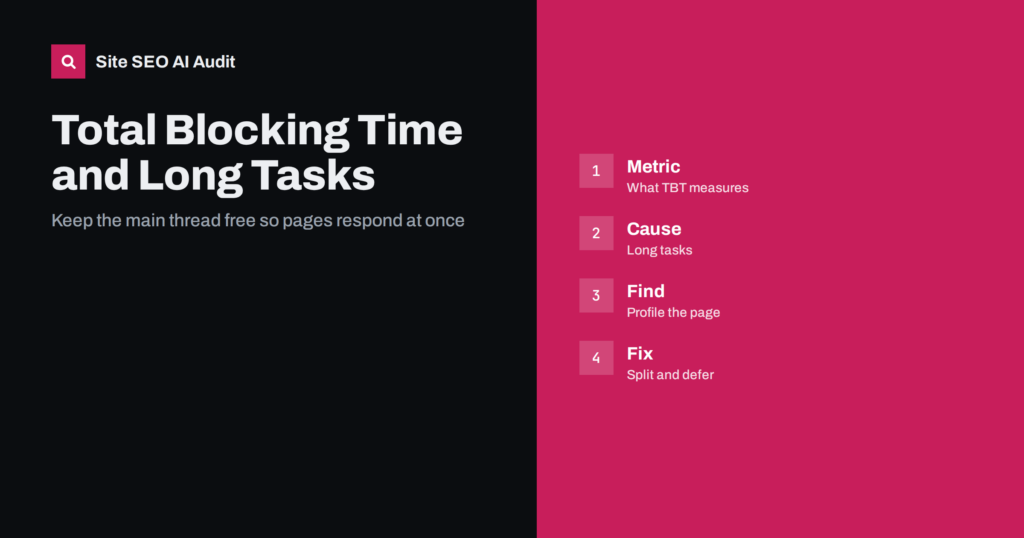
Total Blocking Time and Long Tasks: A Practical Guide
What Total Blocking Time and long tasks mean, how they relate to Interaction to Next Paint, how to find the scripts behind them and…
 2026-11-08 · Skaitymo laikas: 8 min.
Booking and Reservation Pages: SEO That Converts
How to build booking and reservation pages that people and crawlers can use: indexable service pages, widget checks, crawl traps and mobile speed.
 2026-11-02 · Skaitymo laikas: 8 min.
A/B Testing Without Hurting Your SEO: Safe Methods
A/B tests can run safely alongside SEO if you avoid cloaking, use the right redirects and canonicals and end tests on time. See the…
 2026-11-01 · Skaitymo laikas: 8 min.
Google Tag Manager and SEO: What Is Safe to Inject
Tag managers can inject titles, canonicals and schema with JavaScript. See what is safe for search and AI crawlers, what is risky and how…
 2026-10-31 · Skaitymo laikas: 8 min.
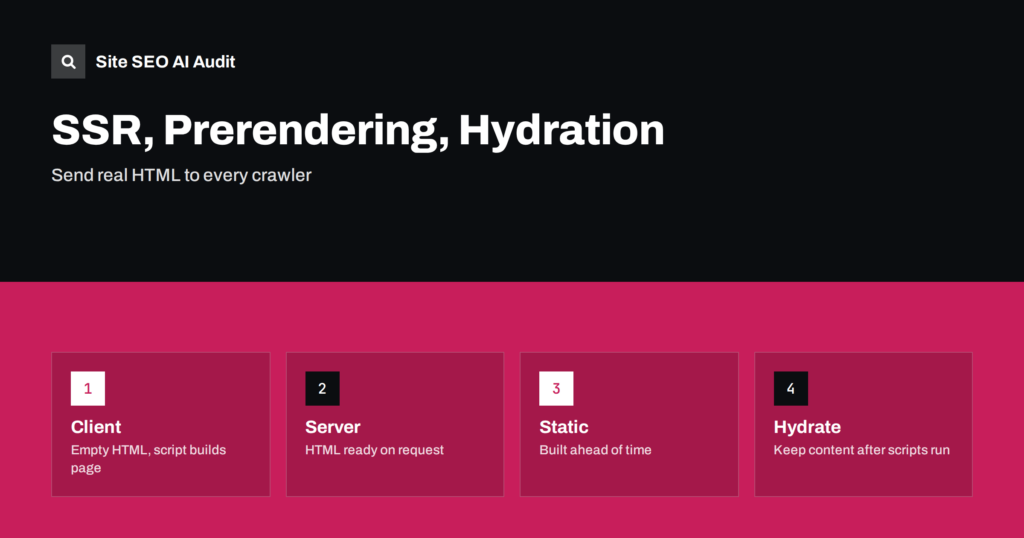
Server-Side Rendering, Prerendering and Hydration for SEO
A plain comparison of client-side, server-side, static and prerendered pages for SEO, with trade-offs, hydration pitfalls and a simple way to choose.
 2026-10-24 · Skaitymo laikas: 8 min.
SEO Requirements for Developers: A Ticket Checklist
Turn SEO advice into tickets developers can build and test. Get a checklist of requirements for URLs, rendering, metadata, status codes and release checks.
 2026-10-21 · Skaitymo laikas: 8 min.
Free Tools and Calculators: Pages That Earn Links
A small calculator or checker can rank for years and attract links no article gets. Learn which tools to build, how to make them…
 2026-10-19 · Skaitymo laikas: 8 min.
Meta Refresh and JavaScript Redirects: When They Are Safe
Meta refresh and JavaScript redirects can work, but server redirects are safer. See when each is fine, how search engines treat them and how…
 2026-10-16 · Skaitymo laikas: 8 min.
Next.js SEO: Rendering, Metadata and Sitemaps
Build a Next.js site that search engines can read: choose a rendering mode, set metadata, sitemaps, canonicals and status codes, and test what crawlers…
 2026-10-15 · Skaitymo laikas: 7 min.
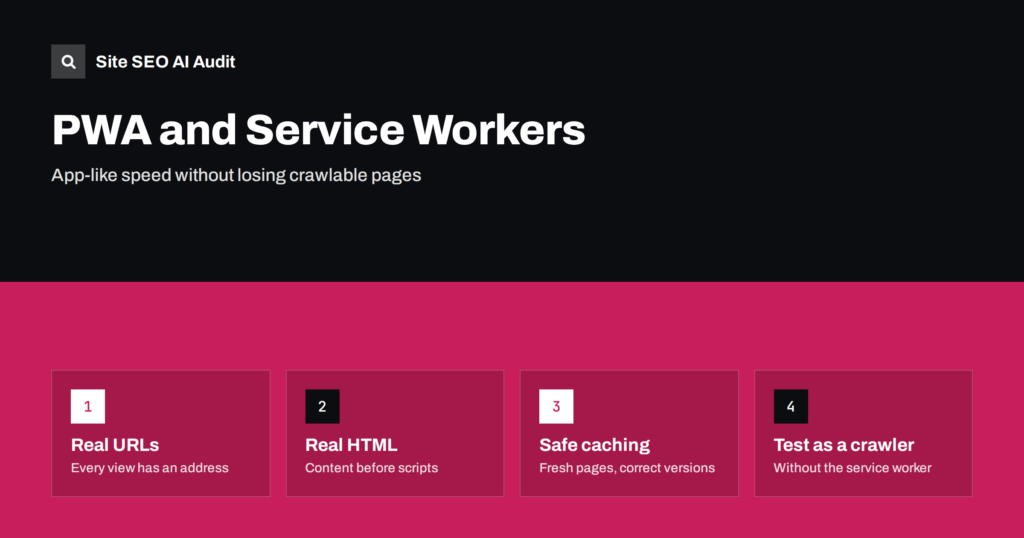
Progressive Web Apps and Service Workers: SEO Checklist
A progressive web app can rank well when every page has a real URL and real HTML. Learn the SEO risks of app shells,…
 2026-10-14 · Skaitymo laikas: 8 min.
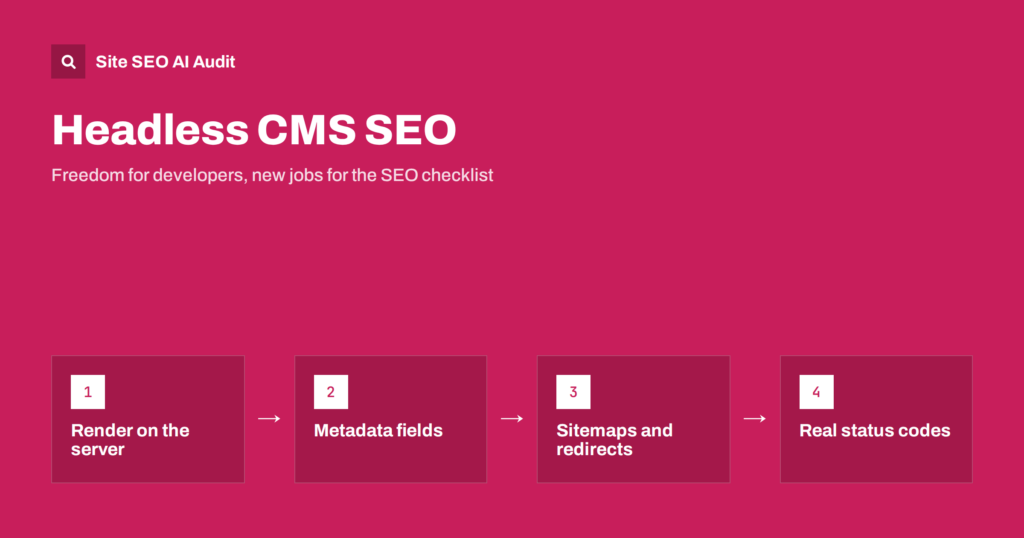
Headless CMS SEO: Rendering, Metadata and URLs
A headless CMS gives developers freedom but drops the SEO features traditional systems include. What to build: rendering, metadata, sitemaps and redirects.
 2026-10-01 · Skaitymo laikas: 8 min.
URL Fragments and Hash URLs: How Search Engines Treat #
Everything after # in a URL is usually ignored by search engines. What that means for jump links, hash routing in single-page apps, tracking…