ENEnglish
 LTLietuviškai
 DEDeutsch
 FRFrançais
 RUРусский
 ESEspañol
 PLPolski
 ITItaliano
 UKУкраїнська
 CSČeština
 PTPortuguês
 JA日本語
JA日本語 LVLatviešu valoda
 ETEesti
 HUMagyar
 IDBahasa Indonesia
 TRTürkçe
 HIहिन्दी
 ELΕλληνικά
 ARالعربية
 THไทย
THไทย VITiếng Việt
 RORomână
 MSBahasa Melayu
 BNবাংলা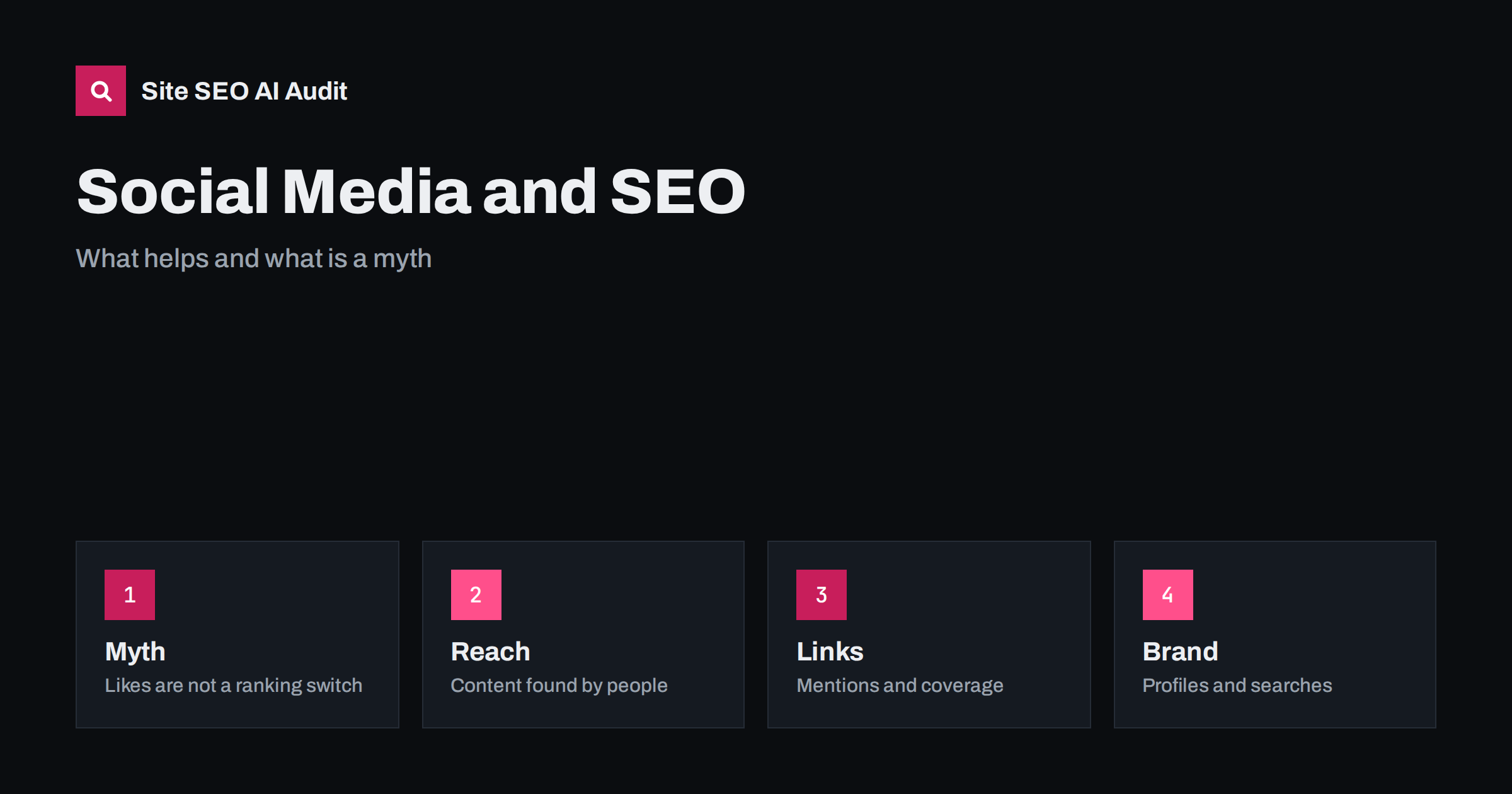
Short answer: Likes, shares and followers are not a simple ranking switch, and you should not count on them to lift a page in search results. Social media still helps SEO indirectly: it puts content in front of people who may link, mention or search for your brand, it gives you profiles that appear for your name, and it provides a place to test topics. Treat social media as a way to earn attention, and measure the effects you can actually see.
Few topics in marketing cause as much confusion as the link between social media and search. Some agencies promise that a burst of posts will push a page to the top. Others say social media has nothing to do with SEO. The truth sits in between. Search engines do not need your followers to understand your pages, but your audience, your brand and your content can all grow through social channels, and that growth can lead to links, searches and trust that do matter. This guide separates the myths from the useful effects and explains how to connect the two channels without wasting effort.
What social media does not do
Start with the myths, because they lead to wasted time.
- A like or share is not a direct ranking signal you can buy. Search engines have said in various ways that they do not simply count social engagement as a ranking factor, and the data on social platforms is hard for them to use reliably.
- Social links usually do not pass the kind of value that normal links do. Many are marked in ways that tell search engines not to follow them, and posts can disappear or change quickly.
- A large follower count does not make a site rank. Pages with few followers can rank first for a query, and popular accounts can have pages that do not rank at all.
- Buying followers or engagement does not help. It adds fake numbers, can harm your reputation and can break the rules of the platforms.
Be cautious with studies that show a correlation between shares and rankings. Content that is good tends to be shared and also to rank, but that does not mean the shares caused the ranking.
How social media can help SEO indirectly
The real benefits come through things that search engines do care about.
- Discovery. A post can bring your article to people who run websites, write newsletters or moderate communities. If they find it useful, some will link to it or cite it.
- Traffic and engagement. Visitors from social platforms read, comment and may come back later by searching your brand. They may also subscribe, which creates a direct channel that does not depend on rankings.
- Brand searches. People who see your name regularly search for it. Searches for your brand are valuable, and they show that your name is known.
- Profile visibility. Your official profiles often appear in results when someone searches your name. They help people confirm that you are real and give them another route to contact you.
- Content testing. You can see which topics, headlines and formats attract reactions before you invest in a long guide.
- Faster exposure for new content. New pages with links or visits from known sources may be discovered sooner, though a sitemap and good internal links are more reliable.
These effects are real but uneven, and they depend on the quality of what you share. A weak page with a loud campaign will not keep its audience.
Turn shares into links and mentions
Links remain one of the signals that show a page is trusted by others. Social media can help you earn them, if you give people a reason. Share original data, clear explanations, useful templates and tools, not only promotion. Make it easy to cite the source: put a clear title, an author, a date and a short summary on the page. When someone mentions your brand without a link, thank them and, where appropriate, politely ask whether they would link to the source. See unlinked brand mentions and AI and international link building.
Do not mass-message strangers or trade links in groups, because such patterns look manipulative. Quality matters more than numbers: one link from a respected site in your field is worth more than hundreds of low-value shares.
Make your pages ready for sharing
When someone shares your page, the platform shows a preview made from meta tags. A poor preview gets fewer clicks. Set Open Graph and similar tags for the title, description and image, and test how the link looks. Use an image of a good size and keep any text in it large enough to read on a phone. These tags do not change rankings by themselves, but they make each share more effective. See Open Graph tags setup and image SEO.
Also add share links only if they help readers, and make sure they do not slow the page. Each share button script can add weight and tracking; see third-party scripts and speed. Simple links that open the platform’s share window are lighter than large widgets.
Use your profiles to support your brand
Profiles on major platforms should be complete and consistent with your website. Use the same business name, a short description in the same words you use on the site, a link to the official address, your location and contact details if you serve local customers. Link from your website to your profiles, so that people and search engines can connect them. This helps search engines and AI assistants confirm which accounts belong to your business; see entity SEO and AI search and organization schema.
Keep profiles active enough to look alive. An abandoned account with outdated information can mislead customers. If a profile is no longer used, update it with a pointer to your website or a note on how to reach you.
Video, images and discovery platforms
Some platforms are also search engines in their own right. People search for tutorials, reviews and ideas on video and image platforms, and the results sometimes appear in general search. If your audience uses them, treat each platform as a separate search channel: write clear titles, descriptions and captions, use the words people search for, and link to a page on your site that continues the topic. Embedded videos on your pages need good titles, descriptions and transcripts; see video SEO for embedded videos. For news-style content, a steady stream of visits from social platforms can also help content appear in discovery feeds; see Google Discover optimization.
Measure what social media does for you
Because the effects are indirect, measurement needs care. Tag your links so that analytics shows which posts bring visitors, and look at what those visitors do: pages per visit, time on page, sign-ups, purchases and returns. Track brand searches in Search Console to see whether your name is searched more often after a campaign. Note new links and mentions that follow a post. Keep a simple log of campaigns and results; see SEO testing and measuring changes for a method that avoids false conclusions.
A technical audit supports the social effort, because a viral post sends people to a page that must load fast and work well. Check titles, descriptions, share images, speed and broken links on the pages you promote. Site SEO AI Audit checks these and more, and the first audit of up to 200 pages is free.
Common mistakes to avoid
- Posting only links to your own pages. Audiences ignore accounts that only sell. Mix useful content, answers and behind-the-scenes material.
- Expecting instant ranking gains. Social activity works through slower effects, so judge it over months.
- Neglecting your own site. A strong social presence cannot replace pages that answer search queries.
- Using different names and details on each profile. Inconsistent information confuses customers and machines.
- Chasing every platform. Choose the one or two where your audience really spends time and do them well.
A simple weekly rhythm keeps the work manageable. Pick one new page or update to promote, write two or three posts that present it in different ways, reply to comments and questions within a day, and note any links or mentions that appear. Once a month, review which posts brought real visits and which topics sparked discussion, and use those lessons to plan your next articles. This habit turns social media from a time sink into a research and distribution channel that feeds your search work.
Related reading
- Open Graph tags setup
- Entity SEO and AI search
- International link building
- Tracking AI referral traffic in GA4
The bottom line
Social media is not a ranking trick, but it can support SEO by bringing attention, links, brand searches and trusted profiles. Create content worth sharing, make your pages ready for previews, keep profiles accurate and measure results over time. Spend your effort on what builds a real audience.
FAQ
Do social signals affect Google rankings?
Not as a simple, direct factor you can rely on. Social activity helps indirectly by bringing visits, links and brand searches.
Should I add social sharing buttons to my pages?
Only if readers use them. Keep them light, because heavy scripts slow the page and can affect user experience.
Do social media profiles help my brand appear in search?
Often yes, because official profiles can appear for brand searches. Keep them complete and consistent with your website.
Are links from social media useful?
They bring visitors, and sometimes the visitors link to you from their own sites. The social link itself usually carries little ranking value.
Is it worth buying followers or likes?
No. Purchased engagement is fake, can harm your reputation and does not help rankings or sales.