 ENEnglish
 LTLietuviškai
 DEDeutsch
 FRFrançais
 RUРусский
 ESEspañol
 PLPolski
 ITItaliano
 UKУкраїнська
 CSČeština
 PTPortuguês
 JA日本語
 LVLatviešu valoda
 ETEesti
 HUMagyar
 IDBahasa Indonesia
 TRTürkçe
 HIहिन्दी
 ELΕλληνικά
 ARالعربية
 THไทย
 VITiếng Việt
 RORomână
 MSBahasa Melayu
 BNবাংলা
#International SEO
International SEO is the work of making a website findable by searchers in more than one country or language. It covers how the site is structured, how language and country versions are signalled to search engines, and how content is adapted for each market. Typical tasks include choosing between country domains, subdomains and subfolders, adding hreflang annotations and keeping translations consistent. It also includes local keyword research, because people in different markets search with different words. Articles under this tag explain the concepts in plain language and show how to check and fix the most common problems.
 15 oct. 2026 · 8 min de citit
Japanese SEO: Scripts, Search Habits and Site Setup
Japanese search mixes four writing systems and polite registers. See what changes in keyword research, URLs, fonts, content style and technical setup.
 14 oct. 2026 · 8 min de citit
Portuguese SEO: Brazil, Portugal and Other Markets
Portuguese is not one market. Learn how to handle pt-BR and pt-PT, local vocabulary, payments, hreflang and site structure for Brazil, Portugal and beyond.
 14 oct. 2026 · 8 min de citit
French-Language SEO: France, Canada, Belgium and More
French is spoken in many markets. Learn how to handle keywords, accents, typography, hreflang and regional versions for France, Canada, Belgium and Switzerland.
 13 oct. 2026 · 7 min de citit
German-Language SEO: Compound Words, Du vs Sie and Markets
German has long compound words, umlauts, formal and informal address and three main markets. What changes in keyword research, URLs and content for German.
 12 oct. 2026 · 8 min de citit
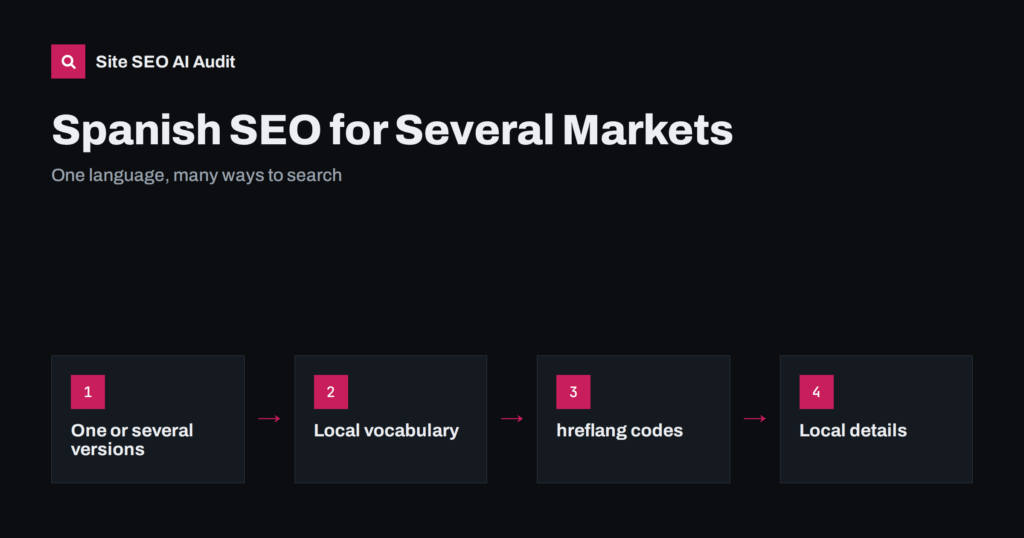
Spanish SEO for Several Markets: Spain, Mexico and the US
Spanish is searched in Spain, Latin America and the US with different words, prices and habits. When one Spanish version is enough and when…
 11 oct. 2026 · 8 min de citit
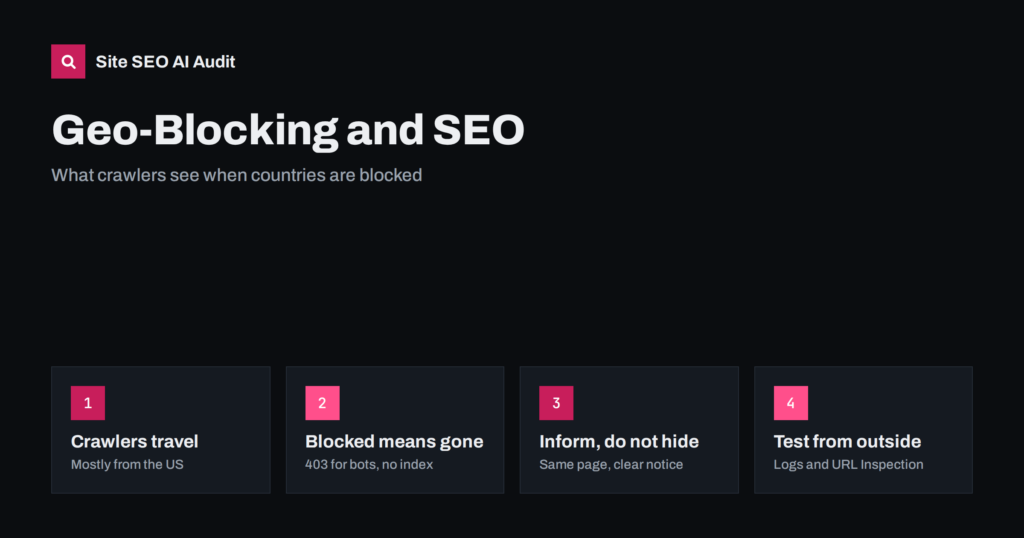
Geo-Blocking and SEO: What Googlebot Sees From Abroad
Blocking or changing content by country can hide pages from crawlers based elsewhere. How geo-blocking affects SEO and how to restrict access safely.
 9 oct. 2026 · 8 min de citit
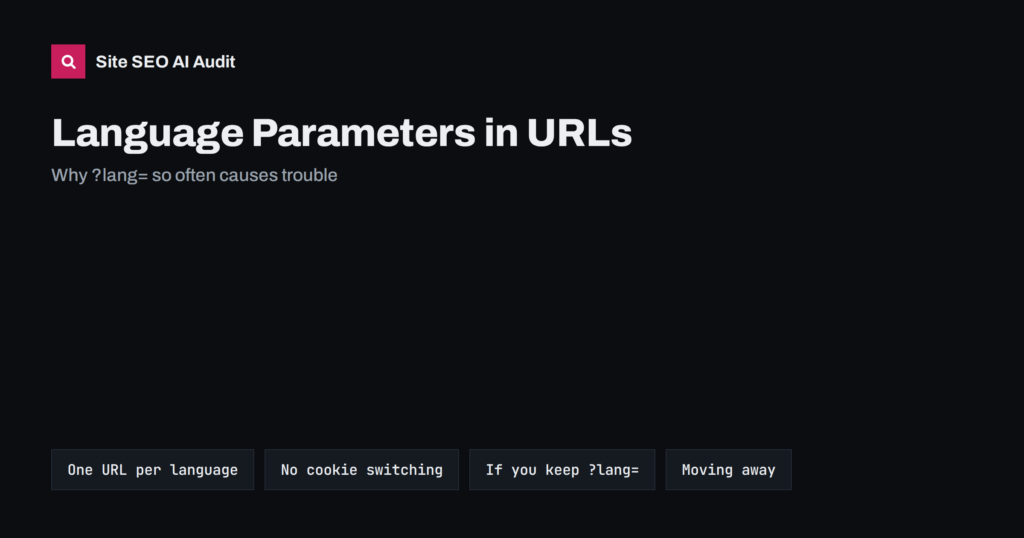
Language Parameters in URLs: Why ?lang= Causes Trouble
Serving languages with ?lang= parameters, cookies or sessions often confuses search engines. The risks, when parameters can work and how to move to clean…
 8 oct. 2026 · 8 min de citit
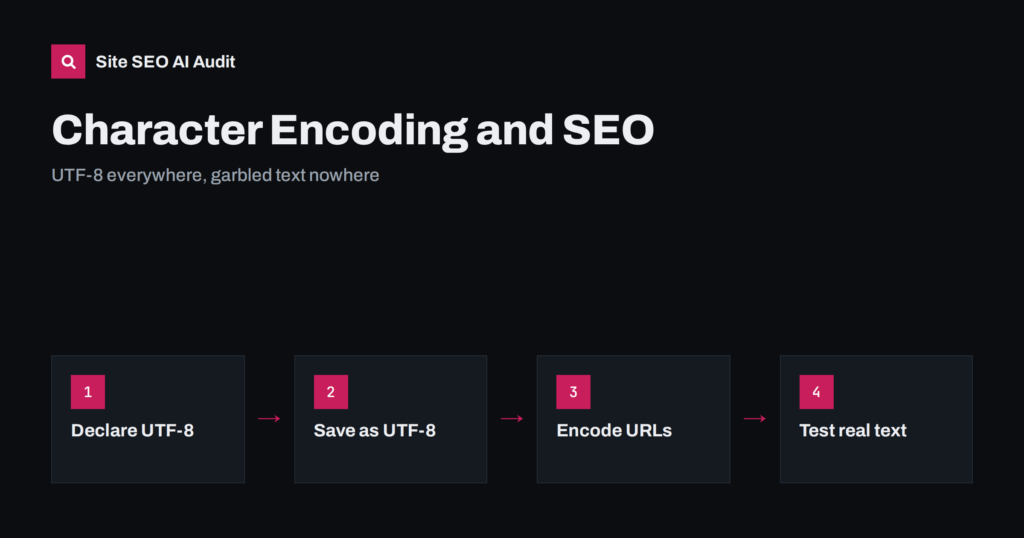
Character Encoding and SEO: UTF-8 for Every Language
Broken characters in titles, snippets and URLs hurt clicks and trust. How character encoding works, why UTF-8 is the safe choice and how to…
 7 oct. 2026 · 8 min de citit
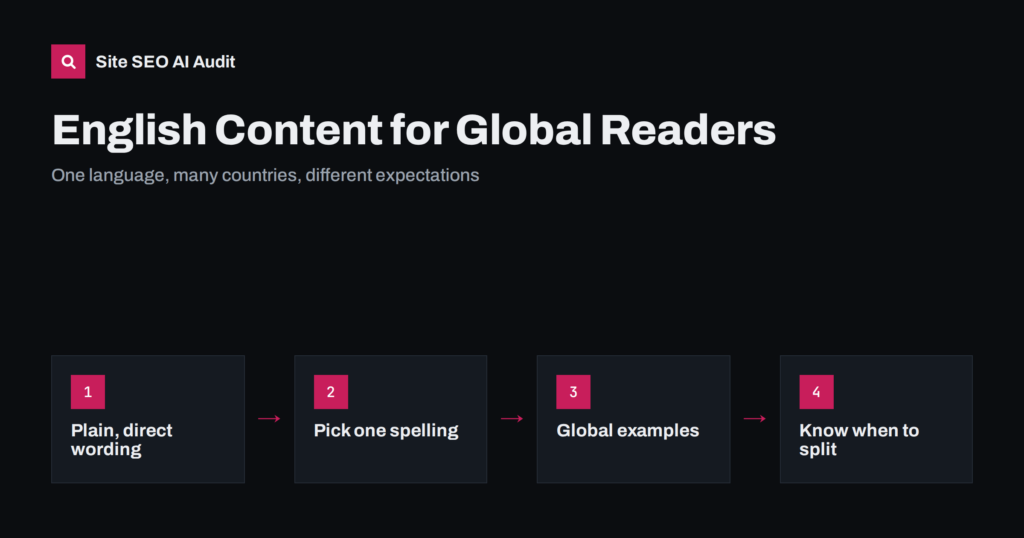
Writing English Content for Global Readers and Search
How to write one English site for readers worldwide: plain wording, consistent spelling, global examples and keywords, and when to split into en-US and…
 6 oct. 2026 · 7 min de citit
Dates, Numbers and Units: Localizing Formats for SEO
03/04 means March 4 to one reader and 3 April to another. How to localize dates, numbers, units, times and phone formats so each…
 1 oct. 2026 · 7 min de citit
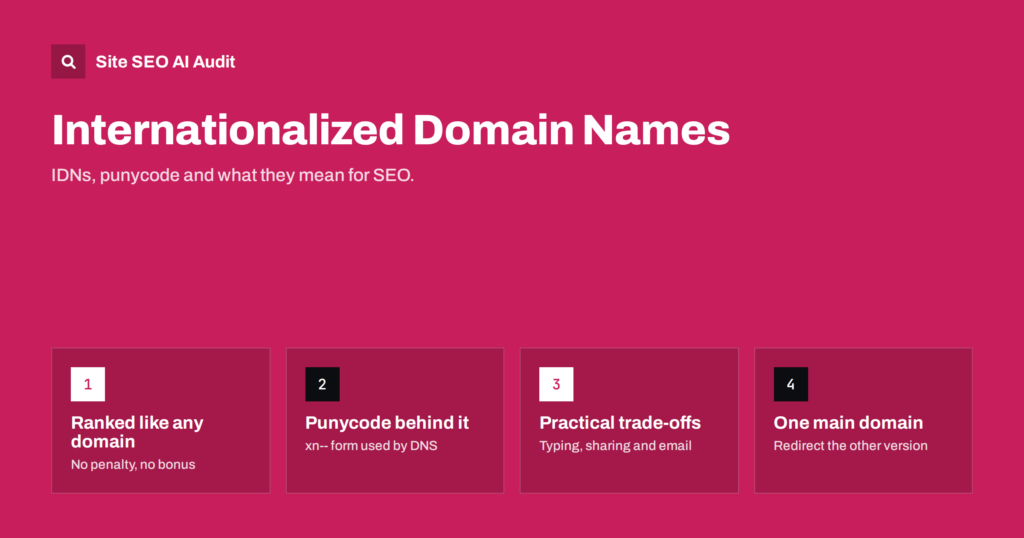
Internationalized Domain Names: IDNs, Punycode and SEO
Domains with local letters like ü, ą or Cyrillic work in search, but they bring practical trade-offs. How IDNs and punycode work and when…
 1 oct. 2026 · 8 min de citit
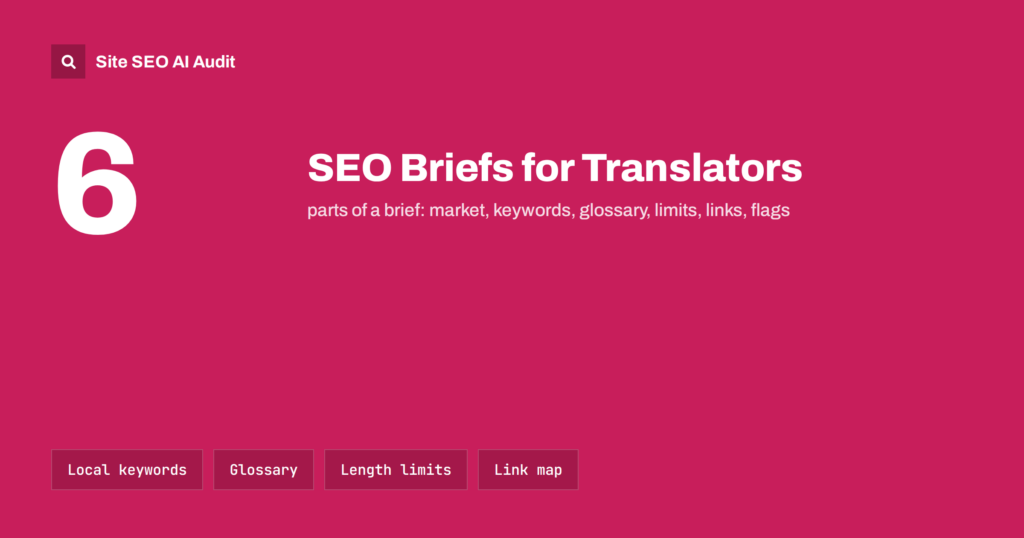
SEO Briefs for Translators: What to Hand Over
A translator can only localise for search if they know what to aim for. What to put in an SEO brief: keywords, glossary, limits,…