 ENEnglish
 LTLietuviškai
 DEDeutsch
 FRFrançais
 RUРусский
 ESEspañol
 PLPolski
 ITItaliano
 UKУкраїнська
 CSČeština
 PTPortuguês
 JA日本語
JA日本語 LVLatviešu valoda
 ETEesti
 HUMagyar
 IDBahasa Indonesia
 TRTürkçe
 HIहिन्दी
 ELΕλληνικά
 ARالعربية
 THไทย
THไทย VITiếng Việt
 RORomână
 MSBahasa Melayu
 BNবাংলা
#International SEO
International SEO is the work of making a website findable by searchers in more than one country or language. It covers how the site is structured, how language and country versions are signalled to search engines, and how content is adapted for each market. Typical tasks include choosing between country domains, subdomains and subfolders, adding hreflang annotations and keeping translations consistent. It also includes local keyword research, because people in different markets search with different words. Articles under this tag explain the concepts in plain language and show how to check and fix the most common problems.
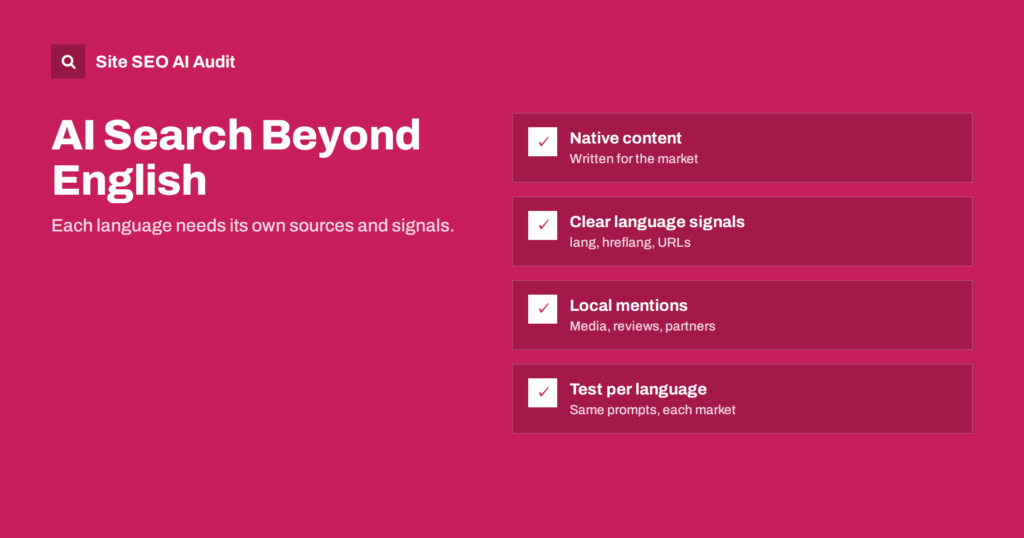 29 сент. 2026 г. · Время чтения: 8 мин
AI Search in Other Languages: Visibility Beyond English
How AI assistants answer questions in languages other than English, which sources they use, and how to make each language version visible in AI…
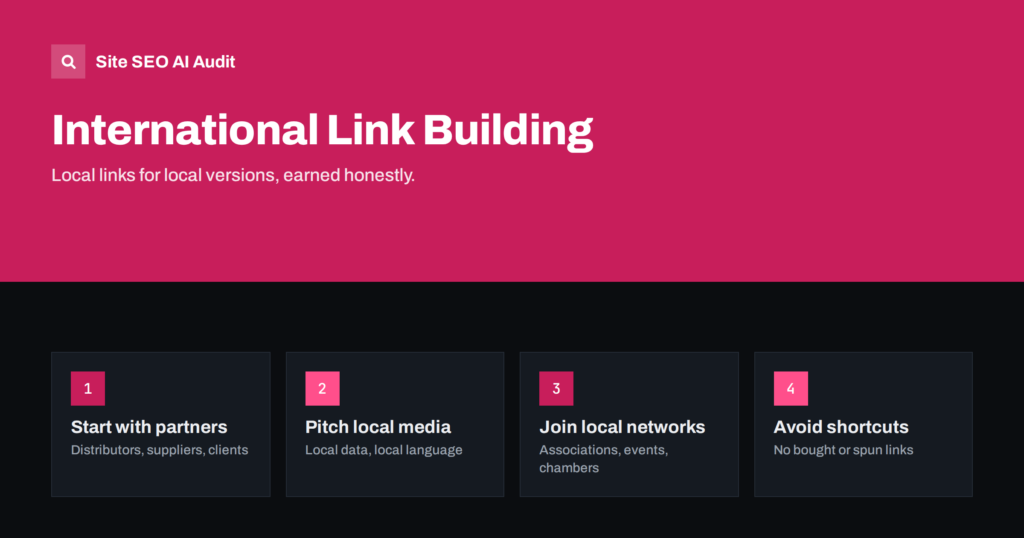 29 сент. 2026 г. · Время чтения: 8 мин
International Link Building: Earning Links in Each Market
How to earn links for each country or language version of your site: which local sources count, how structure affects link value, and what…
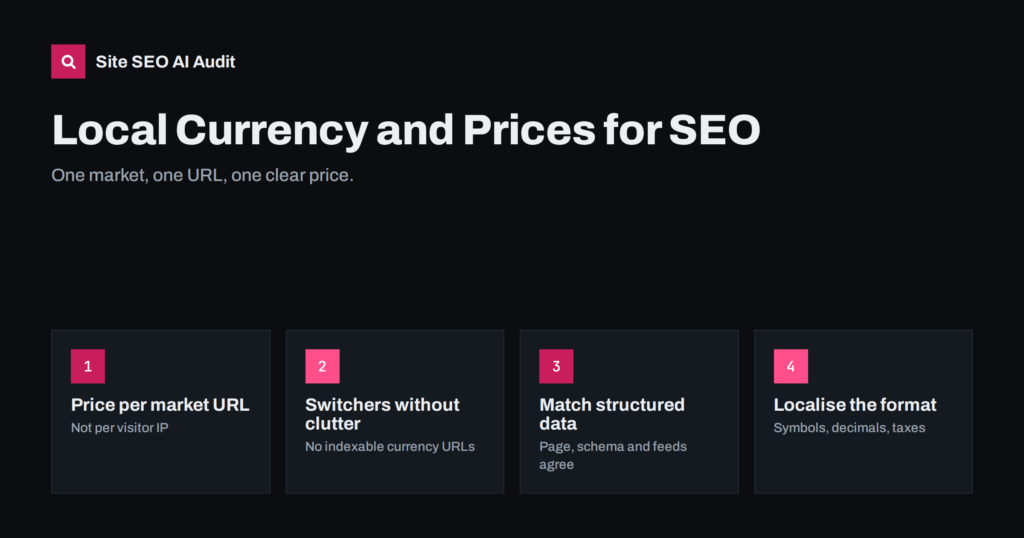 29 сент. 2026 г. · Время чтения: 8 мин
Local Currency and Prices on International Sites for SEO
How to show local currencies and prices on an international site without hurting SEO: URL setup, currency switchers, structured data, taxes and common mistakes.
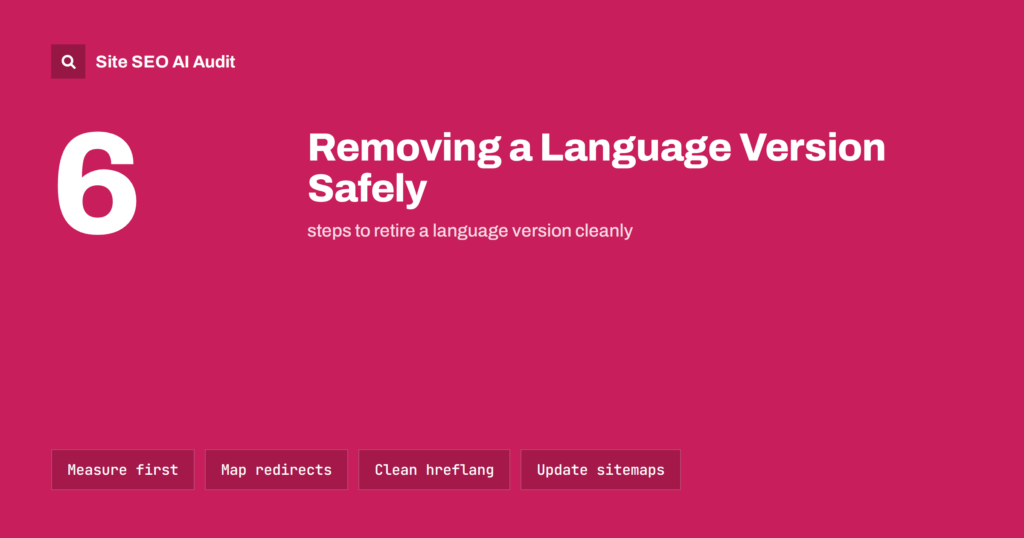 29 сент. 2026 г. · Время чтения: 8 мин
Removing a Language Version Without Losing Search Traffic
How to retire a language or country version of your site: when to redirect, when to return 410, how to clean up hreflang and…
 28 сент. 2026 г. · Время чтения: 7 мин
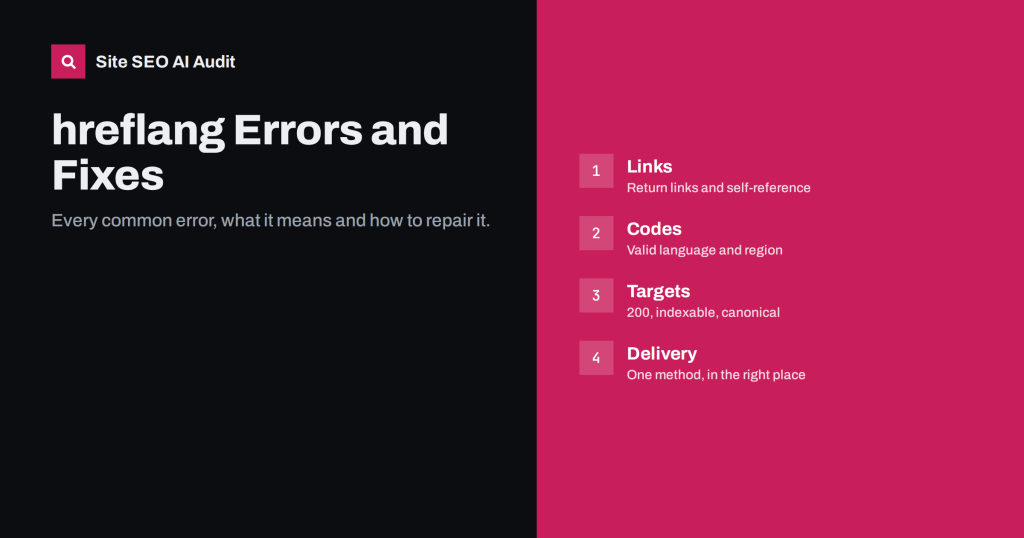
hreflang Errors: The Complete List and How to Fix Each One
Every common hreflang error in one place: missing return links, invalid codes, redirects, noindex targets, canonical conflicts, x-default issues and fixes.
 27 сент. 2026 г. · Время чтения: 8 мин
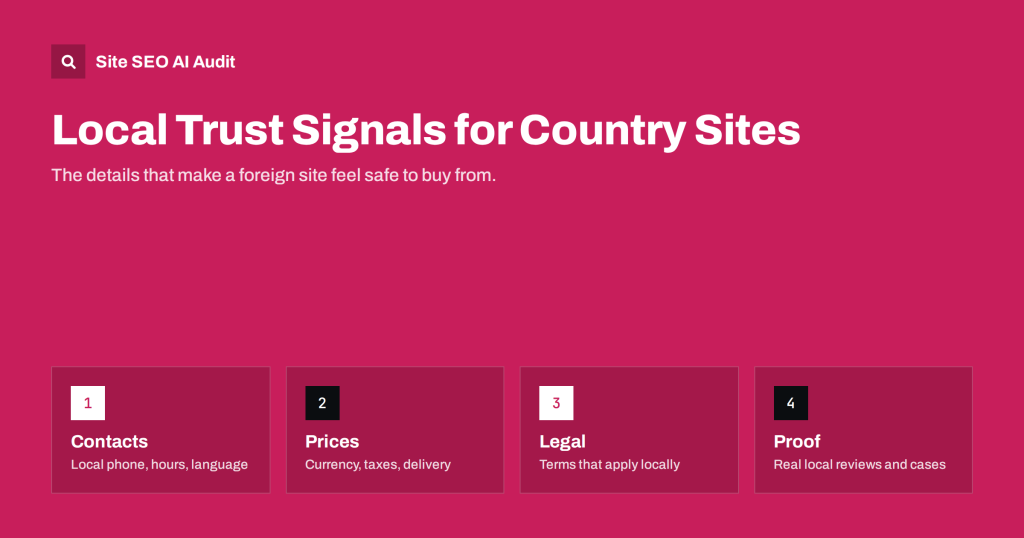
Local Trust Signals for Country Versions of Your Website
Visitors abroad judge a site by local details: contacts, prices, delivery, legal pages, reviews and payments. What to show per market and how to…
 25 сент. 2026 г. · Время чтения: 7 мин
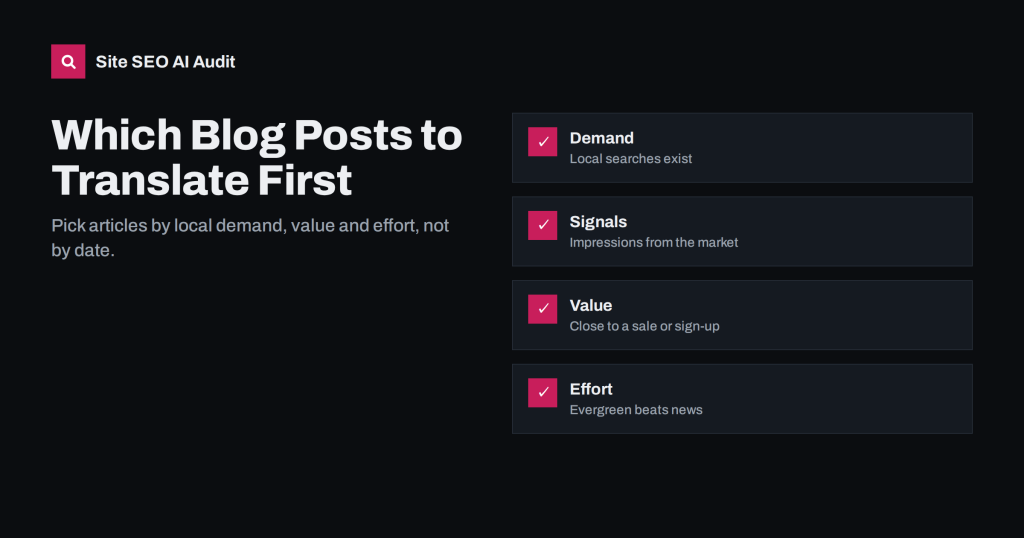
Which Blog Posts to Translate First: A Data-Led Approach
Not every article deserves translation. How to pick blog posts for a new language using search demand, existing traffic, business value and effort.
 24 сент. 2026 г. · Время чтения: 8 мин
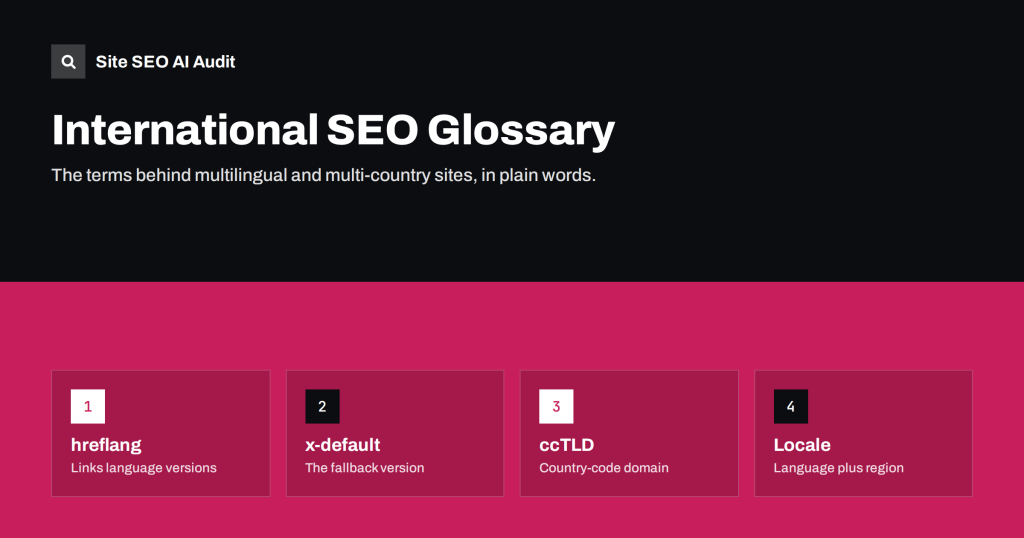
International SEO Glossary: Key Terms Explained Simply
Plain-language definitions of international SEO terms you meet in audits and guides: hreflang, x-default, ccTLD, locale, return links, geotargeting and more.
 23 сент. 2026 г. · Время чтения: 8 мин
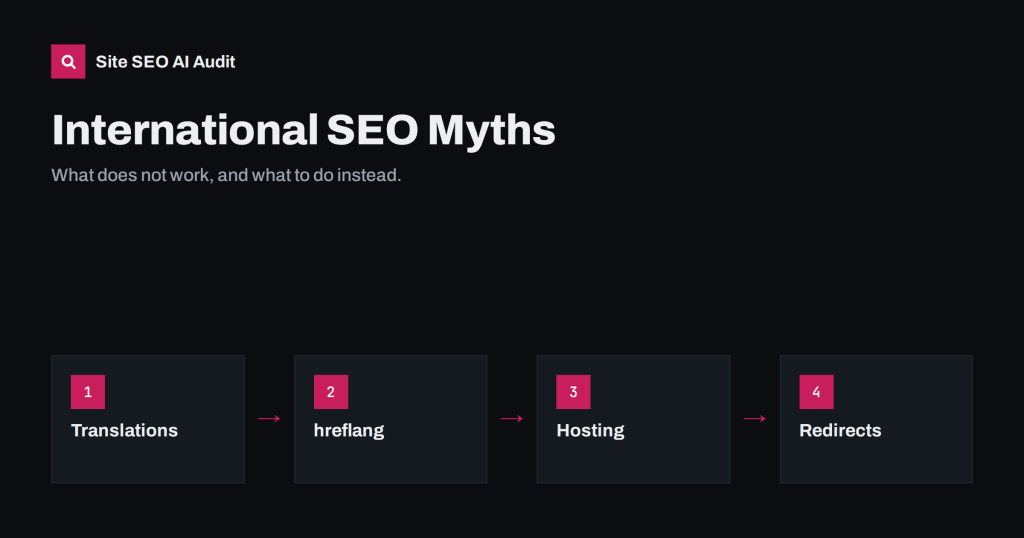
International SEO Myths That Waste Time and Budget
Common international SEO myths, from duplicate content penalties for translations to hreflang boosting rankings, and what actually works for multilingual sites.
 22 сент. 2026 г. · Время чтения: 8 мин
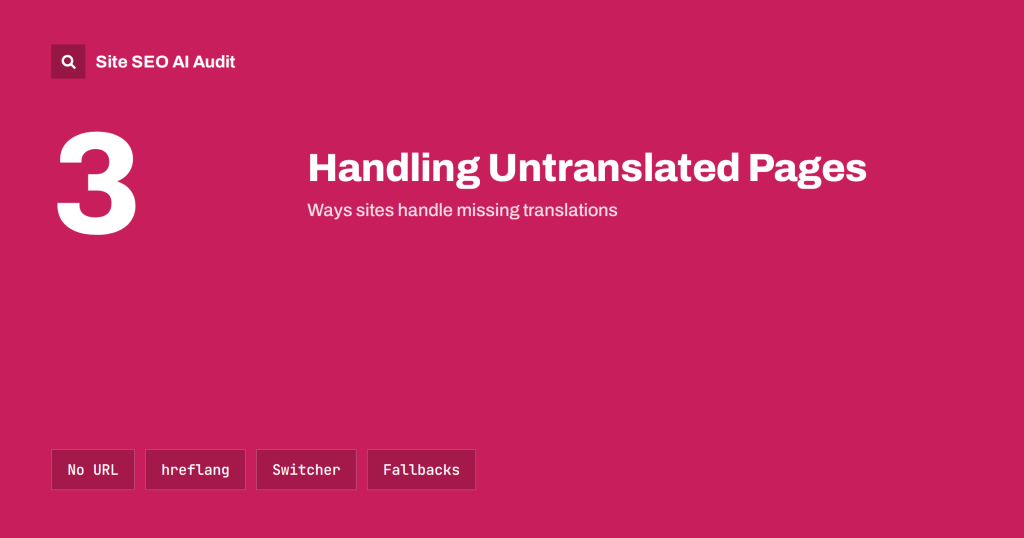
What to Do With Untranslated Pages on a Multilingual Site
When a page has no translation, should the translated URL show the original, redirect or not exist? The SEO trade-offs and a clean set-up…
 21 сент. 2026 г. · Время чтения: 7 мин
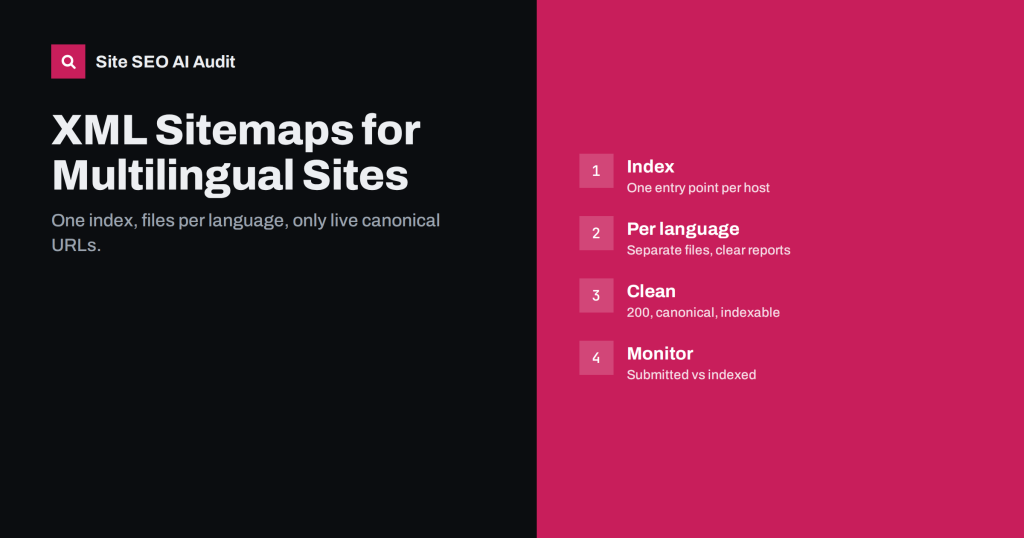
XML Sitemaps for Multilingual Sites: Structure and Checks
How to organise XML sitemaps on a multilingual or multi-country site: one index, files per language, what to include, hreflang options and useful checks.
 20 сент. 2026 г. · Время чтения: 7 мин
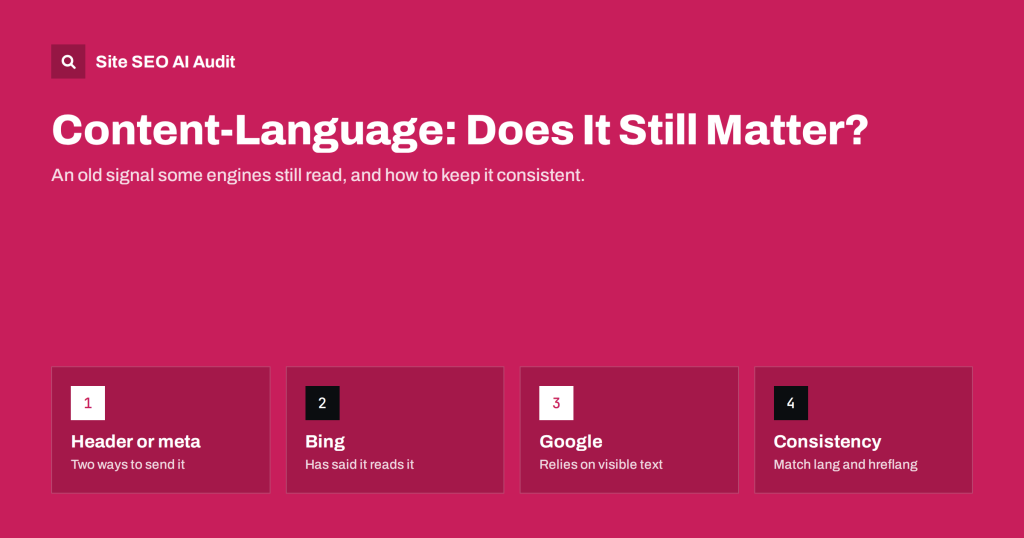
Content-Language Header and Meta Tag: Does It Still Matter?
What the Content-Language header and meta tag do, how they differ from lang and hreflang, which search engines read them and how to set…