ENEnglish
 LTLietuviškai
 DEDeutsch
 FRFrançais
 RUРусский
 ESEspañol
 PLPolski
 ITItaliano
 UKУкраїнська
 CSČeština
 PTPortuguês
 JA日本語
 LVLatviešu valoda
 ETEesti
 HUMagyar
 IDBahasa Indonesia
 TRTürkçe
 HIहिन्दी
 ELΕλληνικά
 ARالعربية
 THไทย
 VITiếng Việt
 RORomână
 MSBahasa Melayu
 BNবাংলা
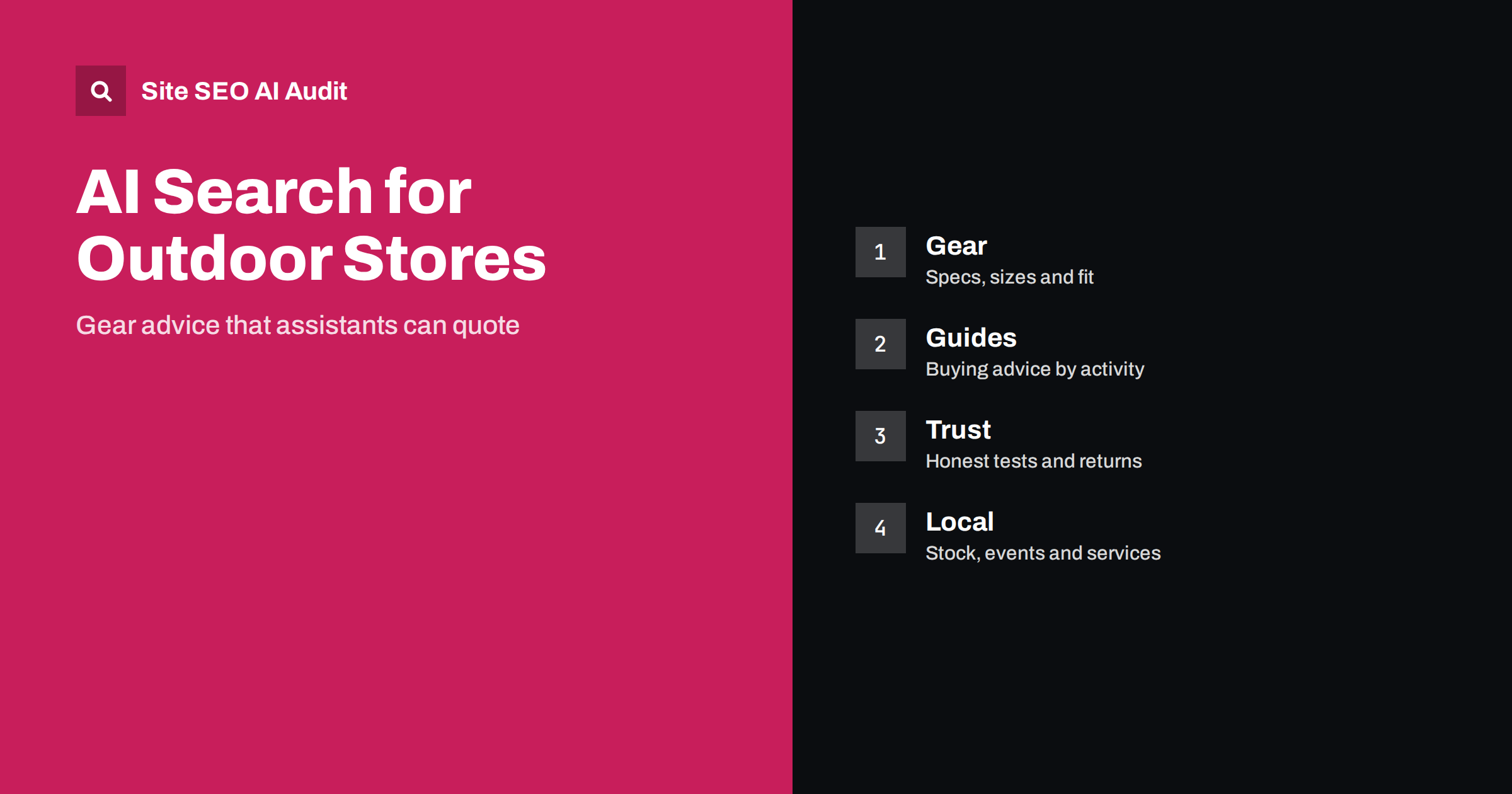
Short answer: Sports and outdoor retailers appear in AI answers when their websites explain gear in clear, concrete text: specifications, sizes and fit, materials, weight, conditions of use, price, stock and returns, together with buying guides organised by activity, level and budget. Add honest comparisons and test notes, show real reviews, publish local information such as workshops, rentals and events, keep facts consistent across marketplaces and profiles, mark up products truthfully and allow the crawlers you want. Pages made only of photos and slogans give assistants little to use.
People ask assistants practical questions before they spend money on equipment: which hiking boots suit wide feet, what size of bike frame fits a given height, how warm a sleeping bag must be for autumn camping, which running shoe works for a beginner or what to pack for a three-day trip. The answers draw on pages that explain such choices clearly. Specialist shops hold the knowledge, since staff fit shoes, repair bikes and advise on routes every day, but much of it never reaches the website. This guide shows how to turn it into pages that help buyers and can be cited. For the principles behind retrieval, see how AI search engines work.
Learn what active shoppers ask
Questions come in a few groups. Selection questions ask which product fits an activity, a body, a budget or a climate. Fit and size questions ask how a brand runs, how to measure and what to do when between sizes. Comparison questions ask about two or three models. Care and use questions ask how to wash a waterproof jacket, how to maintain a chain or how to dry boots. Planning questions ask what to bring, how to train or how to prepare for conditions. Collect real questions from the shop floor, customer service, reviews and the queries that reach the site. Group them by activity and decide which page answers each one. The approach to writing the opening is explained in answer-first introductions.
Describe gear with real specifications
Every product page should give the facts that decide a purchase, in text: the intended use, materials, weight, dimensions, capacity or volume, temperature rating or waterproof rating where relevant, closure and adjustment features, available sizes and colours, the price and the care instructions. Explain the numbers in plain words, because a rating means little to a beginner, and state the conditions under which it was measured when you know them. Add size charts as HTML tables, with a short guide to measuring, and explain how the item fits compared with the usual size of well-known brands, if you can do so reliably. Keep photos for what they show best, but do not put key facts only in images. The structure follows the product page SEO guide and product pages for AI shopping answers.
Write buying guides by activity and level
Buying guides are the pages most likely to be cited, since they answer the question people ask. Write one for each major activity and decision, such as how to choose a trekking backpack, how to pick a road bike size, what to wear for winter running or how to choose a tent for different seasons. Open with a short answer, then explain the factors in order of importance, give examples for beginners and experienced users and say who should spend more and who should not. Mention trade-offs honestly, such as weight against durability. Link each guide to the relevant categories and products, and update it when models change. Quality and experience signals matter, as discussed in E-E-A-T and AI search, so show the author and their background in the sport.
Offer honest comparisons and test notes
Shoppers often ask which of two items is better. Create comparison pages for common pairs, with a short summary, a single table of key differences, a section on who each product suits and notes from real use. State how you tested, for example the distance, conditions and the people who tried it, and separate your own findings from the manufacturer’s claims. Include weaknesses, which makes the page more credible than a list of advantages. Avoid ranking products only by margin, since assistants and readers can tell, and a biased page loses trust. A method is described in how to write comparison pages that AI answers trust.
Cover fit, safety and care responsibly
Some topics affect safety, such as helmets, climbing gear, avalanche equipment, child seats and life jackets. Publish clear, accurate information from the manufacturer and recognised standards, explain when equipment must be replaced and avoid giving advice beyond your expertise. Add a reminder to follow the instructions and, where needed, to take training or ask a qualified instructor. For care guides, give step-by-step instructions, name the products and temperatures to use and warn about what to avoid. Date the pages and review them when standards or models change. If staff members are certified fitters, instructors or guides, say so on the page, because named experience supports trust and helps readers decide whom to ask for help in person. Content on safety is held to a higher standard, as discussed in YMYL topics in AI search.
Publish local services, stock and events
Many outdoor and sports shops offer services: bike repair, boot fitting, ski waxing, rentals, courses, group runs, guided trips and trade-ins. Give each service its own page with what is included, prices or ranges, how to book, how long it takes and what to bring. Publish store details, hours and an overview of stock or brands, and add events with dates, places and how to join. Keep a short, current page for seasonal topics, such as winter services or race preparation. Make sure the address, hours and contact details are identical in every directory and on your profile, as explained in AI search for local businesses. If you have several stores, give each one its own page, avoiding the duplication described in location pages and SEO.
Handle seasons, variants and discontinued items
Gear changes by season and model year. Keep category pages and guides on stable addresses, and update them each year instead of creating new pages for each season, as explained in seasonal pages and SEO. Decide which size and colour variants need their own page, using product variants and SEO. When an item is out of stock or discontinued, keep the page, explain the status and suggest the successor, following out-of-stock and discontinued products. Clear model names and years help assistants avoid mixing up versions. When a new model replaces an old one, say what changed, such as weight, materials, fit or price, because shoppers and assistants often ask whether an upgrade is worth it. Keep a short note on the old model page that links to the new one, and avoid deleting the page while people still own and search for the product, for example to find spare parts, care instructions or size information.
Use structured data and keep facts consistent
Mark up products with their name, description, brand, images, identifiers, price, currency and availability, and mark up the store with organisation or local business data, only where the visible page shows the same facts. Review markup should describe genuine, visible reviews. Keep names, sizes, prices and stock consistent between the website, marketplaces, feeds and profiles, because mismatches cause wrong answers. If you sell several brands with similar names, make the differences clear. More guidance is in the product schema guide and structured data and AI search.
Allow crawlers and review the answers
Check robots.txt, firewall and bot-protection rules, since retail sites often block legitimate crawlers by accident, and decide which crawlers to allow, as explained in AI crawlers and robots.txt. Print product and guide text in the HTML, and keep image-heavy pages fast on mobile. Every month, ask a fixed list of questions about your category and brands, such as best gear for a named activity, a size question and a local service query. Record whether you are named and whether the facts are right, and fix errors at the source. When answers are wrong, use the guide to wrong information about your business.
Site SEO AI Audit crawls your site, checks status codes, titles, structured data, orphan pages, speed and AI crawler rules, and lists the fixes ranked by the points they add. The first audit of up to 200 pages is free; larger sites can see the pricing page.
Related reading
- AI Search for Fashion and Apparel Stores
- AI Search for Electronics and Gadget Stores
- Category Page SEO
- Reviews and Reputation in AI Recommendations
The bottom line
Outdoor and sports shops earn citations by sharing what their staff know: real specifications, fit advice, honest comparisons and guides by activity. Keep product and service facts current, mark them up truthfully, allow the right crawlers and review the answers every month.
SSS
Should I write buying guides if I only sell online?
Yes. Guides answer the questions shoppers ask before buying, and assistants often quote them. Link each guide to the products and categories it covers.
How do I explain technical ratings to beginners?
State the number, explain what it means in practice and mention the conditions of measurement if you know them. Add an example of when the rating is enough and when it is not.
Do I need a page for each size and colour?
Usually not. Keep one page per model, with sizes and colours as options, unless a variant has different specifications or its own demand.
Can I mention competitors in comparison pages?
Compare products fairly and state your method. Stick to facts, and avoid claims about other companies that you cannot support.
How should I handle safety equipment pages?
Use accurate information from the manufacturer and recognised standards, explain replacement and care rules and recommend training where needed. Date and review the page regularly.