ENEnglish
 LTLietuviškai
 DEDeutsch
 FRFrançais
 RUРусский
 ESEspañol
 PLPolski
 ITItaliano
 UKУкраїнська
 CSČeština
 PTPortuguês
 JA日本語
 LVLatviešu valoda
 ETEesti
 HUMagyar
 IDBahasa Indonesia
 TRTürkçe
 HIहिन्दी
 ELΕλληνικά
 ARالعربية
 THไทย
 VITiếng Việt
 RORomână
 MSBahasa Melayu
 BNবাংলা
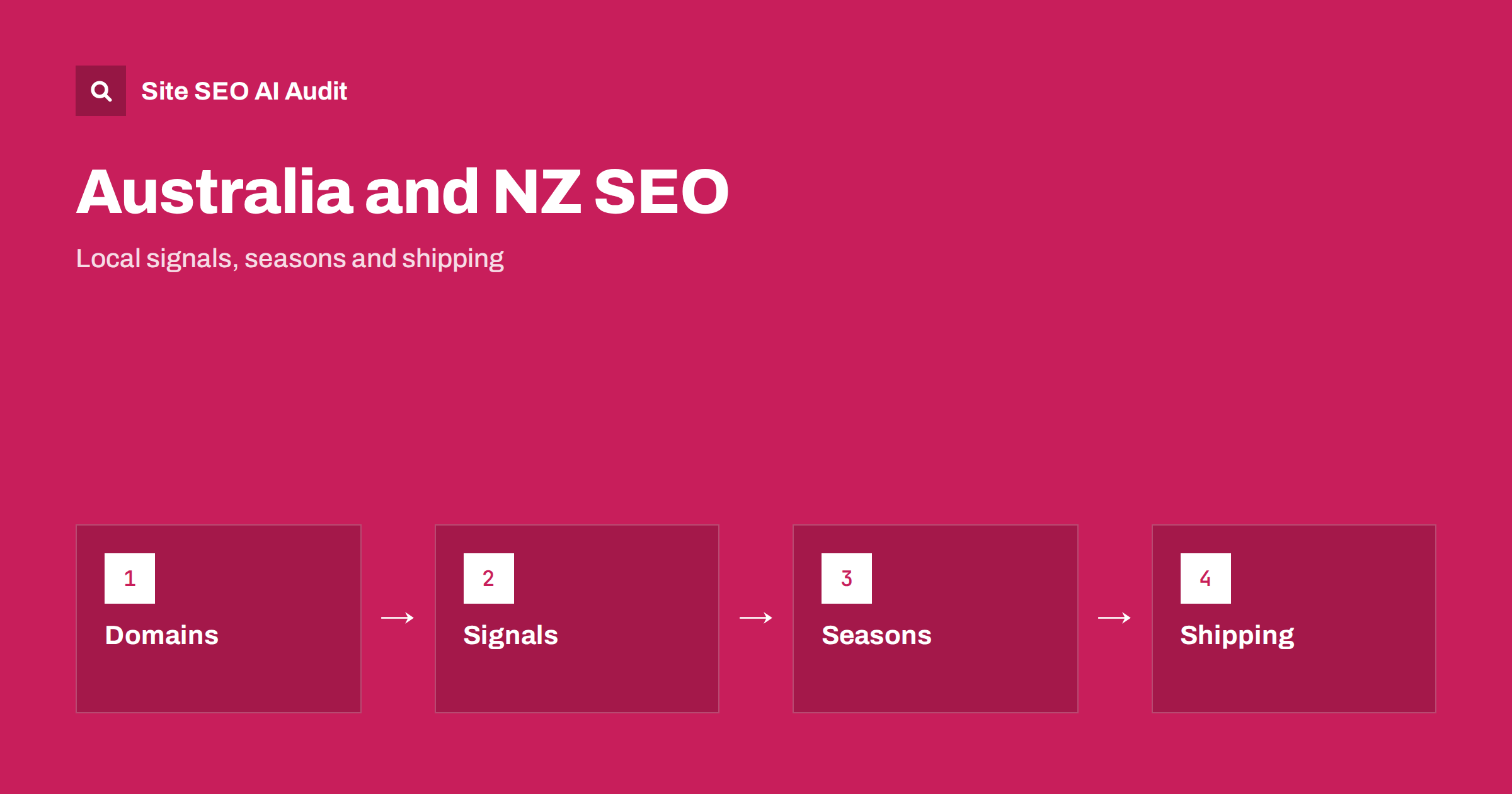
Short answer: Australia and New Zealand search in English and mostly through Google, but they are two separate markets, and treating them as an extension of the United States or the United Kingdom costs conversions. Use Australian and New Zealand spelling, show prices in Australian or New Zealand dollars with tax stated, describe delivery and returns for these countries, and add local trust signals such as a local address, phone number and business registration. Decide between country domains, subfolders and hreflang pairs such as en-AU and en-NZ, remember that seasons and public holidays run on a different calendar from the northern hemisphere, and build local links and profiles. Distance and shipping are central to purchasing decisions, so explain them clearly. The technical rules are the standard ones; the advantage comes from local detail.
Many international companies launch in Australia and New Zealand with the same English site they use elsewhere, only adding a currency. Visitors notice quickly: spelling that looks American, summer promotions in the middle of winter, delivery that takes weeks or costs more than the product, or a lack of any local contact. These small mismatches lower trust, and local competitors who get the details right win the sale. At the same time the markets reward businesses that do it well: the web is mature, shoppers are used to buying online and competition in many niches is less crowded than in the largest English-speaking markets. This guide covers the structure, the local signals, the calendar, the logistics and the content that make a site credible in both countries. For the wider method, see choosing target markets.
Domains and site structure
A .com.au domain signals Australian focus and is trusted by local buyers, but the registry requires an Australian presence for registration, so it is not an option for every foreign company. A .nz domain is more open and equally trusted in New Zealand. If you cannot or do not want to register country domains, use subfolders such as /au/ and /nz/ on one domain, with hreflang pairs en-AU and en-NZ, and make each version genuinely different in prices, delivery and legal details. Subdomains are possible but split authority and are harder to manage. Do not publish the same page for both countries with only the currency changed, because near-duplicate pages compete with each other. If you serve only one of the two markets, choose it clearly rather than a combined “Australia and NZ” version. Details are in country domain, subdomain or subfolder, generic and country domains and how Google targets a country.
Spelling, vocabulary and formats
Australian and New Zealand English follow British spelling in most cases: colour, centre, organisation, licence as a noun. Vocabulary differs from both the United Kingdom and the United States: words for everyday goods, clothing, vehicles, building trades and food vary, and local slang should be used with care in business content. Dates are written day, month, year, measurements are metric and phone numbers follow national formats. Use the terms people type into search, which keyword research in each country will reveal, rather than assuming that a term works in all English-speaking markets. Mixed spelling signals carelessness and can lower relevance for local queries. See global English content SEO, same language, different countries and local formats for dates and numbers.
Prices, taxes and payment
Show prices in Australian dollars for Australia and New Zealand dollars for New Zealand, and say whether goods and services tax is included, since the rates differ between the two countries. Pricing in a foreign currency forces buyers to calculate and often to pay conversion fees, which reduces conversion. List the payment methods local buyers expect, including cards, popular wallets and, where suitable, buy-now-pay-later services, and state clearly when invoices can be issued with tax details for business customers. For cross-border orders, make duties and import charges explicit before checkout. Clear pricing is a trust signal as well as a legal expectation. See local currency prices and SEO.
Local trust signals
Buyers want to know that a business exists locally and can be held accountable. Show an Australian or New Zealand address, a local phone number, business registration details where appropriate, opening hours in the local time zone and a visible way to contact support. Reviews from local customers, case studies from local clients and mentions of local institutions or partners add credibility. Make sure business profiles list the correct country, address and categories, and keep the details identical across the web. For companies without a physical office, a registered business address and a local phone line still help. The wider role of these signals is explained in local trust signals for country sites.
Seasons, holidays and timing
The southern hemisphere calendar is reversed: summer runs from December to February and winter from June to August. Content, promotions, product ranges and schedules built for the northern hemisphere will often be out of phase. Public holidays differ between the two countries, and in Australia between states, and events such as school terms, Christmas shutdowns and major sporting occasions affect demand and delivery. Plan seasonal pages and campaigns for the local calendar, keep them at stable addresses and refresh them yearly. Show opening hours and delivery cutoffs around holidays. See local seasonality in international markets and seasonal pages SEO.
Local search across states and cities
Australia is large, and customers search by city or state: Sydney, Melbourne, Brisbane, Perth, Adelaide and many regional centres. New Zealand searches centre on Auckland, Wellington, Christchurch and regional areas. If you serve customers locally, create location or service area pages with real information: the areas you cover, local projects, staff, contact details and reviews. Avoid copying one template across dozens of suburbs with only the name changed. Complete and maintain business profiles for each real location, use consistent name, address and phone data and encourage local reviews. See local SEO across several countries and AI search for local businesses.
Shipping, speed and returns
Distance shapes buying decisions. Customers compare delivery time and cost with local stores and pay close attention to returns. Where possible, ship from a local warehouse or partner, state delivery estimates by region, show shipping costs early and describe the returns process, including who pays and where items are sent. For websites, serve pages from a CDN with a nearby point of presence, since a site hosted on the other side of the world responds more slowly, which affects speed and conversions. Measure real user performance in each country and compare it with your home market. See hosting and CDN for international SEO.
Content that resonates uses local examples: Australian and New Zealand cities, climate conditions such as bushfire season or earthquake preparedness where relevant, local regulations and standards, and well-known local institutions. Publish guides that answer local questions, for example how to comply with a local rule, how long delivery takes to a regional town or how to claim a warranty. Link from them to your product and service pages. For AI search, state the facts assistants need in plain text: prices in local currency, service areas, delivery times, return conditions and contact details, with the same information in profiles and structured data. Partnerships with local retailers, trade bodies and media provide links and mentions that strengthen local relevance, and sponsoring or supporting local events can build the same signals over time. Measure results separately for each country in Search Console and analytics, and compare conversion rates, because average values across both markets hide real differences. When one market lags, review its pages for missing local detail before concluding that demand is weak.
Checklist and audit
- Separate Australian and New Zealand versions where prices, tax or delivery differ.
- hreflang en-AU and en-NZ with return links and an x-default.
- Local spelling, vocabulary, dates and metric units.
- Local currency, tax statements, payment methods and shipping details.
- Local address, phone, registration details and local reviews.
- Seasonal content aligned to the southern hemisphere calendar.
Site SEO AI Audit crawls each country version, checks hreflang return links, lang attributes, duplicate titles, speed and AI crawler rules, and ranks fixes by the points they add. The first audit of up to 200 pages is free; multi-country sites can see the pricing page.
Related reading
- Global English Content SEO
- Same Language, Different Countries
- Local Seasonality in International Markets
- Country Domain, Subdomain or Subfolder
The bottom line
Australia and New Zealand are separate markets that share a language. Win them with local spelling, local currency and tax, honest shipping and returns, a visible local presence and content that follows the southern hemisphere calendar. Add hreflang and the right domain structure, and the rest is standard SEO done carefully.
FAQ
Do I need a .com.au domain to rank in Australia?
No. It helps with trust and signals focus, but it requires an Australian presence. A subfolder with hreflang and local content can rank well.
Can one English site serve Australia and New Zealand?
It can, but separate versions perform better when prices, taxes, shipping and legal details differ. Do not copy pages with only the currency changed.
Which hreflang codes should I use?
Use en-AU for Australia and en-NZ for New Zealand, with return links on each page and an x-default for other visitors.
Why do seasons matter for SEO?
Demand follows the local calendar. Winter and summer are reversed, so northern hemisphere campaigns, products and dates can be out of phase.
How important is hosting location?
Speed matters, so serve pages from a CDN with a nearby point of presence and measure real user performance in each country.