ENEnglish
 LTLietuviškai
 DEDeutsch
 FRFrançais
 RUРусский
 ESEspañol
 PLPolski
 ITItaliano
 UKУкраїнська
 CSČeština
 PTPortuguês
 JA日本語
JA日本語 LVLatviešu valoda
 ETEesti
 HUMagyar
 IDBahasa Indonesia
 TRTürkçe
 HIहिन्दी
 ELΕλληνικά
 ARالعربية
 THไทย
THไทย VITiếng Việt
 RORomână
 MSBahasa Melayu
 BNবাংলা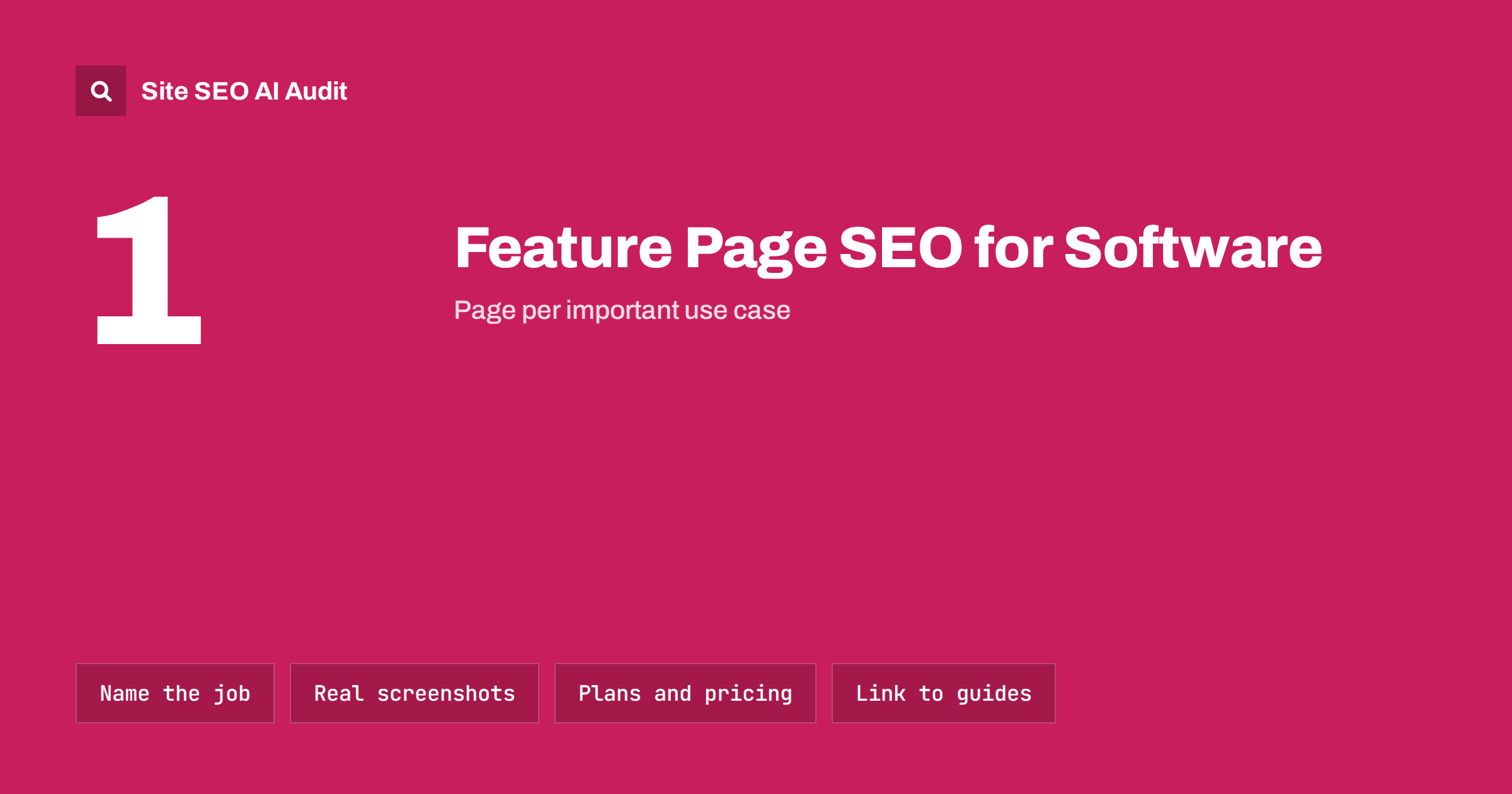
Short answer: Feature pages help software products rank when each one targets a job people search for, not an internal feature name. Name the page after the problem or task (“send invoices automatically”, “schedule social posts”), explain who it is for and how it works with real screenshots, answer the questions buyers ask, and link it to pricing, sign-up and related guides. One page per significant use case usually beats a single long features list.
Why feature pages matter for software
People rarely search for a software brand they have not heard of. They search for what they need to get done: “automatic invoice reminders”, “shared team calendar”, “export orders to CSV”, “website uptime monitoring”. If your product does that job, a page describing it is how searchers find you.
Feature pages also do work beyond search. Sales teams send them to prospects, support links to them, and they are often what comparison sites and AI assistants read when describing what a product can do. A clear, accurate page for each important capability serves all of those audiences at once.
Many software sites miss this opportunity. They have a home page, a pricing page and a single “Features” page listing thirty features in a grid of icons with one line each. That page cannot rank for thirty different jobs. It has one title, one H1 and very little text about each feature. Competitors with a dedicated page for each important use case take those searches instead.
Features vs jobs: naming pages the way people search
Internal teams name features after how they are built or marketed: “Smart Flows”, “Insight Hub”, “AutoSync Pro”. Searchers do not use those words. They describe the outcome or the task.
| Internal feature name | What people search | Better page focus |
|---|---|---|
| Smart Flows | automate invoice reminders | Automatic invoice reminders |
| Insight Hub | sales dashboard for small business | Sales dashboard and reports |
| AutoSync Pro | sync contacts between apps | Contact sync with your other tools |
| TeamSpace | shared calendar for teams | Shared team calendar |
This matters most for small and new products. A well-known brand can get away with invented names, because people search for the brand and the feature together. A product people have not heard of yet has to be found through the words people already use for the problem.
You can still mention the branded feature name on the page. Just do not make it the title, H1 or URL. Use search data and customer language to name the page after the job.
Which features deserve their own page
Not every toggle and setting needs a page. Good candidates are features that:
- Solve a problem people actively search for.
- Are a main reason customers choose your product.
- Serve a distinct audience or use case, such as agencies, e-commerce shops or accountants.
- Replace a common manual process or another tool.
- Have enough substance to explain properly: how it works, options, limits, examples.
Minor features belong on the overview page or inside the relevant main feature page. Your sales and support teams are the best source here: ask which features prospects ask about before buying and which ones customers mention when they explain why they chose you. Those are almost always the features worth a page.
What a strong feature page contains
- A direct opening. H1 naming the job, and one or two sentences on what the feature does and for whom. “Send invoice reminders automatically, so you get paid without chasing clients.”
- The problem. A short description of how people handle this without your product and why it is painful.
- How it works. Steps with real screenshots or a short video. Real product images build more trust than abstract illustrations.
- Key capabilities. The options and details that matter: triggers, formats, integrations, limits. Be honest about what it does not do.
- Who it is for. Typical users and use cases, ideally with concrete examples.
- Proof. Genuine customer quotes about this feature, used with permission.
- Plans and availability. Which plans include the feature, with a link to pricing.
- FAQ. Questions buyers ask sales or support about this feature.
- Next step. Sign-up, trial, demo or a guide to get started.
A worked example
Imagine a small project management app whose features page lists “Timeline view”, “Guest access”, “Recurring tasks”, “Workload” and twenty other items, each with an icon and a sentence. The team decides to build dedicated pages for the four features customers mention most in sales calls.
- “Timeline view” becomes a page titled “Project Timeline and Gantt Chart for Small Teams”, because customers and searchers say “gantt chart” far more often than “timeline view”.
- “Guest access” becomes “Share Projects With Clients Without Extra Seats”, which describes the actual job agencies want done.
- “Recurring tasks” keeps its name, since that is exactly what people search for, and gains examples: weekly reports, monthly invoicing, quarterly reviews.
- “Workload” becomes “Team Workload and Capacity Planning”, with screenshots showing how a manager spots overloaded team members.
Each page explains the problem, shows the feature with real screenshots, lists the plans that include it and answers four or five common questions. The features overview links to all four, relevant blog posts link to them with descriptive anchors, and each page links to pricing and to its setup guide in the help centre. The overview page still lists everything else, but the four pages that matter most now have a real chance to be found.
On-page elements for feature pages
- Title tag: the job plus the product type or brand: “Automatic Invoice Reminders for Freelancers | Brandname”.
- URL: short and job-based:
/features/invoice-reminders/. - Meta description: what the feature does and one concrete benefit.
- Headings: descriptive H2s for each section, some phrased as questions buyers ask.
- Images: real screenshots, compressed, with alt text that describes what the screenshot shows.
- Text in HTML: not only in images or animations. Search engines need to read the explanation.
Connecting feature pages to the rest of the site
Feature pages work best as part of a structure:
- A features overview that briefly introduces each main feature and links to its page.
- Use-case or industry pages (“for agencies”, “for online stores”) that link to the features that matter to that audience.
- Guides and blog posts that explain how to solve a problem and link to the feature that does it.
- Help documentation for detailed setup, linked from the feature page for readers who want the specifics.
- Bảng giá, linked from every feature page, showing which plan includes what.
Use descriptive anchor text in these links, such as “automatic invoice reminders”, so both readers and search engines understand what each feature page covers.
Common mistakes on feature pages
- Named after internal jargon that nobody searches for.
- All features on one page with a line each.
- Only icons and animations, with almost no readable text.
- Stock illustrations instead of real screenshots.
- No mention of plans or pricing, leaving buyers unsure whether they can use the feature.
- Overclaiming: promising outcomes the feature cannot deliver. Buyers find out quickly.
- Duplicate text across feature pages, with only the feature name changed.
- Orphaned pages that exist but are not linked from navigation or content.
Keeping feature pages accurate
Software changes constantly. Screenshots age, options are renamed, limits change and features move between plans. An outdated feature page misleads buyers and generates support tickets. Add feature pages to your release checklist: when a feature changes, the page is updated in the same release. Review all feature pages at least a few times a year, checking screenshots, plan availability and any numbers such as limits or supported formats.
A crawl helps with the structural side: duplicate titles across feature pages, thin pages built from icons, images without alt text, orphaned pages and broken links to old documentation. Site SEO AI Audit checks all of these across your whole site and ranks fixes by impact. See the plans, or run a free first audit.
Related reading
- Landing Page SEO: How to Build Landing Pages That Can Rank
- Keyword Mapping: Give Every Search Topic One Clear Page
- AI Search for B2B SaaS: How to Get on the Shortlist
- Service Page SEO: How to Build Pages That Rank and Convert
The bottom line
Software buyers search for jobs, not feature names. Give each important use case its own page named in their words, explain the problem and how the feature solves it with real screenshots, be honest about capabilities and plans, answer buyer questions, and link feature pages to pricing, guides and use-case pages. Keep them accurate as the product changes.
FAQ
Should every feature have its own page?
No. Give dedicated pages to features that solve a searched-for problem, are a main reason to buy, or serve a distinct audience. Minor features can be covered on an overview or within a main feature page.
Should I use our branded feature names in titles?
Lead with the job people search for, such as “automatic invoice reminders”. Mention the branded name in the content if you want to, but it should not replace the descriptive wording.
Are screenshots important on feature pages?
Yes. Real screenshots show buyers what the product looks like and build trust. Add alt text that describes what each screenshot shows.
Should feature pages mention pricing?
They should say which plans include the feature and link to the pricing page. Buyers want to know whether the feature is available to them before signing up.
How are feature pages different from help articles?
Feature pages explain what a feature does and why it matters, for people deciding whether to use the product. Help articles explain how to set it up, for existing users. Link the two together.