ENEnglish
 LTLietuviškai
 DEDeutsch
 FRFrançais
 RUРусский
 ESEspañol
 PLPolski
 ITItaliano
 UKУкраїнська
 CSČeština
 PTPortuguês
 JA日本語
 LVLatviešu valoda
 ETEesti
 HUMagyar
 IDBahasa Indonesia
 TRTürkçe
 HIहिन्दी
 ELΕλληνικά
 ARالعربية
 THไทย
 VITiếng Việt
 RORomână
 MSBahasa Melayu
 BNবাংলা
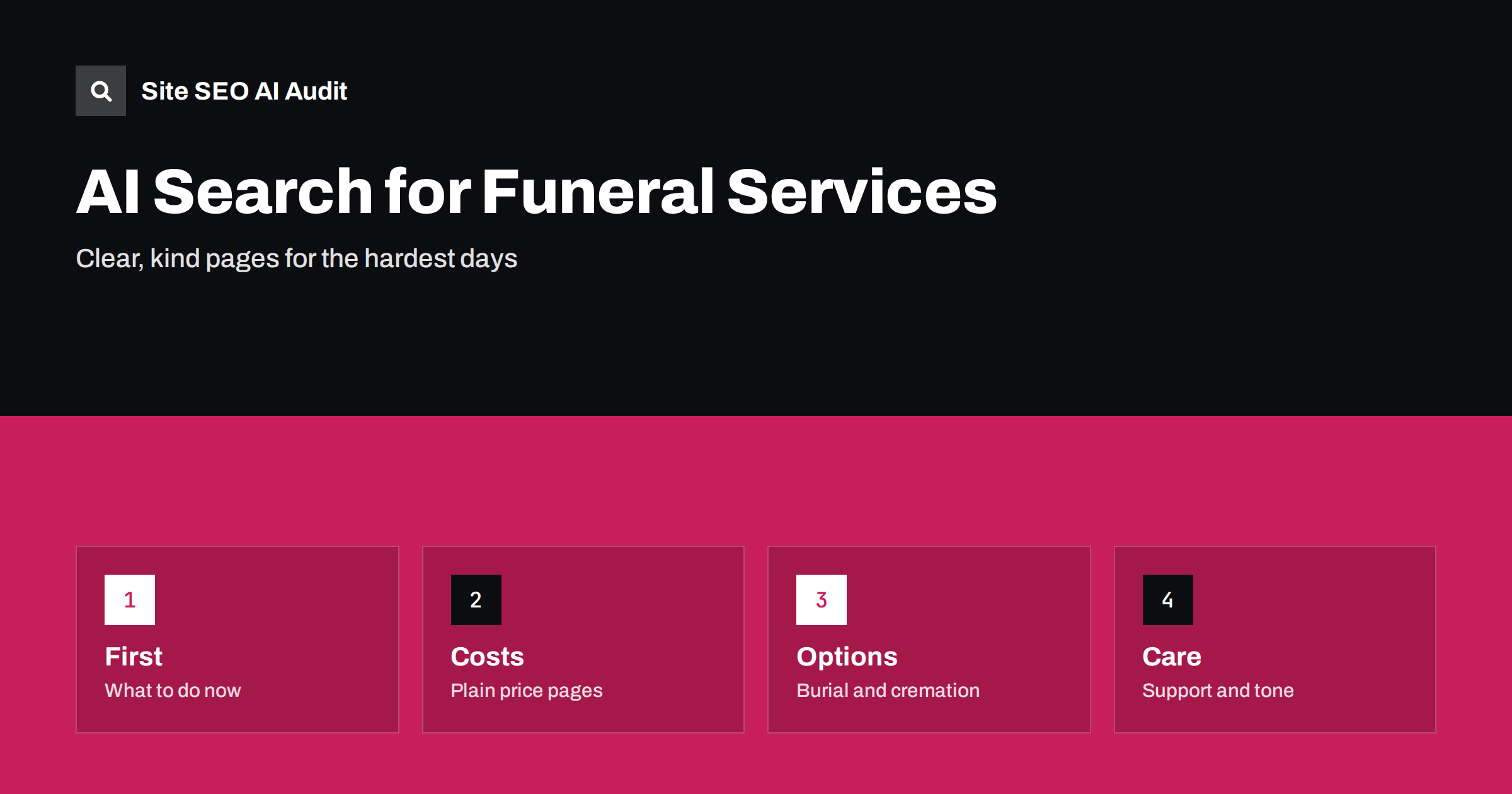
Short answer: People who need a funeral service are often in shock, short of time and unsure of the process, and many ask an AI assistant what to do first, what it costs and who to call. To be named, a funeral business needs calm and clear pages: what to do in the first hours, a plain explanation of the steps, transparent price information, the options for burial, cremation and memorials, reliable local details, 24-hour contact information and respectful, accurate writing. Trust and kindness matter more than clever optimisation.
This is one of the most sensitive areas of local services. Visitors do not browse for fun. They arrive at a moment of loss, and they need guidance that is simple, honest and quick to find. They may type a short question late at night: what do I do when someone dies at home, how much does a funeral cost, can I arrange a funeral myself, what is a direct cremation. Assistants answer these from a mixture of official guidance, general websites and local providers. A funeral business that explains the process clearly and gives accurate local details can be a helpful source, and it also does what the profession is for: it helps people. This guide describes the content and technical care involved. For general local principles, see the guide to local business and AI search.
What people ask and when
Questions come in stages. In the first hours, people ask what to do now, whom to call, how to register a death, whether a doctor must confirm it and how to arrange transport. In the next days they ask about options: burial or cremation, a religious or civil ceremony, a celebrant, flowers, music, notices and a venue for gathering. They also ask about costs, payment, funeral plans and help with expenses. Later come questions about memorials, headstones, scattering of ashes, grief support and what to do with belongings.
Many of these questions depend on local law and custom, so your information must be specific to your area. When you write for each stage, use the words people use, and use short answers followed by detail, as in the guide to answer-first introductions. The approach of matching pages to needs is explained in the guide to search intent.
A page for the first hours
Create one prominent page called something like What to do when someone dies. Give a numbered list of steps in plain language, with the phone number of your 24-hour service at the top, and explain what happens when you call: who answers, how soon someone comes and what information is needed. Cover the most common situations separately: a death at home, in hospital, in a care home or abroad. Say clearly which steps are legal duties and which are choices, and name the official bodies that deal with registration and documents, linking to them rather than copying their rules.
Keep this page light and fast, with large text and a visible telephone link, since many visitors are on a phone and upset. Date it and review it when procedures change. This kind of information is sensitive, and the principles in the guide to sensitive topics in AI search apply: be accurate, cite official sources and avoid pressure.
Costs and pricing without confusion
Cost is the question that people most often ask, and the one that many sites avoid. Transparent pages build trust, and assistants quote what they can find. Explain what a funeral typically includes, which costs are yours and which are paid to others, such as the cemetery or crematorium fees, the celebrant and the doctor’s certificates, and what can be chosen to raise or lower the total. If you publish price lists, make them complete, dated and easy to read, and make clear what is included. Where laws require price disclosure, follow them.
Do not promise savings or use words that pressure families. If you offer funeral plans or payment terms, explain how they work, who provides them and what the person should check. Rules for such products vary, so refer to the official guidance in your country. Use the structure from the guide to pricing page SEO, adapted to a calm tone.
Options, ceremonies and memorials
Describe the main choices in neutral language: burial, cremation, direct cremation, natural or green burial, religious, secular and personal ceremonies, and the practical differences between them. Explain what the process is for each, how long it takes, what choices the family has about the date, the venue, the music and the participants, and what is needed from the family. Add pages for related services: memorial stones and plaques, ashes and keepsakes, livestreaming, notices and tributes, and aftercare.
Respect the diversity of faiths and customs. If you have experience with particular traditions, say so concretely, such as specific rites, languages or timing needs, and link to the community or leader if appropriate. Avoid claims that you cannot support, and never suggest that a certain choice is better for grief than another. For related pages, see the guide to AI search for churches and religious organizations.
Local details, access and contact
Provide the complete address of each location, directions, parking, opening times for the office and chapel of rest, access for people with limited mobility and a telephone number that is answered at all hours, if that is true. Show the names and a short introduction of the people who will help, with their roles and qualifications, and show professional memberships you actually hold. Give each branch its own page with local information, as discussed in the guide to location pages.
Keep the same facts everywhere: on your site, your maps profile, directories and social pages. A wrong number or hour can cause real distress. The method is in the guide to business profile and website alignment. Use structured data for the business, following the guide to LocalBusiness schema, and make sure it matches the visible page.
Obituaries, tributes and privacy
Many funeral sites publish notices and online tribute pages. They are valuable for families and for those who wish to attend or send condolences, and they need care. Publish a notice only with the family’s agreement, with the details they approve: name, dates, the time and place of the service and where to send donations or flowers. Allow the family to have a notice removed or changed, and decide how long notices stay online. Consider whether old notices should remain public and indexed, since names and details persist in search results.
If you allow comments or candles, moderate them kindly and protect against spam. Use clear and simple page titles that include the name only where the family has agreed. For large archives, use consistent structure and avoid thin duplicates, as in the guide to thin content.
Tone, reviews and trust
The tone of the site is part of the service. Use gentle, plain language. Avoid euphemisms that confuse and clinical words that hurt, and avoid sales language such as limited offer. Show real people and places with permission, and no stock images that feel cold. Add an honest about page with the history of the business, its values and how it handles complaints, and a visible policy on prices, as described in the guide to about pages.
Reviews are important, but asking bereaved families to write them requires sensitivity. Offer an easy way for those who wish to share their experience, never pressure them, and reply with respect. Thank kind words, and answer criticism calmly. The wider topic is covered in the guide to reviews and reputation.
Support after the funeral
Grief and practical tasks continue long after the ceremony. Add pages that help: how to notify organizations, how to deal with bank accounts and property, what to do about a will, where to find grief support and how to talk to children. Link to trusted charities and official services, and say clearly that you are not providing legal or medical advice. Offer a way to contact you later with questions. Useful aftercare pages are often among the most cited, because they answer real questions that few sites address well. Keep them updated, with dates and review notes, as explained in the guide to content dates and freshness.
Here is a short example. A family-run funeral home had a home page with a photo and a phone number, and a price page that said please call. Assistants named larger chains with clear guides. The firm added a calm first-hours page, a full price explanation with dated lists, short pages for each option and a page for each branch. Callers began to say that they had read the pages and knew what to ask, and the staff found that conversations were shorter and gentler.
A second example is a small crematorium that published a clear page on how to arrange a service, what the family can choose and how to find the times of services. It became a regularly quoted local source.
Site SEO AI Audit crawls your website and checks status codes, titles, descriptions, broken links, structured data, page speed and AI visibility settings, which helps you keep information pages fast and error-free. It does not verify your prices or manage your listings. The first audit of up to 200 pages is free, and larger sites can see the pricing page.
Related reading
The bottom line
Write kindly, state prices and steps plainly, and keep every local detail correct.
SSS
Should a funeral home publish its prices?
Clear, dated prices build trust and answer the question people ask most often. Follow any legal duty to disclose prices in your area.
What is the most important page?
The page explaining what to do first, with a phone number that is answered at all hours, if you offer that service.
Can we keep obituaries online?
Yes, with the family’s agreement and a clear policy on changes and removal. Think about how long notices should stay public.
How do we ask for reviews?
Gently and without pressure. Offer an easy way to share an experience and reply to every review with respect.
Do we need structured data?
It helps assistants read your business details. The visible page must be correct first, and markup must match it.