ENEnglish
 LTLietuviškai
 DEDeutsch
 FRFrançais
 RUРусский
 ESEspañol
 PLPolski
 ITItaliano
 UKУкраїнська
 CSČeština
 PTPortuguês
 JA日本語
 LVLatviešu valoda
 ETEesti
 HUMagyar
 IDBahasa Indonesia
 TRTürkçe
 HIहिन्दी
 ELΕλληνικά
 ARالعربية
 THไทย
 VITiếng Việt
 RORomână
 MSBahasa Melayu
 BNবাংলা
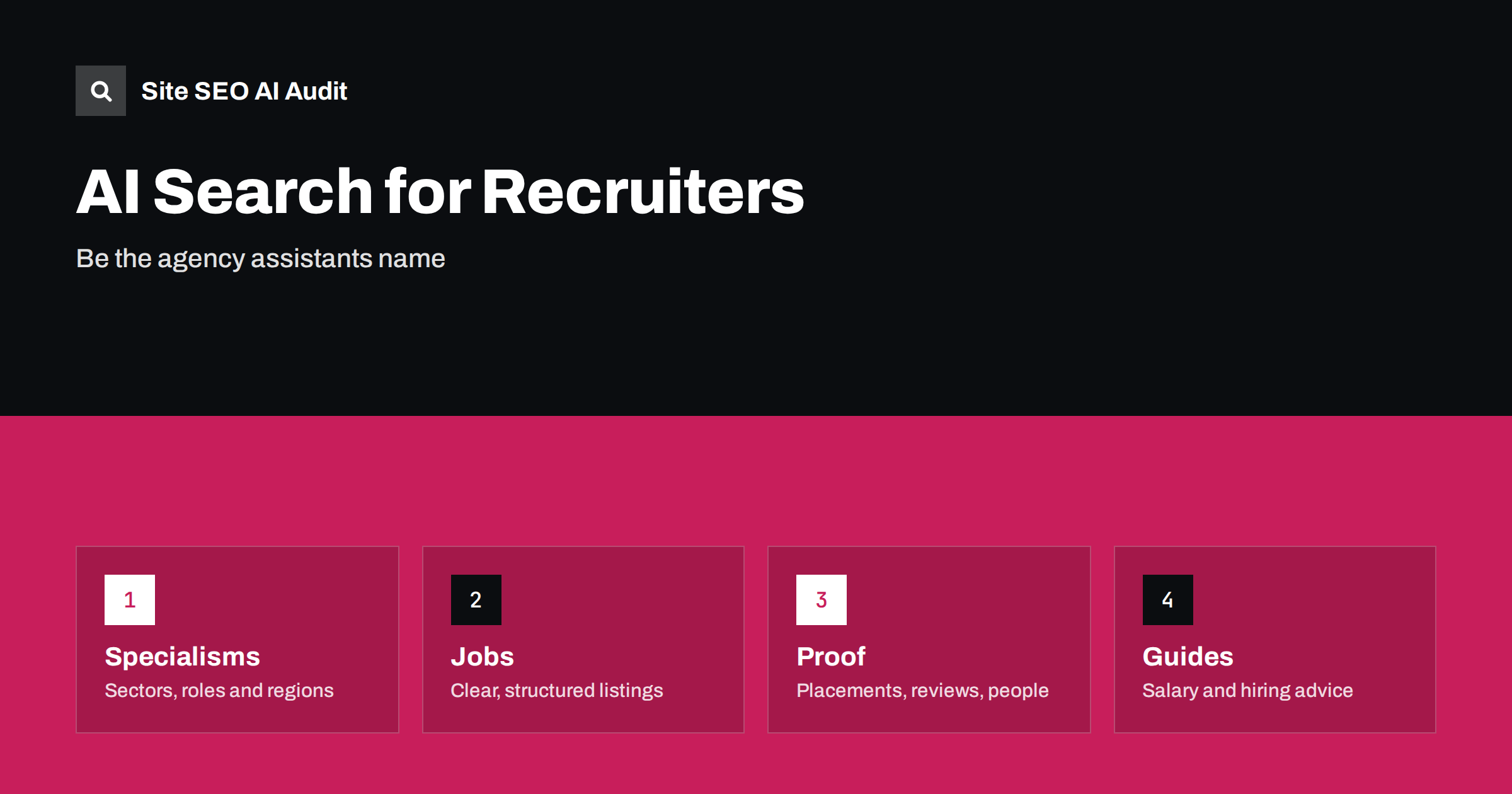
Short answer: Recruitment and staffing agencies are found in AI answers when their sites say precisely who they serve, which roles and sectors they cover, where they operate and how their process works, and when independent sources confirm it. Publish dedicated pages for each specialism and location, explain your process and fees in plain language, mark up job listings with the right structured data and remove expired ones, add named recruiters with real experience, show verifiable results and genuine reviews from both clients and candidates, and publish practical hiring and salary guides based on your own data. Keep AI crawlers allowed in robots.txt, make sure job pages render without complex scripts and keep business details consistent across directories. Agencies that look like vague generalists get skipped; specific, trustworthy and current agencies are the ones assistants cite.
A hiring manager might ask an assistant which agencies place engineers in a particular city, how much temporary staff costs or what to include in a job advert. A candidate might ask where to find warehouse jobs with flexible hours or whether a certain agency is reputable. These are research questions with practical consequences, so assistants look for pages that are clear, current and supported by other sources. Many agency sites perform poorly here: generic text about “talent solutions”, job boards that depend on scripts, outdated listings and no visible people. This guide covers what to fix, using the same principles as in AI search for lawyers, accountants and consultants but adapted to a business with two audiences, employers and candidates.
Define your niche and say it on the page
Choose the sectors, role levels, contract types and regions you actually serve, and state them in the first lines of your homepage and service pages. “Permanent and contract recruitment for accountants and finance managers in the south-east” is useful; “we connect great people with great companies” is not. Create a page for each major specialism, such as healthcare, logistics, construction, IT or office support, and for each location you cover. Each page should explain the roles you fill, typical requirements, how long placements take, which employers you work with where you may name them, and how to start. Avoid claiming coverage you do not have. Specific pages match specific questions, as explained in service page SEO and location pages for SEO.
Explain the process, pricing model and guarantees
Employers want to know how an agency works before they call. Describe the steps from briefing to shortlist to offer, how candidates are screened, how fast first profiles arrive, what temporary and permanent placements involve and what the fee model is. If you cannot publish exact fees, explain how they are calculated and what influences them. State any replacement or guarantee terms exactly as they appear in your contracts, and do not add promises that are not in your terms. Candidates need clear information about how registration works, how personal data is used and what support they receive. Plain, accurate process pages are quoted far more often than marketing language. Put them in normal HTML, not in downloadable brochures.
Structure job listings properly
Job pages are the most dynamic part of an agency site and the easiest to get wrong. Give each vacancy its own stable address with a clear title, location, employment type, salary range where allowed, requirements, responsibilities, closing date and how to apply. Add job posting structured data that matches the visible text, and keep it accurate. Remove or mark expired jobs quickly so that assistants and search engines do not send people to roles that no longer exist; return a proper status for removed pages instead of leaving soft errors. Make sure listings can be crawled without logging in or running heavy scripts, and avoid duplicating the same vacancy across several addresses. The details of listing pages are in careers page SEO, and rendering issues are explained in why AI crawlers miss JavaScript content.
Do not forget the candidate side of each page. Candidates ask different questions: what the agency does for them, whether registration is free, how quickly they will hear back, how interviews work and what happens with temporary contracts, holiday pay or notice periods. Answer these on dedicated pages, not hidden in a registration form. Use the wording a candidate would use, mention the types of roles you place and give a realistic idea of timing. A page that treats candidates with respect also tends to earn better reviews, which feed back into how assistants describe you.
Show the people behind the agency
Recruitment is a relationship business, and trust signals matter. Create pages for your consultants with names, photographs, sectors, years of experience, professional memberships and links to their professional profiles. Add an about page that explains who owns the agency, when it was founded, which registrations or accreditations apply and where the offices are. Use a consistent name and address everywhere. Real people with verifiable backgrounds help assistants connect your brand to credible entities, as described in author pages and bylines and entity SEO for AI search. Avoid stock photos and invented testimonials; anything that looks fabricated damages trust quickly.
Publish proof that can be checked
Back claims with facts. Case studies that describe the brief, the search, the result and a quote from the client, with permission, show what you do; the approach is in case study pages. Report anonymised figures such as time to fill or the number of placements by sector only if they are accurate and current, and state the period. Collect reviews from clients and candidates on independent platforms and on your own site, respond to criticism professionally and keep a record of how the reviews were gathered. Do not buy or incentivise ratings without disclosure. For the wider picture, see reviews and reputation in AI recommendations.
Create hiring and salary guides from your own data
Agencies hold information that others lack: what candidates ask for, what offers are accepted, how long roles take to fill and what skills are scarce. Turn it into guides that answer common questions, such as salary ranges by role and region, how to write a job description, how to run an interview, what a notice period means locally or how temporary-to-permanent arrangements work. Date the guides, state the source and period of any figures and update them on a schedule. Original data is cited more than generic advice, as discussed in original data and first-hand experience. Add short FAQ sections that answer questions directly, following FAQ sections for AI answers.
Handle privacy and sensitive content responsibly
Candidate data is personal data, so your site should explain what you collect, why, how long you keep it and how people can ask for deletion, in plain language. Do not expose candidate profiles or CVs in a way that search engines or crawlers can index without consent. Keep application forms secure, avoid placing private documents in public folders and check that internal search or admin areas are not indexable. Salary and employment topics can affect people’s livelihoods, so be careful with claims and make clear what is general information and what is advice. Clear policies also improve trust, as noted in privacy policy and legal pages.
Keep technical access and local data in order
Check that robots.txt and your firewall allow the AI crawlers you want, that pages load quickly and that your sitemap lists current jobs and pages. Keep your business profile, opening hours, phone numbers and office addresses consistent in directories and maps; the approach is described in AI search for local businesses. If you operate in several countries, give each its own version with correct language and currency signals. Track referrals from assistants in your analytics and review the pages that receive them, using the guidance in tracking AI referral traffic in GA4.
Checklist and audit
- Pages for each sector, role type and location you serve.
- A plain description of your process, fee model and guarantees.
- Job pages with structured data, stable addresses and prompt removal of expired roles.
- Named consultants, company details and verifiable results.
- Reviews from clients and candidates, and original hiring or salary guides.
- Clear privacy information and accessible pages for crawlers.
Site SEO AI Audit crawls your agency site, flags duplicate titles, broken links, slow pages, missing structured data and blocked AI crawlers, and ranks the fixes by how many points each adds. The first audit of up to 200 pages is free; for larger job sites see the pricing page.
Related reading
- AI Search for Lawyers, Accountants and Consultants
- Careers Page SEO
- AI Search Visibility Checklist
- Case Study Pages
The bottom line
Assistants recommend agencies that are specific, transparent and verifiable. Define your niche, explain how you work, publish clean job listings, show real people and proof, share original insight and respect candidate privacy. Keep the technical basics open to crawlers and the details consistent, and review the results regularly.
GYIK
What should a recruitment agency page say first?
State which roles, sectors and regions you serve and for whom, in one or two plain sentences. Then explain how to get started.
Do job listings need structured data?
It is strongly recommended. Mark each vacancy with accurate details that match the visible page, and remove or update expired ones promptly.
Can I publish salary information?
Yes, if it is accurate and sourced. Give the period, role level and region, and update the guide on a schedule.
How can a small agency compete with large ones?
By being more specific. Focus on a niche or region, show named experts, share real results and answer detailed questions that large sites handle generically.
Should candidate profiles be public?
Only with clear consent and a good reason. Otherwise keep them out of search, protect them behind logins and explain your data practices.