ENEnglish
 LTLietuviškai
 DEDeutsch
 FRFrançais
 RUРусский
 ESEspañol
 PLPolski
 ITItaliano
 UKУкраїнська
 CSČeština
 PTPortuguês
 JA日本語
 LVLatviešu valoda
 ETEesti
 HUMagyar
 IDBahasa Indonesia
 TRTürkçe
 HIहिन्दी
 ELΕλληνικά
 ARالعربية
 THไทย
 VITiếng Việt
 RORomână
 MSBahasa Melayu
 BNবাংলা
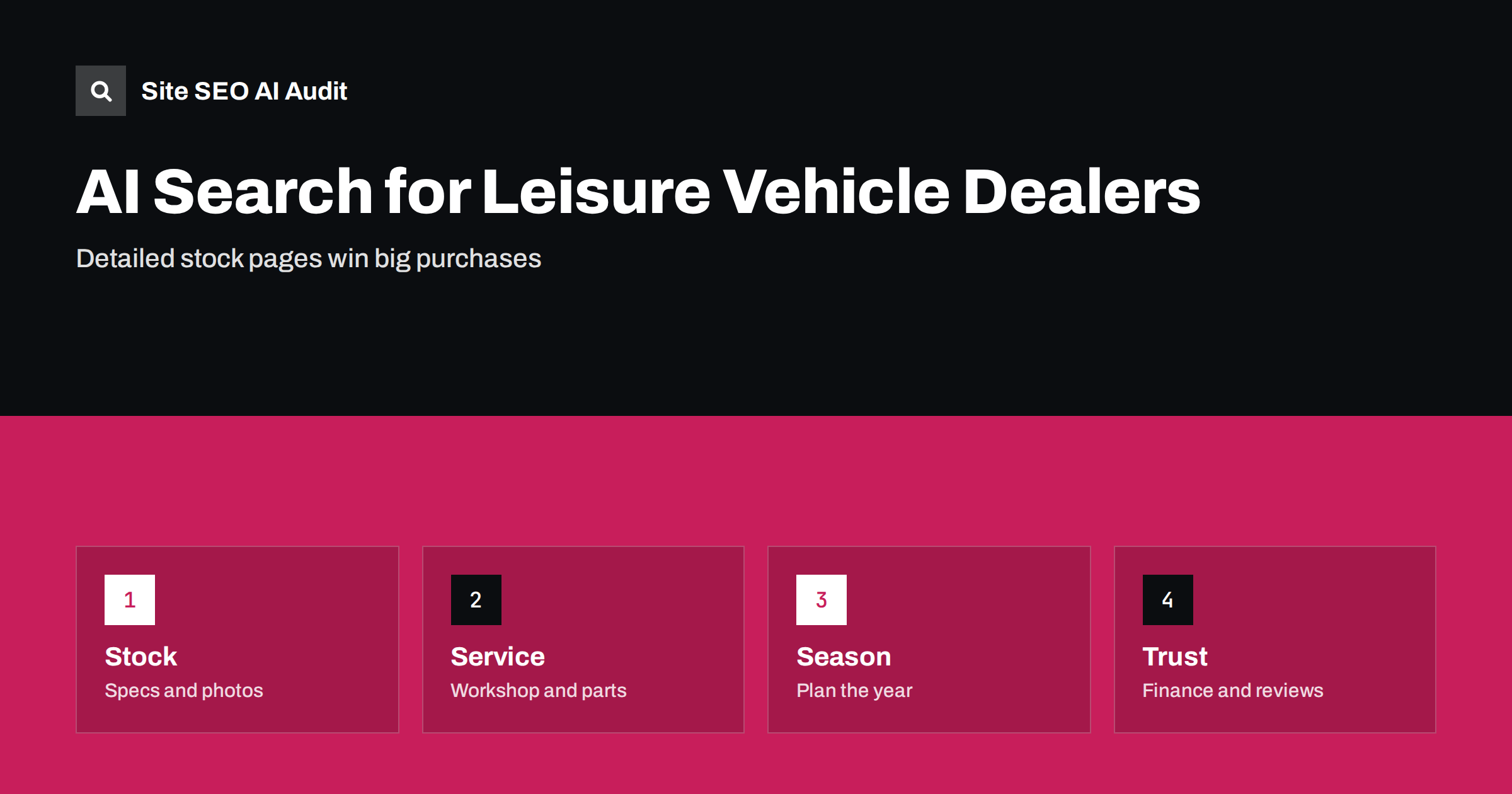
Short answer: Buyers of boats, motorbikes, caravans and motorhomes make large, emotional purchases and ask AI assistants for models, comparisons, dealers and costs. To be named, a dealer needs detailed stock pages with honest specifications and real photos, clear information about brands, test rides or viewings, workshop and parts services, delivery and storage, finance and insurance options explained fairly and reviews from real customers. Seasonal planning and accurate local details also matter.
Leisure vehicles are bought with care and often after months of research. People compare models, read reviews, watch videos, ask which size or engine suits their use, and look for a dealer who will still be there when the first service is due. Assistants help in this research, and their short lists decide which dealers and brands people visit. For dealers, the task is to make their stock, expertise and service easy to find and to quote. For the car trade, see the guide to AI search for car dealers and auto services, which shares many principles.
How buyers ask
Questions fall into stages. Early questions are about types and needs: what kind of caravan suits a family of four, which motorbike is good for a beginner, whether a small cabin boat can be used on a lake or the sea. Mid-stage questions compare models and brands, running costs, insurance, mooring or parking and resale value. Late-stage questions concern a specific dealer: stock, price, finance, trade-in, delivery, warranty and service.
The answers often combine information from manufacturers, magazines, forums, marketplaces and dealer sites. A dealer who has clear pages for each stage has more chances to be present at the moment of choice. Use the way people really ask, as described in the guide to search intent.
Detailed pages for each vehicle
Stock pages are the core. For each item, publish the make, model, year, condition, usage such as hours or mileage, main specifications, equipment, price, location and availability. Add many real photos, including details and any flaws, and a video where possible. State the status clearly: available, reserved or sold. Avoid vague sentences like excellent condition without facts, and give the history, such as service records and number of owners, where you have them.
Keep stock accurate. A sold unit that still shows as available leads to disappointment and wrong answers. Decide how to treat sold items: keep a short page with a note and links to similar stock, or redirect to the category, as discussed in the guide to out-of-stock product pages. Use product markup carefully, following the guide to product markup, and keep it equal to the visible page.
Brands, models and comparison content
Create pages for each brand and main model you sell, with an honest description of who it suits, typical uses, strengths and limits, and real prices ranges where appropriate. Add guides that help the choice: how to choose a boat for your waters, how to compare motorbike classes, what weight a car can tow and what that means for caravan choice. State facts you can support and avoid claiming that a model is the best for everyone.
Comparison pages are quoted often. A fair comparison of two models, with the differences in size, weight, price, comfort and running costs, helps readers and shows expertise. See the guide to comparison pages. Explain terms such as engine classes, berths, payload and licence requirements in plain words.
Service, parts and storage
After-sales matters as much as the sale. Describe the workshop: which brands you service, what work you do, how booking works, typical waiting times, warranty handling and the accreditation you hold. Publish a page for parts and accessories, with how to order and what to expect. If you offer winter storage, launching, delivery, registration help or handover training, give each its own page.
These pages answer practical questions and keep customers coming back. They also support the local signals discussed in the guide to local business and AI search.
Finance, insurance and legal facts
Many buyers ask how to pay and what rules apply. Explain finance and leasing options in general terms, say who provides them and avoid giving precise offers unless they are current and you are authorised to promote them. Describe the insurance you can arrange or recommend and what the buyer should check. Explain registration, licence, inspection and equipment requirements that apply to your region, and date the information, since rules change. For boats, vans and caravans, mention weight and towing rules where relevant.
Be careful with legal and financial advice. Say what you know as a dealer and refer readers to the official source for the rest. See the guide to AI search for finance and insurance for the principles of sensitive information.
Seasons and timing
Demand in this trade is very seasonal. Prepare content before each peak: spring preparation for motorbikes and boats, summer holiday planning for caravans, autumn offers and winter storage. Publish stable seasonal pages that you update each year, as in the guide to seasonal pages, and show dates for events such as open days, shows and test ride days. Keep opening hours accurate, especially around holidays.
Plan the weak season too. Winter is a time for research, so guides, checklists and comparisons can build interest for the spring.
Video, events and community
Video is natural for this category: walk-around tours, demonstrations, test rides and sea trials. Place videos on pages with a written summary, so that the information is available in text, as described in the guide to video SEO. Show your events, demo days and owner meetings with clear dates and places. Contribute to clubs and forums with real help and avoid spam. Many assistants draw on such discussions, so a good reputation there helps.
Related stores, such as outdoor and sports shops, may share audiences. For the retail side, see the guide to AI search for sports and outdoor stores, and for rentals, the guide to rental and hire businesses.
Reviews and reputation
For expensive purchases, reviews carry great weight. Ask satisfied customers for reviews after handover and after the first service, reply to all comments politely and fix real problems. Show reviews on your site only when they are genuine. Make your business details identical across your website, maps, marketplaces and social profiles, as covered in the guide to business profile and website alignment and the guide to reviews and reputation.
Local reach, delivery and viewings
Customers for these vehicles often travel a long way, so say where you serve and how far you deliver. State the address, opening hours, how to arrange a viewing or a test ride and what to bring, such as a licence or a deposit for a trial. If you deliver, explain how it works, what it costs and how long it takes. For boats, describe launching and handover facilities, and for caravans, the way you check towing compatibility before sale.
Give each branch its own page with a map and local contact details, and avoid copying the same text. Publish a short guide on what happens on the day of handover, because first-time owners are often nervous and look for reassurance. Include after-sales contacts for the first weeks, when most questions arise.
Finally, keep a record of the questions that customers ask in person and on the phone. Each frequent question deserves a page or a section on your site, written in plain words with the answer first. This is the most reliable source of content ideas, and it tends to match what people also ask assistants.
Here is a short example. A motorhome dealer had stock pages with a few photos and the text see description. Buyers called to ask basic questions, and assistants named competitors with detailed pages. The dealer added full specifications, floor plans, twenty photos and a short walk-around video for each vehicle, plus a guide to choosing a layout. Phone enquiries became more specific, and test viewings increased.
Another lesson from the trade is that pictures and numbers beat adjectives. A page that lists the length, beam, draft, engine hours and equipment of a boat, with photos of the engine bay and the cabin, answers questions that a claim of excellent condition never will.
A second example is a boat dealer that published an honest page on the costs of owning a small boat, including mooring, insurance and winter storage. It became a frequently cited page and brought in first-time buyers.
Site SEO AI Audit crawls your website and checks status codes, titles, descriptions, duplicate and thin content, broken links, structured data, page speed and AI visibility settings, which helps you find weak or duplicated stock and service pages. It does not manage your stock feed or listings. The first audit of up to 200 pages is free, and larger sites can see the pricing page.
Related reading
The bottom line
Give every vehicle a detailed, honest page, explain service and finance clearly and keep stock, seasons and reviews current.
FAQ
What should a stock page for a used boat or caravan include?
Make, model, year, condition, usage, specifications, equipment, history, price, location, status and many real photos.
How do I handle sold vehicles?
Mark them clearly as sold and link to similar stock, or redirect to the right category if the page has no more value.
Should I publish finance details?
Explain the options in general terms and only show offers that are current and that you are allowed to promote.
Do guides help a dealer?
Yes. Guides on choosing, costs and rules answer early research questions and bring buyers to your site.
Are videos useful?
Very. Add a written summary on the same page so that the information is also available as text.